


Hi, I am Anguzu, Radio Pacis AI Assistant. How can I help you today? Ask me about Radio Pacis, our programmes, frequencies, news, Arua, or the world around us.
26 June 2026 · Radio Pacis Newsroom
Osman Ezale, the electoral commission returning officer for Arua City, during an interview with Radio Pacis. By Onzoma Albert Arua City The Electoral Commission office in Arua City has announced its readiness to conduct Local Council elections across 469 cells
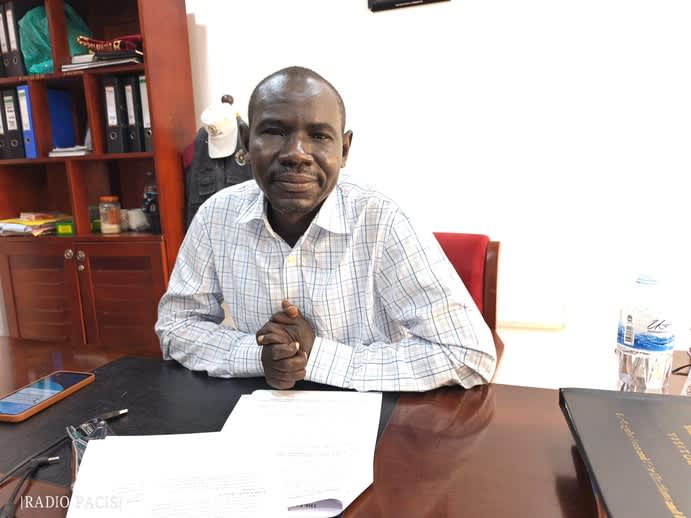
Osman Ezale, the electoral commission returning officer for Arua City, during an interview with Radio Pacis.
By Onzoma Albert
Arua City
The Electoral Commission office in Arua City has announced its readiness to conduct Local Council elections across 469 cells and 54 wards within the city, following the release of election roadmap from EC headquarters. The elections will include Village Women Committee positions and Local Council I and II (LC1) leadership structures in all 71,214 villages nationwide.
Osman Ezale, the Electoral Commission returning officer for Arua City, confirmed that the electoral process would commence with updating cell and women’s cell registers from July 6 to July 10, 2026.
“We are set for the conduct of LC 1, 2 and Women Council elections normally our people focus more on LC 1 elections but they will include LC 2 and Women Council under special interest group elections, the commission is set, has released the electoral roadmap already and one of the key activity on the roadmap is registration of residents based on willingness” he said.
He, urged residents to ensure their details are included in the registers, emphasizing that registration is essential for voters and aspiring candidates. He clarified that registration would be free and supervised by cell election officers appointed by the Electoral Commission.
Furthermore, he stated that candidates are not required to possess academic qualifications, provided they are Ugandan citizens, registered residents of the cell, and at least 18 years old.
The Electoral Commission plans to display the village registers for public verification on July 13 and 14.
Ezale, encouraged active public participation, noting that voting will be conducted through a traditional lining-up method in designated public spaces.
“The mode of conducting the elections will be by lining up the method the parliament has approved for the LC 1, 2 and Women Council elections so we are going to go by that where people will line-up behind their preferred candidates, I encourage our people to actively participate and should not fail to participate because the election is will be by lining-up because it is a democracy and you need to be seen in making your choice in a broad day light” he added.
The LC1 executive committee will comprise 11 members, including positions such as chairperson, vice chairperson, general secretary, and secretaries for information, security, finance, youth affairs, disability affairs, and elderly affairs, among others. Nominations for LC1 candidates will be held at ward level from July 15 to July 19, with nomination forms distributed by parish election officers between July 9 and July 14.
Campaigning for LC1 positions will take place from July 20 to July 27, followed by polling on July 28. Each village will serve as a polling station, and voting will occur openly in public spaces through lining up behind candidates. Candidates are permitted to have two agents at each polling station. After completing the LC1 elections, the Electoral Commission will proceed with Local Council II elections at the parish level, beginning July 29.
Finally, parish-level elections are scheduled for August 10, 2026, to be conducted by newly elected village committees, marking the continuation of the local governance electoral process.