
Hi, I am Anguzu, Radio Pacis AI Assistant. How can I help you today? Ask me about Radio Pacis, our programmes, frequencies, news, Arua, or the world around us.
1 September 2025 · Radio Pacis Newsroom
By Dramadri Federick and Moriku Janet In a world where superpowers compete for influence amid a shifting geopolitical landscape, Russia’s discreet yet persistent expansion into Africa reveals a complex web of motives and methods. Ostensibly driven by anti-colo
By Dramadri Federick and Moriku Janet
In a world where superpowers compete for influence amid a shifting geopolitical landscape, Russia’s discreet yet persistent expansion into Africa reveals a complex web of motives and methods. Ostensibly driven by anti-colonial rhetoric, Moscow’s true goals are wrapped in strategic pursuits: undermining Western dominance, reclaiming global influence, and securing vital resources—often through covert means such as illicit mining networks to bypass sanctions.
Uganda is among the 54 African nations that have signed over 50 bilateral agreements with Russia between 2019 and 2023. This move aims to weaken Western influence and restore Russia’s prominence on the continent through enhanced political, economic, and military engagement. This is exemplified by the increasing number of diplomatic missions and military cooperation initiatives with various African countries.
On November 12, 2022, Russia hosted a cultural festival at Nyange Resort and Marina in Kampala, Uganda. The event provided a platform for Russian delegates to share their expectations and celebrate 60 years of diplomatic relations with Uganda. This year marked a significant milestone, symbolizing the deepening ties between the two nations.
In the same year, the Russian government announced an expansion of its educational aid to Uganda. Russia increased the number of Ugandan students it trains, offering 4,000 spots and boosting student quotas for 2023/2024, along with approving 218 scholarships for vocational training. These efforts aim to strengthen educational support while also serving Moscow’s propaganda objectives and broadening its cultural influence across Africa.
Faida Annet, who studied Diplomacy and Strategic Peace at Moscow State Institute of International Relations (MGIMO), remarked that the mandatory Russian language instruction, aimed at helping students adapt to Russian culture, undermines African traditions. She observed that much of Russia’s scholarship offerings focus on globally marketable courses. While this helps ensure students return to advocate for Russia’s interests, she views this as a form of influence that may act as cultural brainwashing.
Annet explained, “Once students arrive in Russian schools, they are first taught the 33-letter alphabet, which facilitates the spread of their language, culture, and values—values that align with our family norms. Additionally, students are often sent back to their home countries to report on gaps or weaknesses of competing superpowers like the US, which is dominant in Africa. We need proactive measures as African nations to address policies that allow foreign influences to overshadow our heritage; otherwise, we risk losing valuable resources to these external powers.”
Conversely, Duncan Abigaba, another Ugandan economist studying in Russia, noted that Russia’s historical presence in Africa under the Soviet Union has facilitated recent engagements. He pointed out that Russia’s non-interference in governance has made it easier for African countries to form alliances with Moscow.
“Russia is increasing its influence by offering around 200 scholarships to Uganda annually much more than the 50 scholarships provided to other African countries. The main ideological influence tends to be linguistic, as Russians share conservative and traditional values similar to many Africans. However, there are limited discussions about Africa within Russia, mostly at the level of heads of state,” Abigaba explained.
Russia leverages cultural ties, educational exchanges, and military alliances to deepen its influence, with Uganda serving as a key case study. From Uganda’s historical ties with Moscow to Russia’s military footprint in Libya and Sudan, private actors like the Wagner Group operate behind the scenes, blending commercial interests with state objectives. These efforts influence narratives within Uganda sometimes portraying opposition candidates as allies of Western imperialists or supporting progressive agendas like LGBTQ+ rights.
Abigaba also indicated that Russia is working on establishing a military base in Uganda, providing training on technological systems and infrastructure development. “The focus areas include military, cultural, science, and technology sectors. They support projects like the Helicopter Maintenance, Repair, and Operations (MRO) facilities at Nakasongola, under the umbrella of the National Enterprise Cooperation (NEC) of the UPDF,” he added.
According to the PIE Network, the number of African students benefiting from scholarships to study in Russian universities has grown by 150% in the past three years and is expected to grow by more than 47,000 students in 2024 whereas Russia has hosted numerous cultural festivals, notably the 2019 Russia-Africa Summit attended by 43 African leaders. Russia’s vigorous promotion of its modernization narrative and its strategic engagement across the continent underscore its broader ambitions in Africa.
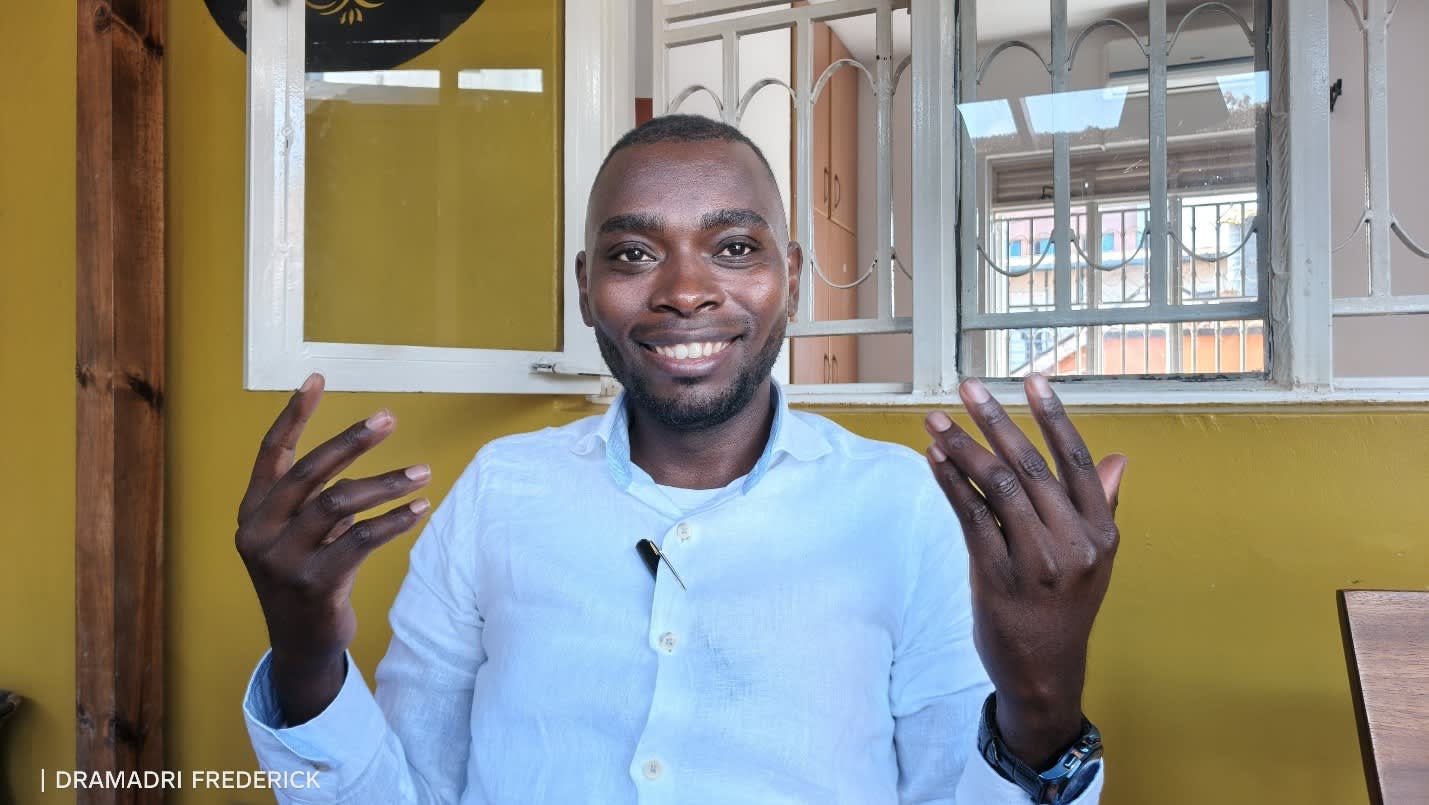
Duncan Abigaba, a Ugandan university scholar of economics who studied
in Russia. Photo by Dramadri Federick.
The Africa-Russia Summit reports that Russia has granted more than 20,000 scholarships to African students since 2015 and has hosted numerous cultural festivals, such as the Russia-Africa Summit in 2019, attended by 43 African leaders. With Russia’s aggressive promotion of its narrative of modernization as a counter to Western influence and its cultivation of a network of sympathizers and propagandists, African nations are increasingly positioned as the vulnerable communities for the Eastern bloc.
Abigaba warns that African leaders are making a mistake by allowing foreign actors to dictate what they should exchange for support.
“It should not be about ‘Pro this’ or ‘Pro that’. It must be about our interests. What are our interests as Africans? We shouldn’t have to mortgage our continent, our wealth, and our citizens,” he emphasized.
As African nations continue to grapple with poverty and resource dependency, Russia’s strategy is to position itself as a developmental partner—offering knowledge, training, and economic opportunities while simultaneously advancing its political and economic interests.
The Hidden Loot of African Resources
Despite Russia’s apparent efforts to assist African countries like Uganda with military supplies, Moscow’s illegal gold exports from Africa are estimated to exceed 100 tons annually, worth over $5 billion. These illicit activities significantly support illegal networks and help circumvent international sanctions, especially in nations such as Uganda and the Central African Republic.
According to The Modern Diplomacy, Russia has maintained a long-standing relationship with Africa. The recent symbolic Russia-Africa summit held in October 2019 in Sochi saw the signing of 92 agreements, contracts, and memoranda of understanding. The total value of these agreements was approximately $12.5 billion. Under the lens of nuclear energy, Russia pledged to address Africa’s energy deficits, which affect over 800 million of the continent’s 1.4 billion people.
Energy shortages hinder both domestic consumption and industrial development, making nuclear energy a key policy focus across Africa.
Wadri Kassiano Ezati, a former member of the Ugandan Parliament with 20 years of service, described Russia’s engagement as an expression of neocolonialism. He called for a unified effort among African leaders to counteract these influences.
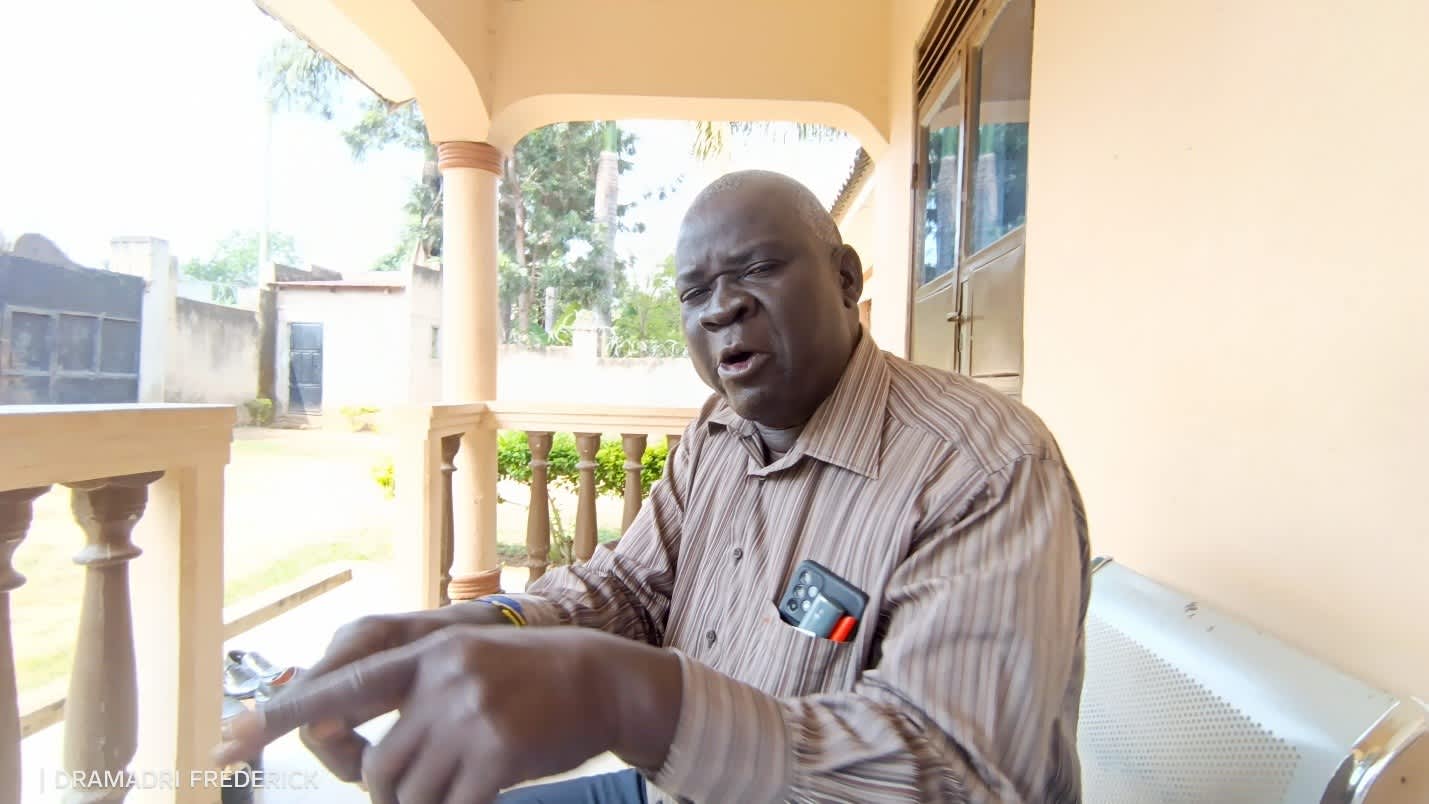
Wadri Kassiano Ezati, a former member of the Ugandan Parliament with
20 years of service. Photo by Dramadri Federick.
Ezati accused African leaders of betraying their nations through the actions of dictatorial heads of state, who he claims are anti-human rights and have been selling off their countries’ resources. “Most African leaders flee to Russia instead of the US to hide from their inhumane activities, which they use to cling to power longer,” he stated. “They focus more on acquiring weapons than providing social services, not realizing that the Russians are targeting our minerals for their own benefit.”
Lemeriga Fadil the Prime Minister Aringa Kingdom noted that most of the subjects are rejecting the African way of doing things but focusing on the foreign ideologies which is eroding the culture of the society. “Most of us are living in imported culture and this has affected us their leaders in managing the society.”
Harold Acemah, a career diplomat and political scientist, emphasized the importance of African nations protecting their natural resources and cultural identities. He noted that Russia employs different terminologies and narratives to spread propaganda, establish influence, and expand its presence in Africa.
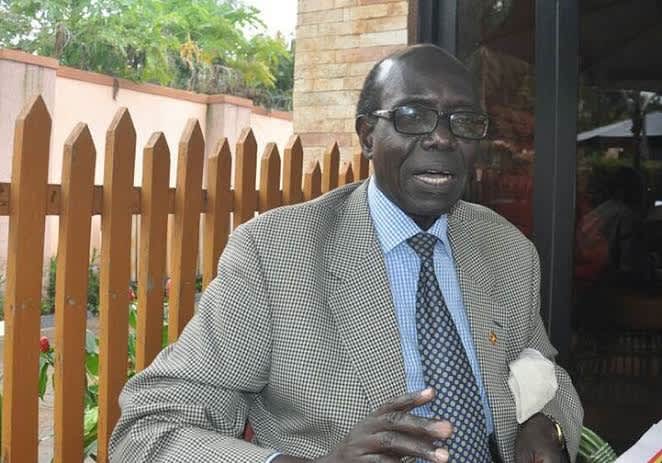
Acemah Harold speaking on the controversial diplomatic Relations the
Foreign countries have with African Nations. Photo by Dramadri Federick.
Acemah pointed out that many African leaders have compromised their sovereignty by selling off their defense systems and environmental resources, which has adversely affected democracy. “Today, African countries prioritize guns and machinery over other interests because they want to stay in power,” he argued. “Russia’s policy of non-interference and secrecy in transactions appears to favor dictators many of whom are corrupt and human rights abusers by undermining accountability and sovereignty.”
Is NAM Relevant in Modern Diplomacy?
Uganda’s President Yoweri Museveni was elected chairman of the Non-Aligned Movement (NAM) for the 2024–2027 term. However, critics argue that NAM’s 120 member countries, along with 18 observer states and 10 observer organizations, are not truly independent of external influence.
Nicholas Opio, a human rights lawyer at Chapter Four Uganda, observed that countries like Uganda and Zimbabwe have increasingly aligned with Russian interests. He suggested that many nations are shifting their allegiances from Western powers, such as the US, due to dissatisfaction with Western approaches to human rights and governance. “Most of our governments are reluctant to discuss human rights and accountability,” Opio remarked. “That’s why they gravitate toward Eastern countries like Russia and China.”
Opio stated that African leaders face the challenge of balancing the pursuit of development with safeguarding their nations’ independence and democratic integrity, “as global power shifts and alliances evolve, the relevance of frameworks like NAM will be tested, prompting African nations to critically evaluate their partnerships and prioritize genuine sovereignty and human rights. Moving forward, transparent and accountable diplomacy will be crucial to ensuring that Africa’s pursuits of development do not come at the expense of its independence and long-term prosperity.”
Russia’s Response
Despite multiple attempts to seek clarification, the Russian Embassy in Uganda did not respond to inquiries. When contacted for an interview, Mr. Matthew Gordon, Millennium Development Goals (MDGs) Results Adviser at the Russian Embassy in Uganda, stated that the allegations were beyond his capacity to address and that he could not refer us to anyone else. “We cannot respond. Please do not rush us,” he said.
Russia’s evolving engagement with Africa underscores a complex and multifaceted dynamic rooted in economic, strategic, and geopolitical interests. While partnerships like the recent summit highlight significant economic opportunities, especially in energy development, they also raise critical concerns about sovereignty, resource exploitation, and political influence.
What the future holds for African Nations
However, beneath these seemingly benign efforts lies a complex web of motives aimed at challenging Western dominance, securing vital resources, and expanding Moscow’s geopolitical reach. The involvement of private actors like the Wagner Group, which operates behind the scenes, highlights the covert dimensions of Russia’s activities, blending commercial interests with strategic objectives.
As African nations navigate these growing ties, concerns about cultural influence, sovereignty, and resource security are increasingly evident. Critics warn that Russia’s entanglements could potentially undermine local traditions and sovereignty, especially with the expansion of military bases and intelligence operations.
Meanwhile, proponents argue that these engagements offer African countries alternatives to traditional Western partnerships, providing avenues for development and strategic independence.
In this evolving landscape, the story of Africa’s relationship with Russia encapsulates a broader global contest a multifaceted struggle for influence where diplomacy, military power, and cultural exchange intersect with underlying economic and geopolitical ambitions. The future of these alliances remains uncertain, but one thing is clear: Africa is emerging as a pivotal arena in the global race for power and resources.