


Hi, I am Anguzu, Radio Pacis AI Assistant. How can I help you today? Ask me about Radio Pacis, our programmes, frequencies, news, Arua, or the world around us.
24 March 2026 · Radio Pacis Newsroom
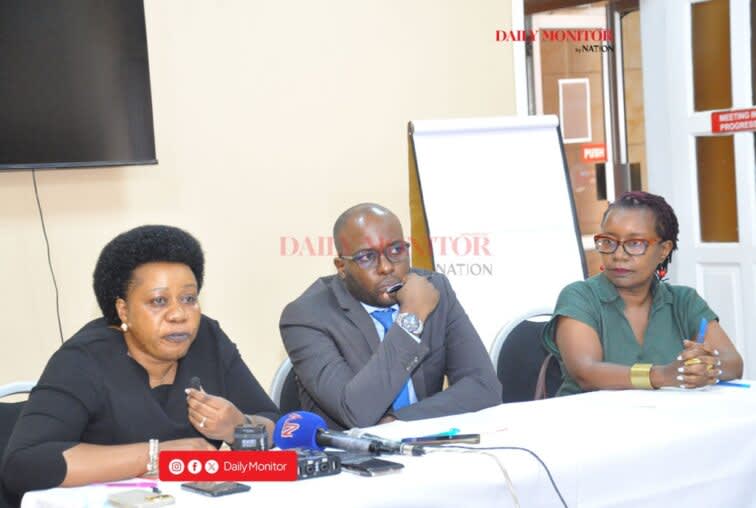
Left to right: Ms Sarah Bireete, Executive Director of the Centre for Constitutional Governance, lawyer Mr Andrew Karamagi, and Ms Sarah Mukasa of the Women’s Movement during a press conference in Kampala on March 23, 2026. PHOTOO/MIKE SEBALU DAILY MONITOR Civ
DAILY MONITOR
Civil Society Organisations (CSOs) in Uganda have pushed back against proposed government measures to regulate funding and accreditation of non-governmental organisations, warning the move risks shrinking civic space and undermining constitutional freedoms.
Speaking at a stakeholders’ engagement on Monday, activists said NGOs play a critical role in bridging service delivery gaps and should not be subjected to restrictive controls.
Andrew Karamagi, a lawyer and member of the Pan-Africa Union, said government narratives targeting civil society were aimed at limiting public engagement.
“Civil society organizations and NGOs are an indispensable component of the socioeconomic and political fabric of our polity,” he said, adding: “Our existence is not only mandated by the Constitution, but is also borne out by the history of struggle for self-determination… from providing essential services to promoting accountable governance.”
Civil society actors cited a history of state pressure on NGOs, including raids in 2017 on organisations such as ActionAid, Great Lakes Institute for Strategic Studies (GLISS), and the Uhuru Institute during the presidential age limit debate.
In August 2021, the Uganda NGO Bureau suspended 54 organisations over alleged non-compliance with the 2016 NGO Act, including expired permits and filing irregularities. Some of the affected groups later successfully challenged the decision in court, including Chapter Four Uganda.
Activists said the current proposals, emerging ahead of and after the 2026 general elections, appear aimed at silencing civic engagement on issues such as corruption, human rights abuses and electoral integrity.
Sarah Bireete, executive director of the Centre for Constitutional Governance, accused the government of imposing unlawful sanctions and questioned the legal status of the NGO Bureau following recent amendments.
“The NGO Amendment Act of 2024… redefined the Bureau,” she said, arguing that the current structure lacks formally gazetted board members.
“What we have is the Secretary of the Bureau… the members who were originally known as board members no longer exist… legally, we have a non-existent NGO Bureau,” she added.
Civil society groups also opposed proposals to establish a government-controlled NGO fund.
Job Kiija, a civic activist, said such a fund would be used to control rather than support the sector.
“NGOs exist to fill the gaps left by the inefficiencies of government. So how can the government claim that they can actually finance NGOs?” he asked, citing concerns over accountability.
The groups called for a halt to ongoing Regulatory Impact Assessment (RIA) proposals related to funding and donor accreditation, and demanded broader consultation with stakeholders.
They also urged the government to respect constitutional provisions, including Articles 29 and 38, which guarantee freedoms of association, expression and participation in governance.