


Hi, I am Anguzu, Radio Pacis AI Assistant. How can I help you today? Ask me about Radio Pacis, our programmes, frequencies, news, Arua, or the world around us.
4 June 2026 · Radio Pacis Newsroom
A panel of environmentalists during the Northern Green dialogue at Radio Pacis on Thursday June 4, 2026. By Morish Dramadri Arua city Environmentalists in Northern Uganda have identified negative public attitudes and weak enforcement of environmental laws as m
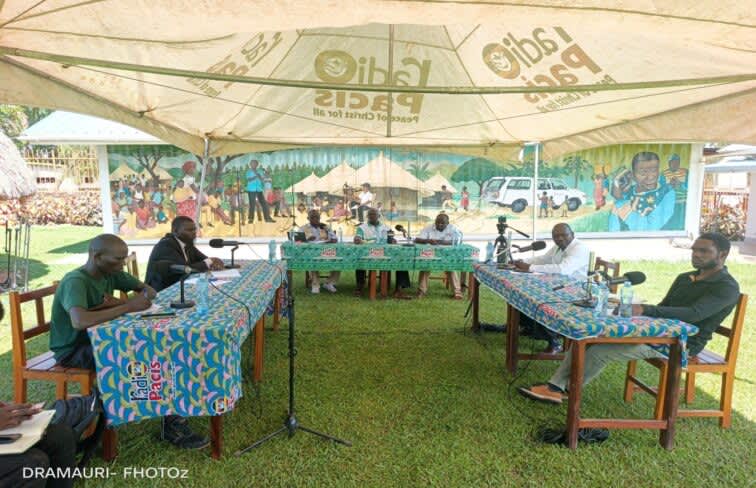
A panel of environmentalists during the Northern Green dialogue at Radio Pacis on Thursday June 4, 2026.
By Morish Dramadri
Arua city
Environmentalists in Northern Uganda have identified negative public attitudes and weak enforcement of environmental laws as major barriers in the fight against environmental degradation, warning that the region continues to suffer from widespread deforestation, wetland encroachment, and poor plastic waste management.
The concerns were raised during the Northern Uganda Green Dialogue an annual initiative by Radio Pacis that brings together the various stakeholders including environmental activists, the civil society organizations, and government officials to converse on the pertinent environmental challenges and make commitments to that effect. The dialogue held on Thursday, June 4, 2026 is a precursor to the commemoration of World Environment Day.
Despite ongoing interventions by government agencies, civil society organizations, and environmental activists, Northern Uganda remains vulnerable to environmental destruction. Forest reserves such as Zoka Central Forest Reserve and Kei Forest Reserve continue to face pressure from illegal logging, charcoal production, and unsustainable exploitation of natural resources. Environmentalists also point to the growing influx of non-biodegradable plastics, which continue to pollute urban and rural communities across the region.
In recent years, Uganda has intensified efforts to protect the environment through several policy and conservation measures. Government has strengthened campaigns against illegal charcoal trade, promoted landscape restoration initiatives, and expanded tree-planting programs under the National Forestry Authority and the Ministry of Water and Environment and the country’s implementation of the National Development Plan III’s climate resilience strategies.
These efforts have been scaled down locally with initiatives such as the “Radio Pacis Go- Green Campaign” that has seen over 12,000 trees already planted across the region in the last eight years since its initiation in 2018, young children now initiated into environmental stewardship through the “Go- Green Kids” festival.
Speaking during the dialogue, Walter Nyamua, Coordinator of the Radio Pacis Go-Green Campaign, noted that the initiative has made significant strides over the past eight years through tree planting, distribution of seedlings to schools and communities, and active involvement of children in environmental conservation activities.
Nyamua said the campaign is now placing greater emphasis on waste management, recognizing that reducing waste and promoting recycling can help protect forests and improve environmental sustainability for future generations. “This year we have decided to move away from giving tree seedlings, we have decided to embrace the element of maintaining the trees. Northern Uganda has been affected by deforestation a lot, the statistics of NEMA 2025 indicates that we generate approximately between 600 to 800tons of plastic wastes daily, less than 10% of that plastic waste is recycled. As Radio Pacis we focus on waste management, plastic waste and solid waste, how do we manage these two,” Nyamua said.
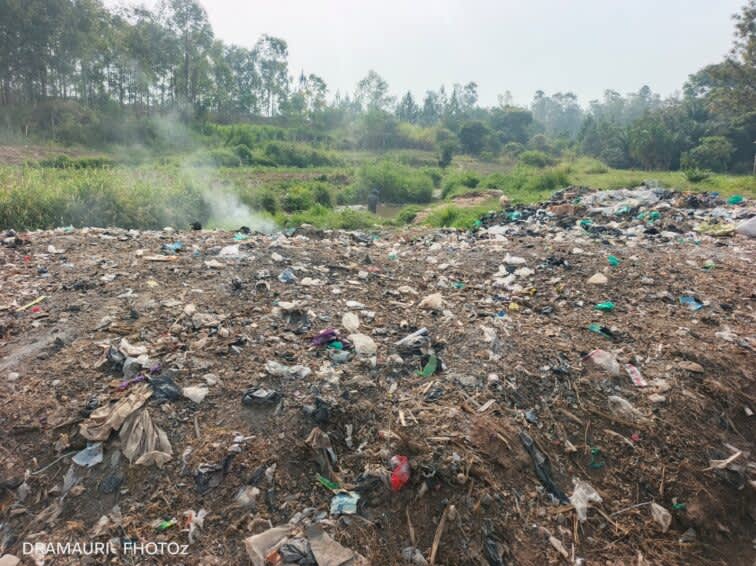
A file photo of a section of poorly disposed solid waste along River Enyau in Arua city.
Photo by Morish Dramadri
However, Favorites Edeti, the Environment Officer for Ayivu Division in Arua City, attributed the increasing environmental pollution in the city to poor public attitudes toward waste disposal.
Edeti said many residents continue to dump waste indiscriminately despite existing regulations and public awareness campaigns, calling for greater community responsibility and stricter enforcement of environmental bylaws to promote proper waste management.
“we have had these plastic bangs that we have put in different growth centers so that our people would be engaged in managing plastic wastes, people look at these things and no one puts his plastics there, the plastics that you use, don’t just drop anywhere, use these plastic bangs well,” said Favorite.
This year’s World Environment Day celebrations in Uganda are being observed under the theme: “Climate Action Begins with You; Act Now.”
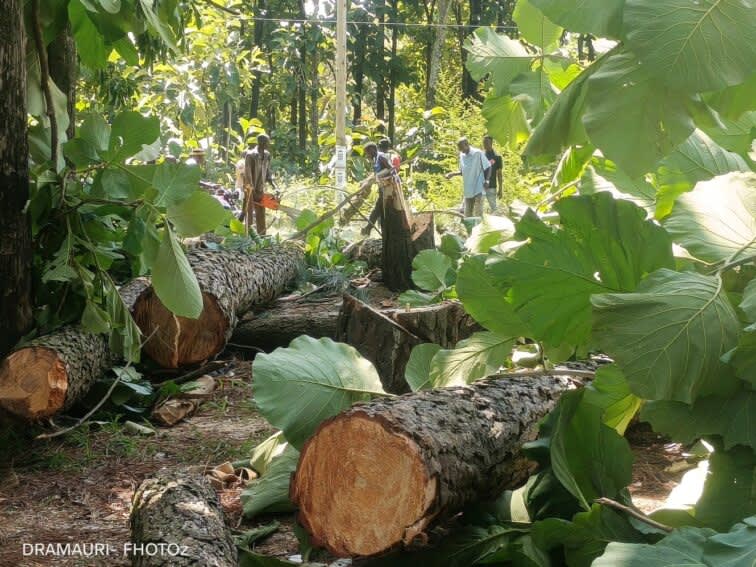
A file photo of one of the activities of environmental destruction, photo by Morish Dramadri
Meanwhile, Olema Jackson, the Operations Manager of Rural Initiative for Community Empowerment (RICE) West Nile a local non- governmental organization operating across Northern Uganda, challenged young people to develop innovative technologies and enterprises that reduce dependence on firewood and charcoal, which remain major drivers of deforestation in Northern Uganda. He emphasized the need to invest in alternative energy solutions, including clean cooking technologies and renewable energy innovations that can help protect forests while creating economic opportunities for young people.
“Young people, intervene in promoting for us technologies that can reduce the consumption of trees, we are not going to stop depending on trees but we want to use less of it, young people have brains please give us those technologies,” Olema implored.
On his part, Msgr. Charles Idraku, Director of Radio Pacis, urged Ugandans to take advantage of the country’s abundant natural resources responsibly and to become active stewards of the environment.
He called on individuals, communities, institutions, and policymakers to work together in protecting forests, wetlands, water sources, and biodiversity, stressing that environmental conservation is essential for sustainable development and the well-being of future generations.
“Uganda is a very extremely rich country God has given us an environment that is so beautiful you just throw a seed it grows by itself you even don’t have to struggle, let us do our part, learn from nature and from other living things. The issues of kavera came in Uganda in the early 90s,” Msgr. Charles emphasized.
As Uganda joins the rest of the world to commemorate World Environment Day, environmental stakeholders are emphasizing that meaningful climate action requires collective responsibility, stronger enforcement of environmental laws, and a change in public attitudes toward environmental protection.