


Hi, I am Anguzu, Radio Pacis AI Assistant. How can I help you today? Ask me about Radio Pacis, our programmes, frequencies, news, Arua, or the world around us.
20 July 2025 · Radio Pacis Newsroom
Patrick Ogik show Rice seeds after harvest By Desire AlimocanGulu Acholi Sub region has for long been facing post-harvest handling challenges ranging from poor drying methods, inappropriate storage methods and transportation. The result has been high rate of p
Patrick Ogik show Rice seeds after harvest
By Desire Alimocan
Gulu
Acholi Sub region has for long been facing post-harvest handling challenges ranging from poor drying methods, inappropriate storage methods and transportation.
The result has been high rate of post-harvest losses, food insecurity in households and reduced quality of the harvests before reaching the final consumer in the markets, which also led to low-income earnings from the harvests.
One of the farmers in Paicho Sub County Gulu District, Ogik Patrick Tabbu, who plants rice, soya and maize explains how they would rudimentarily handle their crops during harvest period until they reach the last stage of consumption because there was limited knowledge on how to work smartly to protect their harvests from getting wasted.
“Those days, we used to pick our crops from the garden and start to dry form the farm in the soil to remove the husks because people claimed the tarpaulins are expensive. The farmers also used torn sacks to store their crops. People would eat soil in their food just because of how they prepared them. For example, rice was shelled on the ground to remove the husks and when packing, of course they packed stones too,” Ogik explains.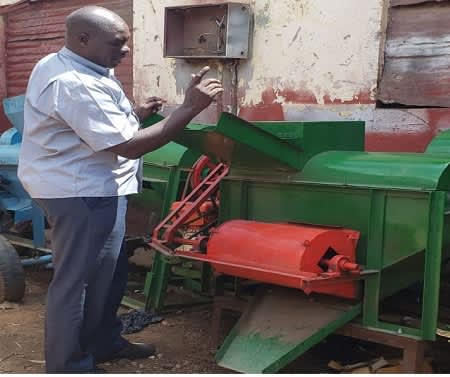
A man explains the workings of a rice hawler
However, this situation is about to change for good, with different interventions underway by different stakeholders to help solve such challenges among the stakeholders trying to help the farmers address the challenge of post-harvest losses is Palladium Uganda.
Under the Climate Smart Jobs project, it is helping farmer groups in the Northern Uganda access post-harvest handling equipment at affordable prices which some farmers are using currently through private sectors that fabricate this equipment like shelling and threshing machines.
Bilbao General Enterprise in Gulu City, a private sector that deals in rice milling and production of the equipment is playing a role in the post-harvest handling excellence.
As one of the ways to help farmers harvest better and handle the harvest well, Nasuru Jamal, the managing Director of Bilbao General Enterprise also provides the machines that help minimize losses while threshing maize, and Multi-crop Sheller that are effective for time saving and protection from waste.
He points out that ever since some of these farmers started using the machines and equipment like tarpaulins, their rice quality has improved and are cleaner compared to the days before the interventions.
Ogik also testifies that they now produce cleaner rice using tarpaulins and their market demand has gone higher.
“Now when I take my rice into the market, because it is clean, they will buy it fast because they know its quality. We do not eat soil in the rice anymore. When I store it, I do not get losses to mold, termites and pests because I store my crops in the most appropriate way,” he adds.
Another group of farmers in Gulu city that has adapted to better ways of handling their harvests since 2017 after the training that was provided to them by Palladium Uganda together with farming incentives, is Latyeng Framers Group in Bungatira ward in Gulu City, that has been realizing much profits from rice seeds that they would harvest and sell to other farmers.
This group that consists of 125 farmers plus other cooperative farmers that they train, uses different post-harvest handling equipment to ensure their rice seedlings are not lost, as explained by Vicky Ochan, the secretary Latyeng Farmers group.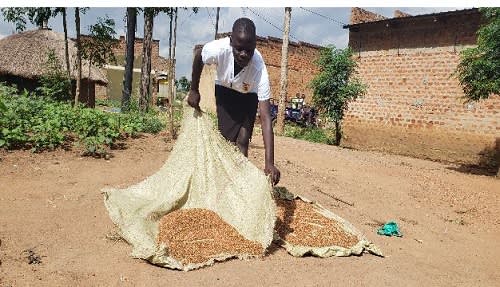
Vicky Ochan Sun drying rice
“We use a machine for removing the husks from the rice, after that we dry our seeds on tarpaulins. We also have a moisture meter for measuring how dry the seeds are. If we detect moisture in it, we make sure it is dry enough to store,” she said.
The group also has a big store which consists of a complete rice milling machine that was donated to them in 2018 by the National Agricultural Advisory Services- NAADS for storing their seeds.
While storing, Ochan emphasized that, the bags of rice are measured using the floor scale then placed on pallet floors that save the rice from molds and termites or other pests.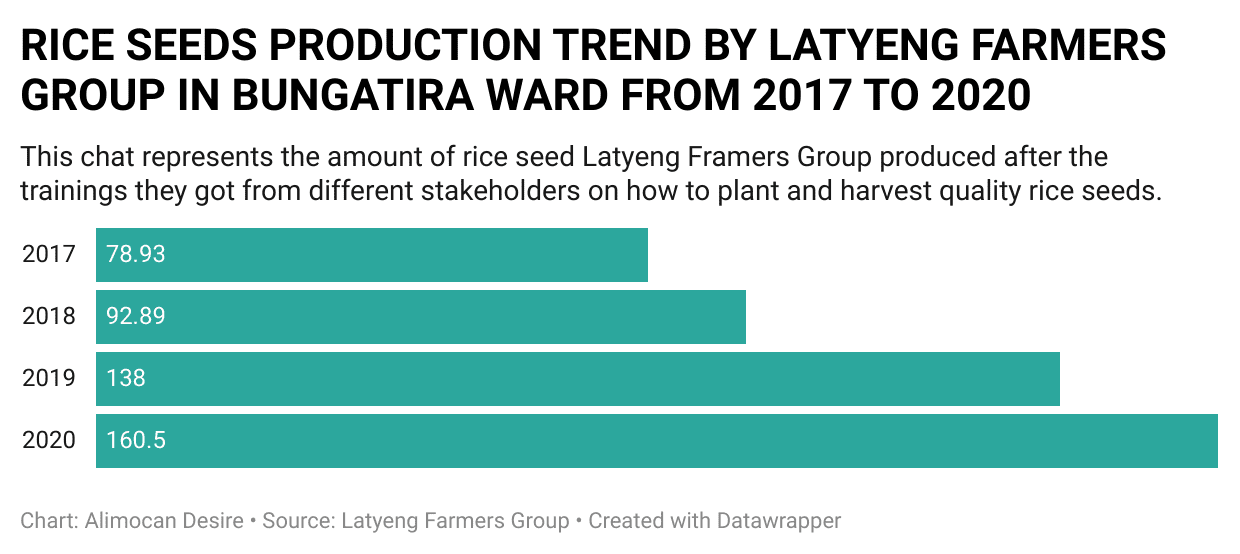
The Gulu city Agricultural department is playing their role as local government in aiding the farmers in Gulu City to handle their harvests better.
Ajok Christine Onono, the Gulu City Agricultural Officer said that, they are sensitizing and training approximately 1,000 agronomists on how to protect their harvests from waste.
“We together with Food Rights Alliance are doing serious training and sensitizing them through the media, we have also done a piloting for a Farmer Field school this year,” she said.
Despite the interventions in place, some farmers still face challenges while trying to practice the climate smart agriculture as some have financial constraints in accessing the post-harvest handling equipment and transportation to the market.
The biggest challenge farmers face is climate change, as they no longer understand when it may rain or shine, therefore, hindering their crops from drying well, like maize that gets mold which becomes toxic because due to aflatoxins that the maize develops if not dried well.
For example, Latyeng Farmers group has not been able to produce noticeable tons of rice since 2021, due to climate change as the plants get destroyed from the gardens because of too much rains or sunshine.
The production of this story was supported by InfoNile in partnership with Palladium under the climate smart jobs program