


Hi, I am Anguzu, Radio Pacis AI Assistant. How can I help you today? Ask me about Radio Pacis, our programmes, frequencies, news, Arua, or the world around us.
16 July 2026 · Radio Pacis Newsroom
Agroup of cocoa workers at natures harvest Kuluba Sub County in Koboko district By Vasco Gift Koboko Climate change manifests in different forms, such as rising temperatures, unpredictable rainfall, floods, prolonged droughts, and declining soil fertility, is
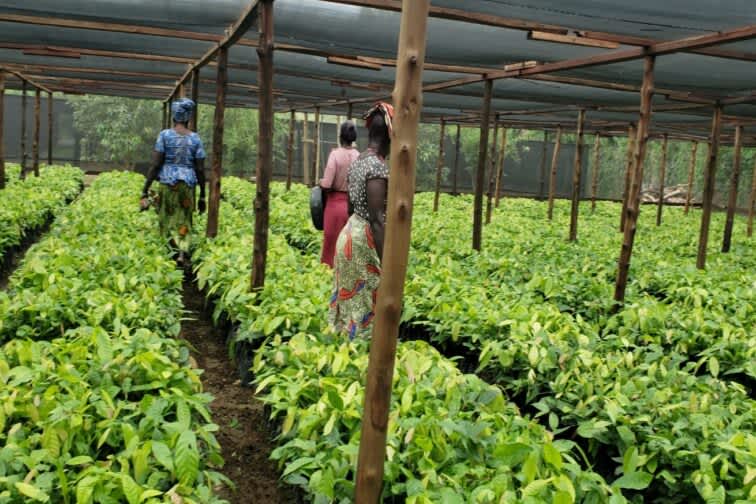
Agroup of cocoa workers at natures harvest Kuluba Sub County in Koboko district
By Vasco Gift
Koboko
Climate change manifests in different forms, such as rising temperatures, unpredictable rainfall, floods, prolonged droughts, and declining soil fertility, is no longer a distant threat to smallholder farmers in Koboko district in West Nile Sub region.
The phenomenon is already reshaping agricultural production across the district by placing traditional farming methods under intense pressure, demanding new approaches that protect both livelihoods and the environment.
Livelihoods and food security of several communities have been threatened in the past few years. Yet, one crop is emerging as part of the solution: cocoa.
The crop is not simply becoming a source of income, but a pathway toward climate resilience among smallholder farmers, environmental restoration mechanism, and sustainable rural development for all.
There is strong evidence in the district linking climate-smart cocoa farming to the creation of multiple benefits for pioneer Cocoa farming households.
In Kitimiri village, Nyambiriparish in Kuluba Sub County, Fatuma Wile banks up to 2 million shillings every two weeks, earned from her Cocoa harvests from just an acre of plantation.
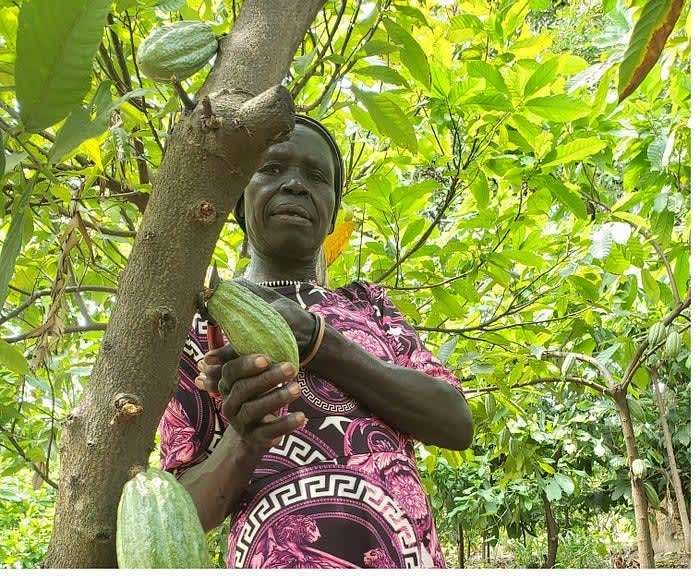
Fatuma Wile harvesting Cocoa at her two Acre model farm in Kitimiri village
Pioneers of Change
Three years ago, Fatuma Wile, a widow, never knew about Cocoa growing as a viable enterprise in Koboko district. She was introduced to the value chain by Natures harvest, a commercial agent under the Wiigot Platform of Climate Smart Jobs, a transformative agribusiness initiative in Northern Uganda funded by Palladium UK.
The agent provided her with quality inputs — Cocoa Seedlings, Fertilizers and training in sustainable Cocoa agronomic practices alongside extension services.
She hasn’t been abandoned. She continues to receive market information and access through the same agent making it easy for her to sell her Cocoa and earn competitive prices, as the agent bulks the produce from individualCocoa farmers.
Fatuma began planting her Cocoa two years ago following several failed attempts to change her life with three acres of land under enterprises such as Cassava, Maize and Groundnuts, which she dominantly grew for family food. Her income was just 50,000 Uganda shillings from the surplus produce she sold for other basic needs like healthcare and school fees.
Not anymore. Fatuma’s six children now study in Ayipe primary school and Bright star primary school in koboko municipality, something she could barely afford before engaging in Cocoa.

One of the children at Bright Star Primary School paid by Fatuma
Fatuma is a member of a small farmer group comprising of five members with two women and three men, inspired by her success story in Cocoa growing. They are all millionaire pioneers of Cocoa growing in Koboko today.
Using proceeds from her Cocoa field, Fatuma began constructing a Four roomed iron-roof building for her family this year. She is confident that Cocoa provides an assured pathway to sustainable wealth for women seeking to secure their health or businesses.
Success depends on knowledge, collaboration, and investment as Moses Aloro, another youthful Cocoa grower under the group discovered. He joined the value chain in 2018, also with inspiration from Natures Harvests, where he sells his Cocoa produce from the two acres of land.
His average income is three Million shillings every season, a major shift from the seasonal crops — Maize, groundnuts, and bananas fetched him about 300, 000 shillings a year.
Moses has big dreams to educate his five children beyond the Primary Five Class he ended in due to lack of school fees. Currently they go to Ayipe primary school without any school fees pressure.
To expand faster, he is setting up a Cocoa nursery bed for himself and 10 other youth interested in joining the value chain. Each Cocoa seedling is sold at 1,000 Uganda shillings at the Nursery bed of Natures Harvests.
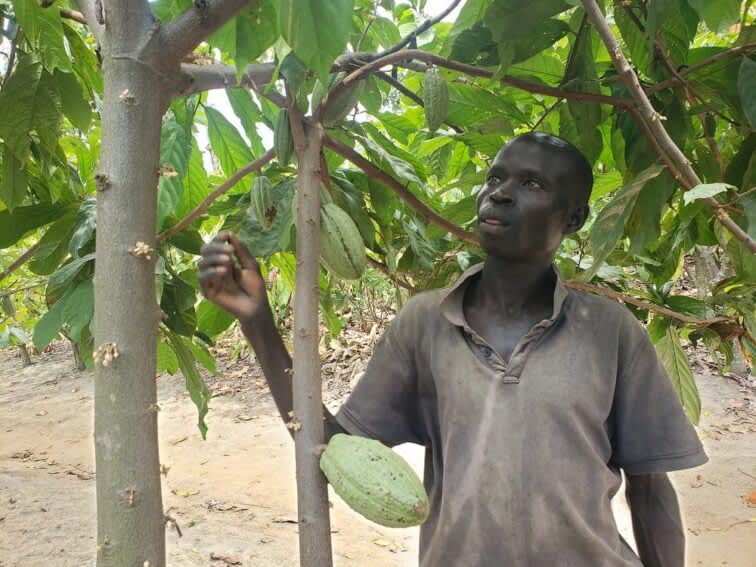
Moses Aloro supervising his cocoa pods
Climate Action
Climate action begins on the farm, small or big, but its benefits extend far beyond rural communities. With every cocoa tree planted within a sustainable agroforestry system, communities enjoy cleaner air, healthier soil, protected biodiversity and improved livelihoods as well as greater food security.
In 2021, Elly Asiki, the LC3 Chairperson of South Division in koboko Municipality, suddenly quit politics and firmly fixed his hopes in Cocoa growing. He established 25acres of land under Cocoa, Four years ago which he is projecting will earn him more than 75millionShillings by the end of 2026.
In the first two years, Asiki cashed 10million shillings a season from his first low hanging fruits.10 years ago, Elly grew beans, cassava and tomatoes with fading hopes for a better future with income averaging just Five Million Shillings a year.
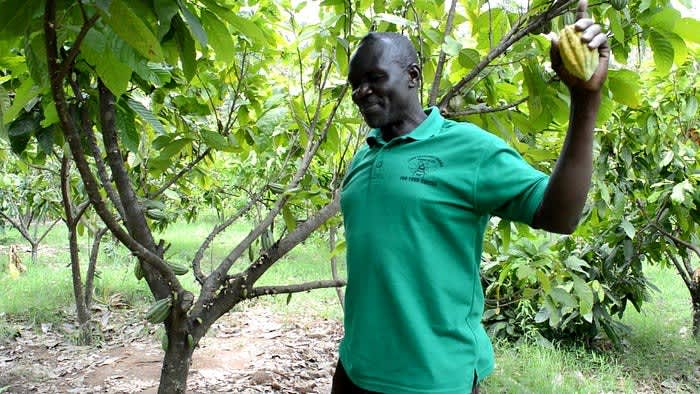
Elly Asiki, Former LC3 Chairperson of South Division
Asiki’s story is like that of Isaac Todoko, another happy Cocoa grower in the same sub county.Todoko, a member of Kobokococoa Cooperatives’ Association, reveals that Cocoa isthe gold of Kakwa tribe. Every fortnight, he banks more than two million shillings he harvests from his three-acre plantation.
Todoko’s success began through an interaction with former koboko County Member of Parliament, James Baba, who introduced cocoa farming to the district in 2018. Three years later, Natures Harvests embarked on massive farmer recruitment and formation of cooperatives to produce vegetables including red peppers, grafted mangoes and rice among others. Progress was slow and frustrating.
Koboko’s smallholder farmers are not simply victims of climate change. They are leaders in building sustainable climate solutions one farm, one tree and one harvest at a time.Asiki’s story is like that of Isaac Todoko, another happy Cocoa grower in the same sub county. Todoko, a member of Kobokococoa Cooperatives’ Association, reveals that Cocoa is the gold of Kakwa tribe.
Every fortnight, he banks more than two million shillings he harvests from his three-acre plantation.
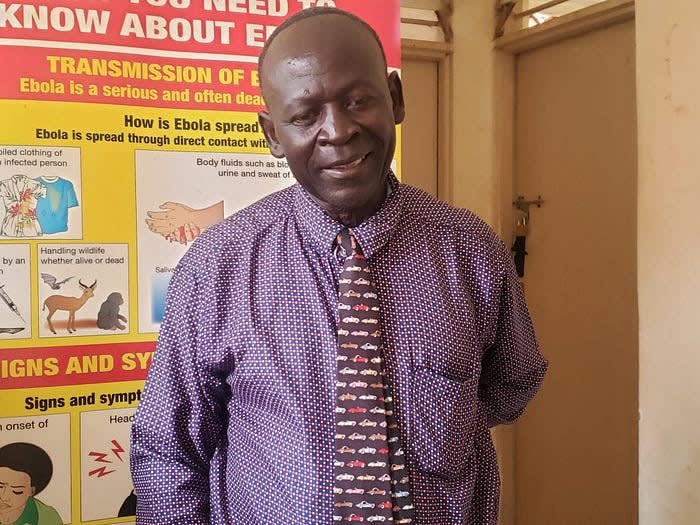
Isaac Todoko another Cocoa Famer
Greener Koboko
Back in 2017, James Baba, a veteran Parliamentarian travelled to Ghana in West Africa in response to call of duty as Uganda’s Ambassador to Ghana.
He then visited Mayuge district in Busoga region where he interacted with some farmers in the value chain. Back in West Nile, he accidentally encountered an old man in Arua city with Cocoa trees in his backyard. The pods looked healthier, juicy and attractively bigger in size.
For James Baba, it was a Eureka moment which definitively alerted him to the fact that Cocoa grows and blooms in the shared West Nile climatic conditions prevalent in Koboko district.With the help of the National Agriculture Research Organization (NARO), several soil tests confirmed the suitability of the climate for the agroforestry crop.
NARO scientists identified the variety well suited for the region as Red Criollo producing fine aromatic flavor from its fruity, nutty and signature low bitterness — making it ideal for the manufacture of premium world’s most sought-after Chocolate.
However, the scientists recommended that farmers in Koboko district should concentrate on growing mainly the Forastero variety because of its tolerance to drought, resistance to disease and high yields value.
The variety also produces big green pods which changes appearance to signature yellow or orange when fully ripe. It is on high demand in European and Asian markets.
“The variety is very hardy, good for new farmers as it tolerates poor soils. It presents with large pods with smooth body texture. And it is easy to ferment and dry.” A statement on the National Agricultural Advisory Services states.
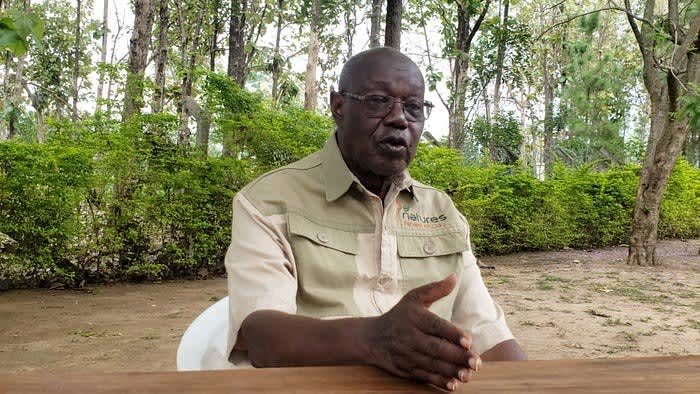
James Baba, a veteran Parliamentarian who initiated cocoa growing in Koboko.
According to Henry Baba, the manager of Natures Harvests in Koboko district, a kilogram of cocoa beans cost between 35,000 and 45,000 Uganda shillings.
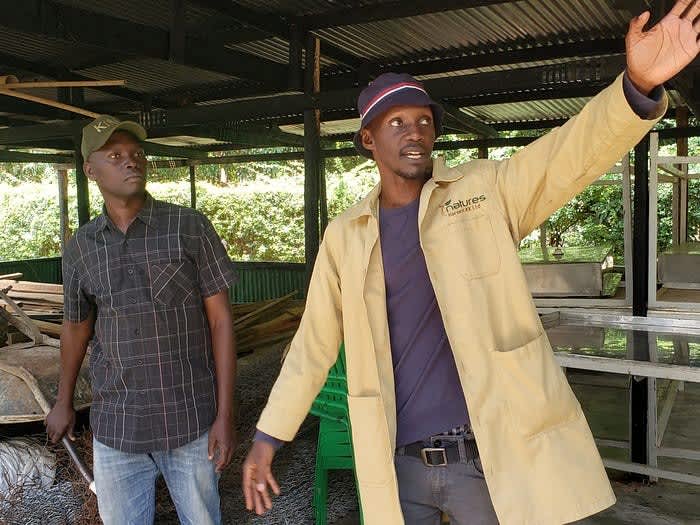
Henry Baba, the manager of Natures Harvests on the left showing cocoa plantations to smallholder farmer during a visit
A report authored by Dr Onzima Steven the Koboko district production officer indicates that there are 573 cocoa farmers in Koboko district alone. In Koboko Municipality, 75 farmers have enrolled in the value chain.
According to the report, women make up 40 percent of Cocoa farmers in koboko district and Koboko Municipality. Majority of them are beneficiaries of the Commercial Agent model under Wiigot Platform of Climate Smart Jobs.
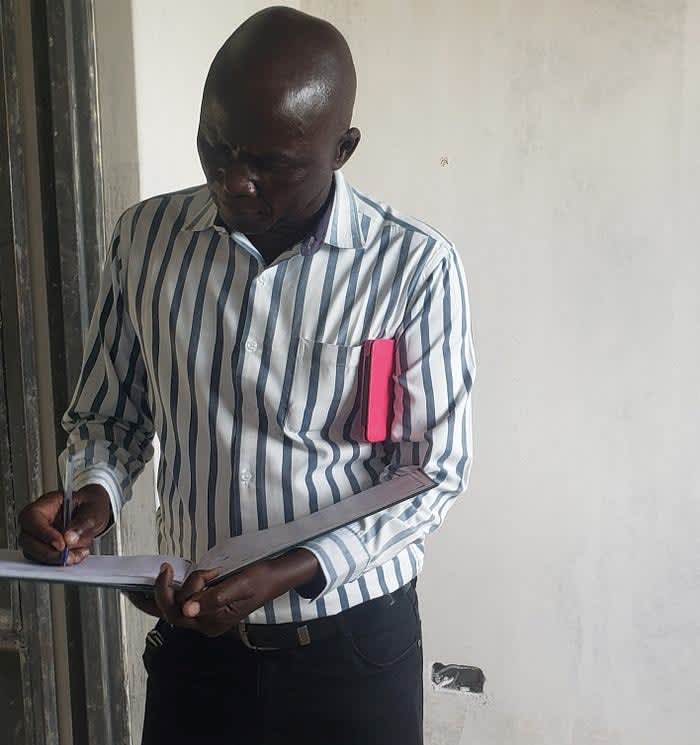
Dr Steven Onzima recording the number of farmers at Kobo cocoa factory.
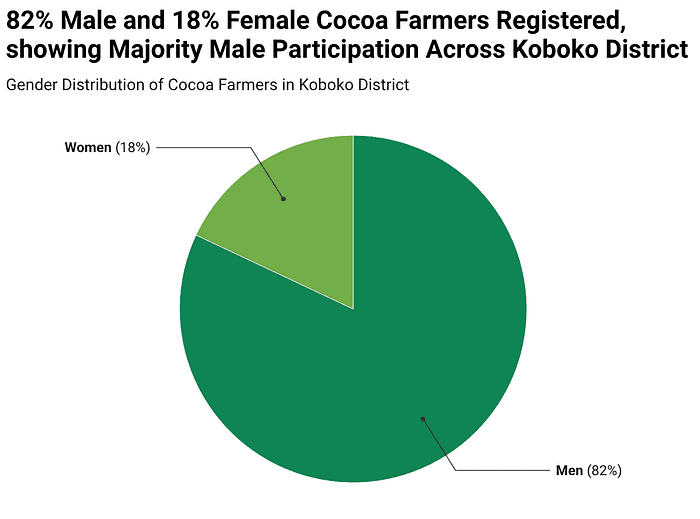
According to the reports from production department, three female and sixty eight male farmers grow cocoa in Koboko district
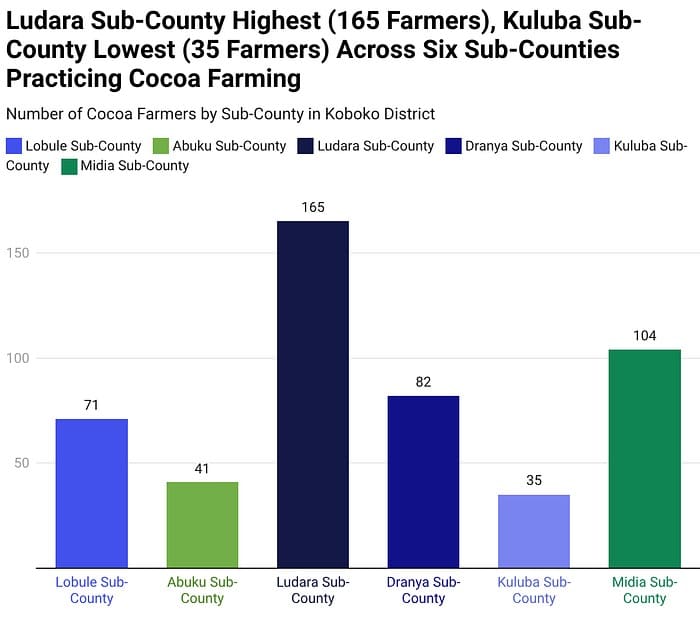
There are 573 cocoa farmers registered by the district though there are some individual farmers operating independently and progressively doing well. The district recorded 105 female farmers(18%) growing cocoa and 468 male farmers(82%) embracing cocoa farming.
Alege Wadri, the Koboko district environment officer says there are many benefits of consuming Cocoa as it is rich in antioxidants and low in hazardous sugar. This he says is critical in improving heart health, lowering blood pressure by boosting essential blood flow to the brains and other parts of the body.
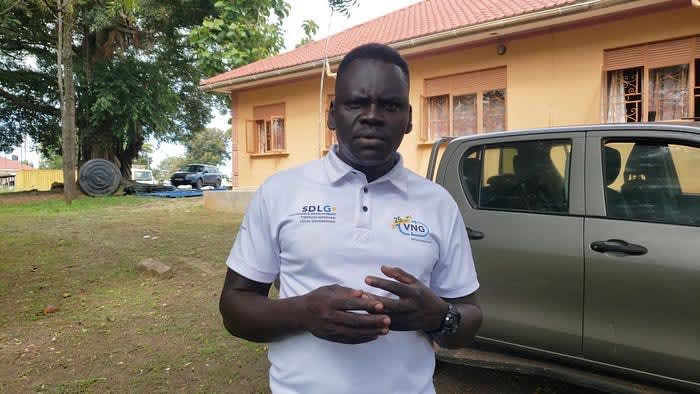
Alege Wadri, the Koboko district environment officer
First Cocoa Processing Plant
As production increases, the need for value addition is already being met by the establishment of the first cocoa factory, Kobo cocoa Ltd, in Media sub county Koboko district.
It is supporting farmers in Yumbe, Arua and Adjumani districts in Uganda, South Sudan and the Democratic Republic of Congo to produce more beans.
According to Natures Harvests, high-quality cocoa attracts premium prices on the World market. This is why mitigating the adverse impacts of Climate Change on the crop is top priority for both farmers and processers.
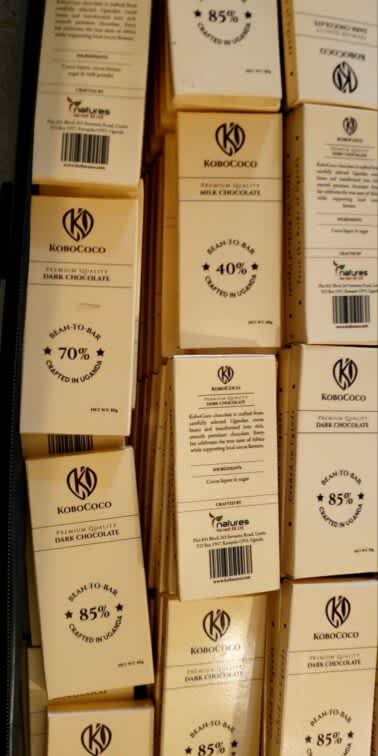
Chocolate products produced by Kobo cocoa ltd.
Across the district, farmers have been told to integrate shade trees in their plantations to provide additional products such as fruits, firewood, timber, and medicinal plants in the short term. These diversified income sources reduce financial risk during difficult seasons while improving soil fertility to support long-term productivity. For many families in Koboko district, cocoa helps transform vulnerability into real livelihoods opportunity.
Natures Harvests services all Cocoa farmers in West Nile through a digital platform as orders for climate-smart advisory and inputs flow through a common WhatsApp group called Natures harvest kk Ltd WESTNILE REGIONAL ONLINE COCOA PLATFORM. That’s not all.
A dedicated website www.natureshaverst.co.ug provides all the technical and practical information for beginners to integrate into the value chain. The agent goes to great length to answer some questions in local language, making vital agriculture information easily accessible, interesting and impactful for women and youth farmers to stay in the business.
This story was produced in partnership with the Media Challenge Initiative, InfoNile and Wiigot with support from Palladium.