


Hi, I am Anguzu, Radio Pacis AI Assistant. How can I help you today? Ask me about Radio Pacis, our programmes, frequencies, news, Arua, or the world around us.
5 June 2026 · Radio Pacis Newsroom
Eucalyptus Nursery Bed in Gulu district By Odong Stephen Gulu City Omel Sub-County in Gulu District has allocated UGX 1.5 million out of its UGX 47 million budget for the 2026/2027 financial year to establish a tree seedling nursery bed. The seedlings will be
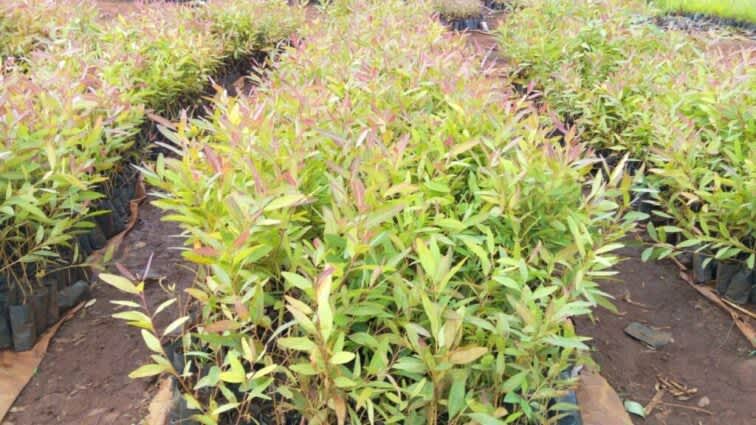
Eucalyptus Nursery Bed in Gulu district
By Odong Stephen
Gulu City
Omel Sub-County in Gulu District has allocated UGX 1.5 million out of its UGX 47 million budget for the 2026/2027 financial year to establish a tree seedling nursery bed. The seedlings will be distributed to communities in the six parishes of the sub-county to support reforestation efforts after years of forest destruction.
The LCIII Chairperson of Omel Sub-County, Hon. Vincent Ouma, says the council prioritized the project because of changing weather patterns caused by poor forest conservation. He says the sub-county believes massive tree planting is one of the best ways to address the environmental challenges affecting the area. According to Ouma, the council decided to establish a tree nursery so that free seedlings can be distributed to community members.
“As a sub-county, we came up with the idea of establishing a nursery bed so that we can start distributing tree seedlings to the community and encourage people to plant trees to replace the forests that were destroyed over the years. We also have some farmers in the community, especially those with the capacity, who have started planting trees on one to two hectares of land, which is a positive step towards restoring the environment. Most of us contributed to the destruction of the environment, and that is why there is now an ongoing effort to restore and replant trees,” said Ouma.
Innocent Kalokwera, the LC1 Secretary of Ogwari A Village, welcomed the initiative, saying it will help communities’ access free tree seedlings. He added that the program will complement the efforts of organizations such as Kijani, which are already providing different tree species to communities for environmental conservation.
“In most parts of our area, people have cut down many natural trees, so the best way to restore the environment is by planting new forests. That is why I believe this is a very good initiative to provide tree seedlings to the community. It is also one of the initiatives through which we are calling upon other organizations to come and support us, because many people are interested in tree planting but they do not have the capacity to do it on their own,” Kalokwera said.
Meanwhile, Bangken Glory appealed to residents of Omel Sub-County to prioritize tree planting instead of destroying forests. Glory emphasized the importance of protecting the environment and warned that continued deforestation could lead to serious future challenges in the area.
“I urge everyone to protect our environment, especially the trees we already have. We should stop the continuous cutting of trees because, if it continues, it may cause serious problems in our area in the future. It is also important to remember that whenever you cut down a tree, you should plant another one to replace it. This will help protect and sustain our environment,” Glory said.
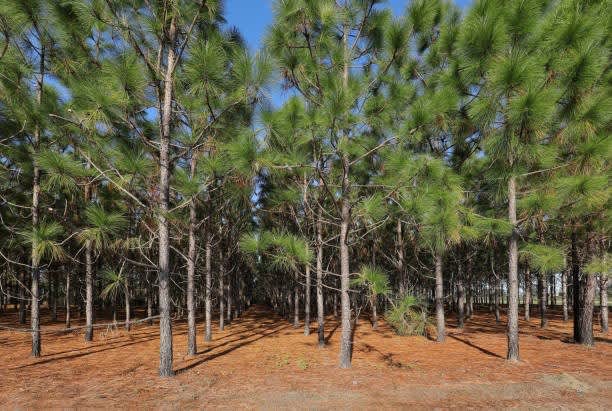
Pine garden of Vincent Oyet Kalik in Ogwari parish in Omel sub county Gulu district
Vincent Oyet Kalik, a resident of Ogwari A, welcomed the initiative, saying he is also playing a role in environmental conservation by preserving some of the natural tree species in his area while planting fast-growing trees such as pine. He explained that the trees will not only help conserve the environment and combat climate change, but will also provide income for his household once they mature and are sold.
However, he expressed concern that many people still do not fully understand the importance of preserving indigenous trees despite the growing effects of environmental degradation being witnessed in their communities.
“Sometimes when I advise people to stop the rampant cutting of trees, they ignore me and say that unlike their grandparents, they now need money and see trees only as a source of income. This mindset needs to change so that people can understand that cutting trees indiscriminately is harmful to the environment,” he said.
James Ocaka, the Gulu District Forest Officer, says that apart from the sub-county initiative, there is also an ongoing forest restoration project in Omel Sub-County. He says tree planting activities are being carried out along the Aswa River bank within 15 meters of the river buffer zone as part of environmental restoration efforts.
“That project is being implemented by the district with support from the Ministry of Water and Environment. We also have a component of distributing seedlings to communities, which is being carried out by a supplier contracted by the ministry. The exercise is ongoing, and communities are being given fruit tree seedlings to plant in their own areas,” Ocaka explained.
He added that there is also ongoing community sensitization across all sub-counties in Gulu District to educate residents about the dangers of deforestation and the benefits of tree planting.
“We are continuously creating awareness and sensitizing communities on the importance of protecting the environment. We want people to stop the practice of deforestation and instead embrace tree planting,” he said.
Gulu District has about 130,000 hectares (130 kha) of natural forest, covering roughly 11% of the district’s land area. It also has around 3,900 hectares (3.9 kha) of planted or non-natural tree cover, while only about 4% of the district had dense tree canopy coverage (above 30%) as of 2000.
Between 2001 and 2024, the district lost approximately 44,000 hectares of tree cover from non-fire causes, with additional losses caused by wildfires. In some years, annual forest loss reached nearly 988 hectares, generating an estimated 440,000 tons of carbon dioxide emissions.
The major causes of deforestation in Gulu include illegal logging, commercial charcoal burning, dry-season wildfires, and agricultural expansion for subsistence farming. These pressures have made Gulu one of the most affected districts in Northern Uganda for forest degradation and tree cover loss.