


Hi, I am Anguzu, Radio Pacis AI Assistant. How can I help you today? Ask me about Radio Pacis, our programmes, frequencies, news, Arua, or the world around us.
28 April 2026 · Radio Pacis Newsroom
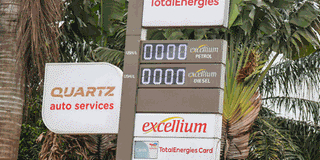
A blank fuel price board at Total Energies City Centre yesterday, April 23, 2026. The station had no fuel. PHOTO/MICHAEL KAKUMIRIZI DAILY MONITOR Government has launched investigations into Oil Marketing Companies suspected of hoarding fuel and charging exorbi
DAILY MONITOR
Government has launched investigations into Oil Marketing Companies suspected of hoarding fuel and charging exorbitant prices, even as officials insist national stocks remain sufficient.
The move follows mounting public complaints of dry pumps, rationing, and selective selling at petrol stations across Kampala, Wakiso, and upcountry towns, contradicting repeated assurances from the Ministry of Energy that supply is normal.
Dr. Patricia Litho, the Director of Communications at the Ministry of Energy, said while deliberate hoarding has not yet been confirmed, it remains a key line of investigation. “We suspect, but we cannot confirm. What we can confirm is that we supplied enough stock,” she said in an interview.
Government is now preparing enforcement action under the Petroleum Supply Act, with a closed-door meeting scheduled today, April 27, between the ministry and OMCs. The law allows government to revoke licenses, shut down operators, and even seize hoarded fuel.
But the Sustainable Energies and Petroleum Association of Uganda (SEPA Uganda), the umbrella body for licensed downstream oil marketers, has strongly rejected allegations of exploitation. In a statement issued Sunday, April 26, 2026, SEPA Uganda said claims that sector players are hoarding fuel, inflating prices, and engaging in cross-border smuggling are unfounded.
“SEPA Uganda strongly rejects these allegations. The downstream petroleum sector in Uganda operates within robust compliance frameworks, supported by internal controls and continuous monitoring to promote transparency and accountability,” the association said. It added that member companies operate under strict regulatory oversight and comply with all applicable laws, standards, and government directives.
SEPA Uganda noted that Uganda’s fuel supply is centrally coordinated by the Uganda National Oil Company (UNOC), and all official queries regarding national stocks, supply levels, and imports should be directed to UNOC.
The association attributed current pricing pressures, supply constraints, and isolated fuel shortages to disruptions in global oil markets driven by ongoing conflict in the Middle East, “and not deliberate actions by oil marketing companies.”
“SEPA Uganda reiterates its members’ firm commitment to ethical conduct, fair pricing, and uninterrupted service delivery. We remain focused on ensuring that fuel supply continues to support essential services, businesses, and communities across Uganda,” the statement read.
Official figures suggest Uganda is not facing a national shortage. As of April 21, government reported 70.5 million litres of petrol (19 days’ cover), 43.2 million litres of diesel (12 days), and 32 million litres of jet fuel (53 days).
Additional shipments, over 460 million litres combined, are expected between May and June, extending national fuel cover by several weeks.
Yet on the ground, the experience is starkly different. Motorists report stations running dry, while others remain operational but crowded, with long queues or restricted sales. In some areas, fuel appears to be available only to selected customers, such as boda boda riders or contracted clients. This mismatch has unsettled consumers and businesses, raising questions about where the fuel is going.