


Hi, I am Anguzu, Radio Pacis AI Assistant. How can I help you today? Ask me about Radio Pacis, our programmes, frequencies, news, Arua, or the world around us.
20 April 2026 · Radio Pacis Newsroom
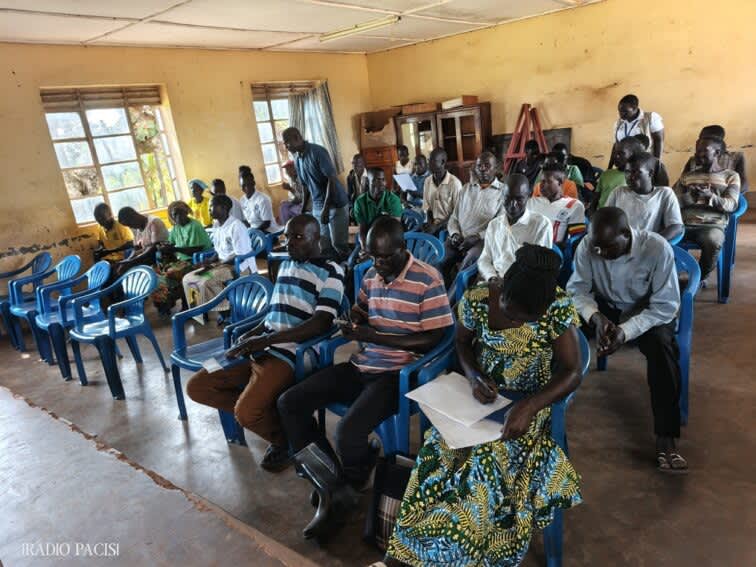
CEFORD officials, Arua district leaders and community members and leaders in Logiri during community barraza in Logiri sub-coiunty By Onzoma Albert Arua City A significant number of women in Logiri sub-county, Arua district, continue to deliver at home under t
By Onzoma Albert
Arua City
A significant number of women in Logiri sub-county, Arua district, continue to deliver at home under the care of traditional birth attendants (TBAs).
The main reasons cited include the long distances to health centers, lack of transportation and labor that progresses faster than expected.
Despite a national increase in facility deliveries, regional disparities and cultural preferences for Traditional Birth Attendants mean many mothers, especially those who are poor and uneducated, remain at high risk due to home births.
This concern was raised during a community Barraza organized by the Community Empowerment for Rural Development (CEFORD) under the project “Strengthening Civic Participation for Effective Accountability and Transparency in the Public Sector.”
The project funded by the Royal Danish Embassy Kampala is being implemented in Arua, Moyo, Obongi, Terego, and Madi Okollo districts, in partnership with the West Nile Regional Civil Society Network and Integrated Child Service Consult.
Phiona Drateru, the female councilor elect of Logiri North, attributes the challenge to the vastness of the sub-county, lack of ambulance services, and insufficient support. She urged the creation of more health centers to address this issue.
“It is not entirely their fault because they don’t have nearby health centers. The only health center this women use here is Logiri health center III which is very far for most of this women in Logiri. The health center serves parishes like Ciaba, Oliba, Okavu and Ezoo which are all vast” she said.
“I therefore appeal to the responsible authorities to at least upgrade Logiri health center III to health center IV status to serve our people better” Drateru added.
Fridah Lekuru, CEFORD’s project officer for governance, appealed to the community to not only report issues affecting them during such gatherings and but to relevant authorities and leaders in a timely manner.
“I want to urge the community members here to use the different structures within the communities to report such issues because we have trained them as community monitoring teams who are under IGG and report community issues related to grievances such that they don’t wait for such forums to report community challenges they are encountering” she said.
Dr Geoffrey Orijabo, the acting district health officer of Arua, acknowledged the issue, while he discouraged home births and appealed to community members to trust government-deployed professional health personnel.
“I request the community members to have trust in us the health workers because we need them, they need us and we are here to serve them. The community members always prefer going to traditional birth attendants first and come to us when they are defeated that side which is not something good and we are not encouraging that but they should instead trust us and come to us for proper services” he said.
Despite restrictions on TBA services, strong cultural reliance on them persists. Women in the lowest wealth brackets and those with little or no formal education are significantly less likely to deliver in health facilities. Home births often occur in non-sterile or contaminated environments and lack skilled attendants, increasing maternal and newborn mortality risks.
While facility delivery rates are improving in some districts of the region, home births remain a critical issue driven by poverty, infrastructure gaps and deeply rooted cultural beliefs.