


Hi, I am Anguzu, Radio Pacis AI Assistant. How can I help you today? Ask me about Radio Pacis, our programmes, frequencies, news, Arua, or the world around us.
13 March 2026 · Radio Pacis Newsroom
Agricultural officers during recent engagement with the farmers in West Nile region in Arua city (Photo by Onzoma Albert) By Onzoma Albert Arua Agro-Input Dealers, NGOs, and farmers in West Nile region are calling on the government to urgently enhance agricult
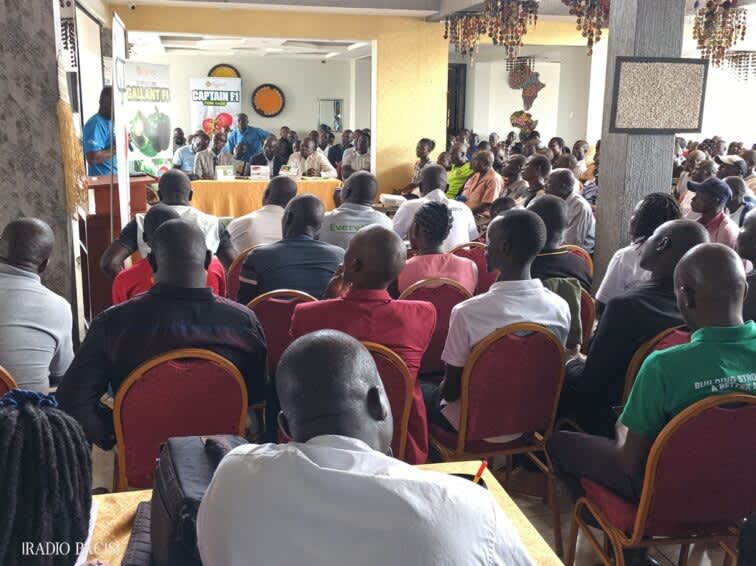
Agricultural officers during recent engagement with the farmers in West Nile region in Arua city (Photo by Onzoma Albert)
By Onzoma Albert
Arua
Agro-Input Dealers, NGOs, and farmers in West Nile region are calling on the government to urgently enhance agricultural extension and veterinary services to address critical productivity gaps, disease management, and adoption of modern farming techniques.
The main concerns focus on improving farmers’ access to technical advice, livestock health products and training to promote higher yields and better knowledge of contemporary practices.
Currently, government provides about 58% to 63% of extension services across all local governments demanding increased private sector involvement to fill remaining gaps.
Sabit Andeoye, working with Christian-based organization African Evangelistic Enterprise Uganda highlighted the scarcity of agricultural extension workers, covering vast areas and leaving many farmers underserved.
“One person riding in all these distances and districts and yet we have 365 days in a year. How much can such a person do? When we were still growing we used to have very strong extension services but I do not know what has happened. If the funds have reduced it should be revived back and must as well applies to the area of veterinary services, please consider the area of extension service to see into it that it is addressed” he said.
Francis Abiriga, the district Agriculture Officer of Madi Okollo, acknowledged the concern, urging Agro-Input Dealers to assist in delivering extension and veterinary services, especially at their outlets, as the government works to improve the situation.
“As government our capacity is very thin regarding agricultural extension services where you only find one person per sub-county and I want to encourage agro-put dealers to not only sell inputs but as you sell the inputs give that little advisory service to the farmers as well that will complement our efforts as government” he said.
Dr. Willy Nguma, the district Production Officer of Arua, noted that Uganda’s national extension policy permits private-public partnerships, urging private sector players to bridge extension and veterinary service gaps.
“There is a gap which must be filled by the private sector because they place very big role in provision of agricultural extension services. I want to as well implore agro-input dealers and non-governmental organizations working with us to come and back the extension services in any agro-input they are dealing in” he said.
Stakeholders emphasized that government should not only provide information but also link extension and veterinary services with agricultural inputs like improved seeds and breeds.
Training more extension staff will help address high agent-to-farmer ratios and improve skills in modern, climate-smart agriculture, and ICT use.
Agro-Input Dealers, NGOs, and other stakeholders stress that these improvements are essential for fostering sustainable agricultural development and increasing productivity in the region.