


Hi, I am Anguzu, Radio Pacis AI Assistant. How can I help you today? Ask me about Radio Pacis, our programmes, frequencies, news, Arua, or the world around us.
25 June 2026 · Radio Pacis Newsroom
Gulu city HIV focal point person Florence Amito sharing the statistic on the PrEP uptake at GRRH as Dr Stella Marry Ayo the in charge of Bardege health centre iii seated listening. By Odong Stephen Gulu City Despite continued government efforts to provide HIV
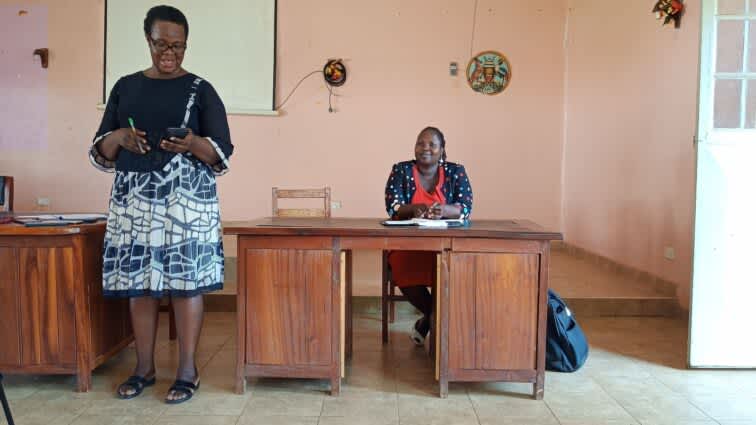
Gulu city HIV focal point person Florence Amito sharing the statistic on the PrEP uptake at GRRH as Dr Stella Marry Ayo the in charge of Bardege health centre iii seated listening.
By Odong Stephen
Gulu City
Despite continued government efforts to provide HIV prevention services to end HIV/AIDS by 2030, health experts in Gulu City have expressed concerns over the low uptake of Pre-Exposure Prophylaxis (PrEP), a medication taken by HIV-negative individuals who are at high risk of contracting HIV.
Data from Gulu Regional Referral Hospital on Oral PrEP uptake between April and May 2026 shows varying levels of enrolment across age groups. Among those aged 15–19 years, 11 people enrolled in April compared to 13 in May. For the 20–24 age group, enrolment increased from 33 in April to 51 in May. Among people aged 25–29 years, uptake declined from 88 in April to 79 in May, while the 30–34 age group recorded a drop from 61 to 53.
The 35–39 age group registered an increase from 44 in April to 49 in May. Uptake among people aged 40–44 years rose slightly from five to six, while those aged 45–49 years decreased from three to two. No individuals aged 50 years and above were recorded as having enrolled for PrEP during the two-month period.
According to Gulu City HIV Focal Person Florence Amito, the figures do not necessarily mean that people aged 50 years and above are not accessing HIV prevention services.
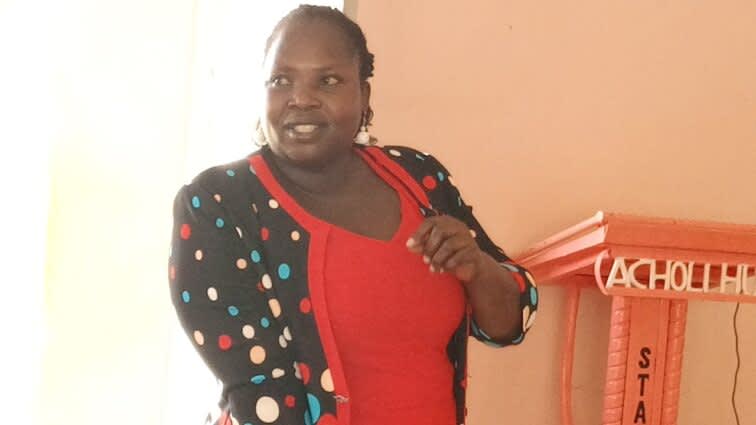
Dr Stella Marry Ayo senior medical officer in charge Bardege Health centre III.
At Bardege Health Centre III, data from January to March 2026 indicates that 114 people were assessed for PrEP during the first quarter of the year, but only 52 were enrolled. Of those enrolled, five were breastfeeding mothers at risk of HIV infection, 34 were pregnant women, and nine belonged to other risk categories, according to the facility’s in-charge, Dr. Stella Mary Ayo a senior medical officer in charge Bardege Health centre III.
Dr. Ayo said Bardege Health Centre III serves a population of 17,052 people and records between 1,000 and 1,400 outpatient visits every month. She noted that the facility continues to register new HIV infections despite the availability of preventive services.
“The enrolment of only 52 people on PrEP in the first quarter is still a very small number because we continue to register new HIV-positive cases. I would like to call upon people who are at risk of HIV acquisition to come and access PrEP as a preventive measure so that we can reduce new HIV infections,” Dr. Ayo said.
Health experts warn that new HIV infections could increase if more people do not embrace PrEP. Statistics from January to March 2026 show that Gulu City alone registered 480 new HIV infections.
The concern was raised during a Health Café for journalists organized by the Health Journalists Network Uganda, with support from HEPS-Uganda.
Dr. Ayo said Oral PrEP is readily available at various health facilities, but only a small number of people are utilizing the service. She urged residents to visit health centres, including Bardege Health Centre III and Gulu Regional Referral Hospital, to access PrEP and reduce their risk of HIV infection.
“People should take steps to prevent HIV infection. Statistics show that new infections still occur, and Pre-Exposure Prophylaxis can help. If you believe you may be at risk of acquiring HIV, please come for these free services because PrEP is available at health facilities and can help prevent HIV infection,” she said.
Dr. Ayo added that the facility regularly conducts health education sessions and risk assessments before enrolling individuals on PrEP.
Meanwhile, Florence Amito emphasized that while PrEP is highly effective in preventing HIV infection, it does not protect against other sexually transmitted infections (STIs) or unintended pregnancies. She urged users to take the medication consistently and according to medical guidance to achieve maximum protection.
Amito noted that Oral PrEP can reduce the risk of acquiring HIV through sexual contact by up to 99 percent when taken correctly.
“If you find yourself repeatedly using Post-Exposure Prophylaxis (PEP), you should consider transitioning to PrEP. Don’t allow ignorance to put you at risk because one mistake can change the course of your life. Do not be afraid of what others may say when they see you taking PrEP; you are protecting your own life,” she said.
Amito explained that before an individual is enrolled on PrEP, several medical assessments are conducted, including HIV testing to confirm that the person is HIV-negative. Additional tests are performed to assess liver and kidney function before treatment begins.
She cautioned residents against purchasing PrEP from private pharmacies without proper medical supervision.
“Some pharmacies in Gulu City may be selling PrEP, but they cannot provide the necessary tests and assessments required before enrolment. I urge people to avoid obtaining these drugs without proper medical guidance and prescriptions from qualified health workers,” Amito said.
Susan Kipwola, a trained peer educator who has been using PrEP since 2023, said the medication has helped her protect herself from HIV infection.
“Many people still lack awareness because some believe government health programmes are intended to harm them. However, this is not true. These programmes are designed to protect people from infections and other health risks. It is also important for the public to understand that HIV is not transmitted only through sexual intercourse; contact with infected blood can also lead to infection. Preventive measures such as PrEP are therefore important in reducing the risk of HIV transmission,“ Kipwola said.
Statistics from January to March 2026 indicate that Gulu City has a total of 22,439 people living with HIV. During the same period, 480 new HIV infections were recorded, and 96 percent of those diagnosed were successfully linked to care and treatment services.
The data further shows that 7,637 males and 14,802 females are living with HIV in Gulu City.
Uganda’s national HIV prevalence rate stands at 7 percent, while Gulu City’s prevalence rate is higher at 9 percent. Health officials believe this rate can be reduced if more people embrace preventive measures such as PrEP to protect themselves from HIV infection.