


Hi, I am Anguzu, Radio Pacis AI Assistant. How can I help you today? Ask me about Radio Pacis, our programmes, frequencies, news, Arua, or the world around us.
25 June 2026 · Radio Pacis Newsroom
Gulu town primary seven school girls pose for a photo after receiving pads. (Biko Rombe) By Biko Rombe Gulu City Menstruation is natural, not a disease. It should never stop a girl from attending school, sitting examinations, or pursuing her dreams. That was t
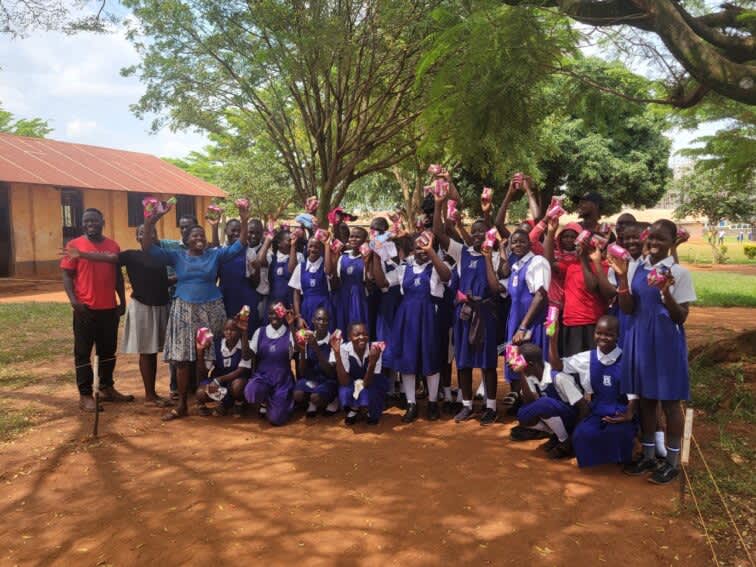
Gulu town primary seven school girls pose for a photo after receiving pads. (Biko Rombe)
By Biko Rombe
Gulu City
Menstruation is natural, not a disease. It should never stop a girl from attending school, sitting examinations, or pursuing her dreams.
That was the central message delivered to 49 Primary Seven candidates at Gulu Town Primary School on Friday, June 19, during a menstrual health outreach organized by Northern Ugandans on X in partnership with Venice Women’s Initiative.
The outreach combined menstrual health education, mentorship, and the donation of sanitary materials aimed at ensuring girls remain in school throughout their menstrual cycles.
During interactive sessions, public health specialists and community volunteers tackled common myths surrounding menstruation, encouraged open discussions among both girls and boys, and emphasized the importance of menstrual hygiene management.
Speaking to the learners, Oboma Samuel of Venice Women’s Initiative explained that menstruation is a normal biological process that should not be viewed as an act of shame.
“Menstruation is natural and every girl will go through it. It is not a sickness, and it should never be a reason for girls to miss school or feel embarrassed,” he said.
Samuel addressed several misconceptions commonly associated with menstruation. He challenged the belief that girls should stay home during their periods, stressing that menstruation should not interfere with education when proper support and hygiene materials are available.
He also dispelled myths suggesting that menstrual pain can be cured through sexual activity or that menstrual blood is dirty.
“Menstrual blood is not dirty or poisonous. Menstruation is part of the body’s natural reproductive process,” he explained.
The facilitator further encouraged boys to learn about menstruation so they can support their sisters and classmates instead of teasing or stigmatizing them.
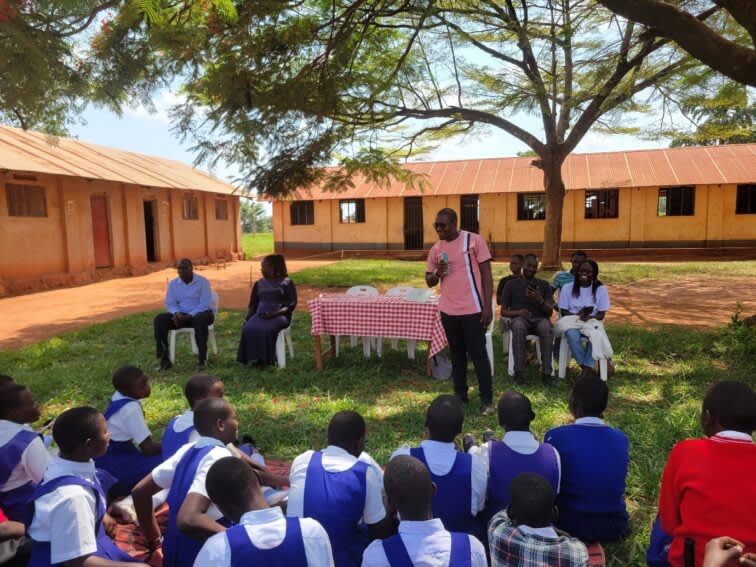
Kasozi Osborn Ismail addressing p.7 pupils at gulu town pri. school
Public Health Specialist Kasozi Osborn Ismail reinforced the message by teaching learners about menstrual hygiene practices, including the proper use of sanitary pads, regular bathing, changing pads every four to six hours depending on flow, handwashing after changing pads, and the safe disposal of used sanitary products.
“We need to use clean sanitary pads, maintain good hygiene, and remember that periods should never stop our dreams,” Kasozi told the pupils.
He urged boys to respect and support girls during menstruation, noting that understanding menstruation helps create a more inclusive and supportive learning environment.
The outreach also created space for pupils to ask questions about menstruation, puberty, reproductive health, and personal hygiene. Learners actively participated in discussions on menstrual cycles, signs and symptoms of menstruation, and practical ways to manage menstrual discomfort.
Head Girl Atem Sharon Chioma said the session helped girls gain confidence and practical knowledge.
“I learned that when you have menstrual pain, you can use warm water or a hot water bottle to help reduce the discomfort,” she said.
Teachers at the school welcomed the initiative, noting that lack of menstrual products remains one of the reasons some girls miss classes.
Adoch Margaret Latigo, the head teacher at gulu town primary School who attended the outreach, described the session as life-changing for many learners.
“The education they have given our girls is very important because some girls fear menstruation and stay at home. This knowledge will help them understand that menstruation is normal and that they can continue attending school,” she said.
Latigo noted that many schools struggle to provide adequate sanitary supplies, often relying on a few packets of emergency pads each term.
Similarly, Senior Woman Teacher Barbara Okuli emphasized that girls should not miss lessons because of their periods.
“We encourage girls to report to female teachers whenever they need support. Menstruation is not sickness and should not stop anyone from learning,” she said.
Beyond the classroom discussions, the outreach culminated in the donation of menstrual hygiene materials to support vulnerable learners.
Northern Ugandans on X and Venice Women’s Initiative donated six cartons of Lucky Girl sanitary pads and eight dozen knickers to support Primary Seven girls at Gulu Town Primary School.
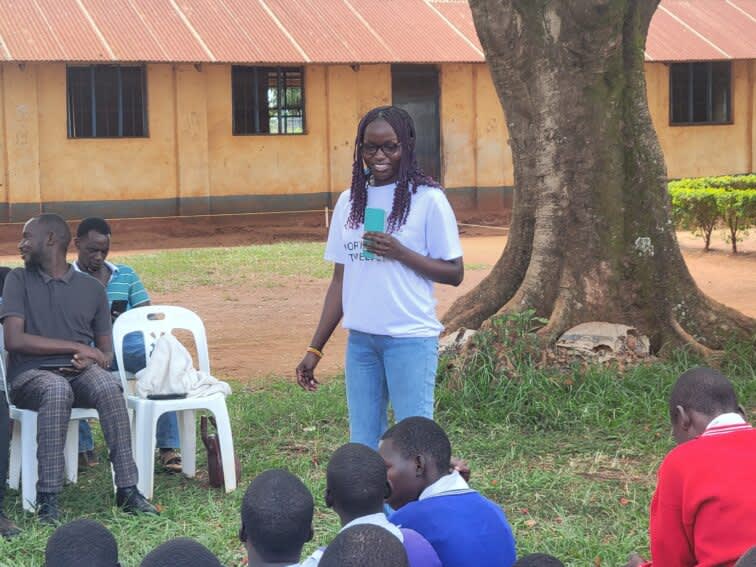
Agenorwot Linnet addressing pupils during the education session
Speaking during the event, Agenorwot Linnet Komakech, Coordinator for Education at Northern Ugandans on X, said the initiative was inspired by concerns that some girls miss classes and examinations due to a lack of menstrual supplies.
“We chose Gulu Town Primary because it is a UPE school, and we have often heard concerns that some girls miss exams because they do not have sanitary pads. When a girl lacks pads, she may fear coming to school because of the possibility of staining her uniform,” she said.
Linnet explained that members of Northern Ugandans on X, a community formed through the social media platform X (formerly Twitter), pooled resources to purchase the donated items.
“We first planned to provide pads, but after consulting the school administration, we learned that some girls also needed underwear. That is why we added knickers to the donation,” she said.
She emphasized that the group’s mission extends beyond online advocacy.
“We want our impact to be felt on the ground, not only on social media. We organize community outreaches to schools, hospitals, and other vulnerable groups because we believe meaningful change happens when we directly engage with people.”
Komakech noted that the outreach is part of a broader community engagement programme that has previously supported patients at Awach Health Centre and is planning future interventions in other districts, including Lira.
She also welcomed support from individuals interested in contributing to similar initiatives.
“Our doors are open. Anyone who wants to support or join us is welcome because our goal is to reach more people across the community,” she said.
The outreach concluded with a call for continued investment in menstrual health education, mentorship, and access to sanitary products to ensure that no girl misses school because of her period.
For many of the learners, the event delivered more than sanitary supplies. It provided knowledge, confidence, and reassurance that menstruation is a normal part of life—and that with the right support, it should never stand in the way of education.