


Hi, I am Anguzu, Radio Pacis AI Assistant. How can I help you today? Ask me about Radio Pacis, our programmes, frequencies, news, Arua, or the world around us.
6 June 2026 · Radio Pacis Newsroom
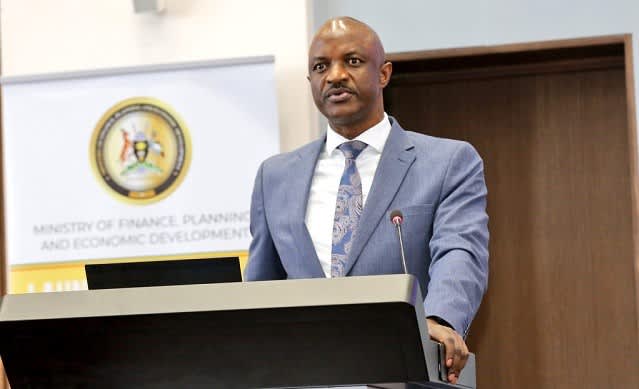
PS Ggoobi Ramathan announcing the decision (Courtesy) By Martin Anguyo Arua City A section of the public in the West Nile sub-region has expressed mixed reactions following the government’s decision to discontinue funding for national public holiday celebratio
By Martin Anguyo
Arua City
A section of the public in the West Nile sub-region has expressed mixed reactions following the government’s decision to discontinue funding for national public holiday celebrations and redirect the resources toward development priorities.
The policy shift was recently announced by Ramathan Ggoobi, the Permanent Secretary and Secretary to the Treasury at the Ministry of Finance.
Under the new directive, government funding for public functions commemorating national holidays—including Liberation Day, Janani Luwum Day, International Women’s Day, Labour Day, Martyrs’ Day, Heroes Day and Independence Day—will cease beginning in the 2026/2027 financial year.
The move has sparked debate among residents, with some welcoming it as a prudent measure to enhance service delivery, while others fear it could reduce the visibility of important social causes.
Siyam Bairu, a women’s rights advocate, argues that the cancellation of public commemorations—particularly International Women’s Day celebrations—could have far-reaching implications for women, especially those living with disabilities.
“Such events have traditionally provided an important platform for advocacy, awareness creation and the amplification of issues affecting vulnerable groups. Without these gatherings, opportunities to highlight the challenges facing women and persons with disabilities may become increasingly limited” she said.
However, Adiga Lawrence Ozubia supports the government’s decision, saying resources previously allocated to organizing national celebrations could be better invested in addressing pressing infrastructural challenges across the country.
“Redirecting the funds toward sectors such as roads, health services, education and other critical development projects could yield more tangible benefits for citizens” he said.
For years, the government has organized large-scale public ceremonies in different districts to mark national holidays. These events often required substantial expenditure on mobilization, protocol arrangements, transport, security, tents, public address systems, entertainment and allowances.
The latest policy reflects a broader effort by government to rationalize public spending and priorities development projects. While supporters view the move as a step toward fiscal discipline and improved service delivery, critics maintain that national commemorations play a vital role in promoting civic engagement, national identity and social inclusion.
As implementation of the directive approaches, the debate continues to highlighting the delicate balance between preserving national traditions and addressing the country’s growing development needs.