


Hi, I am Anguzu, Radio Pacis AI Assistant. How can I help you today? Ask me about Radio Pacis, our programmes, frequencies, news, Arua, or the world around us.
19 July 2026 · Radio Pacis Newsroom
Remains of dead bat found next to Bugema University Arua Campus. By Dramadri Federick Arua City Researchers at Muni University have dismissed claims linking the recent deaths of bats in parts of West Nile Sub region to a possible Ebola outbreak, warning that s
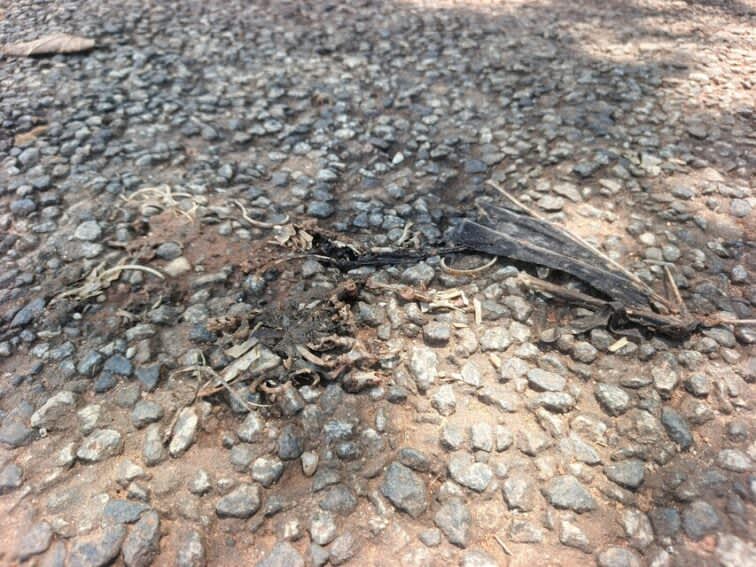
Remains of dead bat found next to Bugema University Arua Campus.
By Dramadri Federick
Arua City
Researchers at Muni University have dismissed claims linking the recent deaths of bats in parts of West Nile Sub region to a possible Ebola outbreak, warning that such speculation lacks scientific evidence and risks creating unnecessary public fear during disease outbreaks.
The clarification follows reports in June this year, at the height of Uganda’s Ebola outbreak, when members of the Arua City Ebola Taskforce raised concern after several dead bats were discovered around the Arua Golf Course and the City Health Department premises. The incidents quickly fuelled rumours among sections of the public that the bats had succumbed to the Ebola virus and could be spreading the disease.
However, scientists at Muni University say there is no scientific basis for drawing such conclusions without laboratory investigations.
The research team, led by Dr. Imran Ejotre, Director of the Ecological Health Research Laboratory at Muni University, together with Mr. Anguyo Dennis Foe, Senior Laboratory Technician, and Mr. Adiga Kassim, Laboratory Technician, has been conducting extensive studies on bat ecology, wildlife diseases, and zoonotic disease surveillance in the West Nile region.
According to Dr. Ejotre, bats are among the most studied mammals because they naturally host a wide range of viruses. However, the presence or death of bats should never automatically be interpreted as evidence of an Ebola or any disease outbreak.
“The sudden death of bats alone is not evidence of Ebola virus disease. Wildlife mortality can result from many causes, including environmental stress, poisoning, and disease affecting bats themselves, old age, climate events or habitat disturbance. Determining the cause requires proper scientific investigation and laboratory testing,” Dr. Ejotre explained.
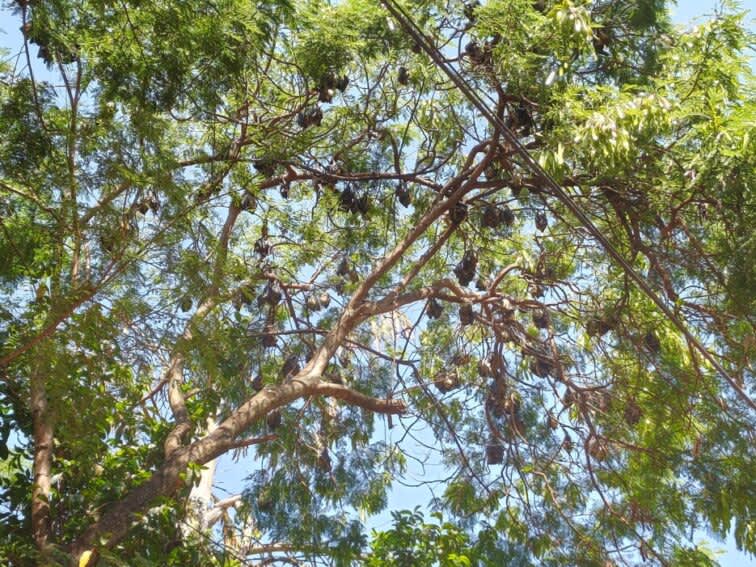
Live Eidolon helvum bats sighted hanging on a tree at Arua Golf course.
Dr. Ejotre noted that the most common bat species found in West Nile sub regions are the African straw-coloured fruit bat (Eidolon helvum) and several species of insect-eating bats.
He explained that extensive surveillance conducted by the laboratory has repeatedly screened these bats for Ebola virus, Marburg virus and other zoonotic pathogens.
“We have been capturing bats because they’re loud, they’re big. They have been screened for Ebola, Marburg and all these other viruses, we found that they are free, they don’t carry Ebola. So the suspicion that these bats are dying because of Ebola is a false one because if it was their natural host they would fly”. Imran explained
The researchers emphasize that while some bat species elsewhere in Africa have been associated with filoviruses the virus family that includes Ebola and Marburg not every bat species carries these viruses. Uganda is home to about 98 bat species, each with different ecological characteristics and disease profiles.
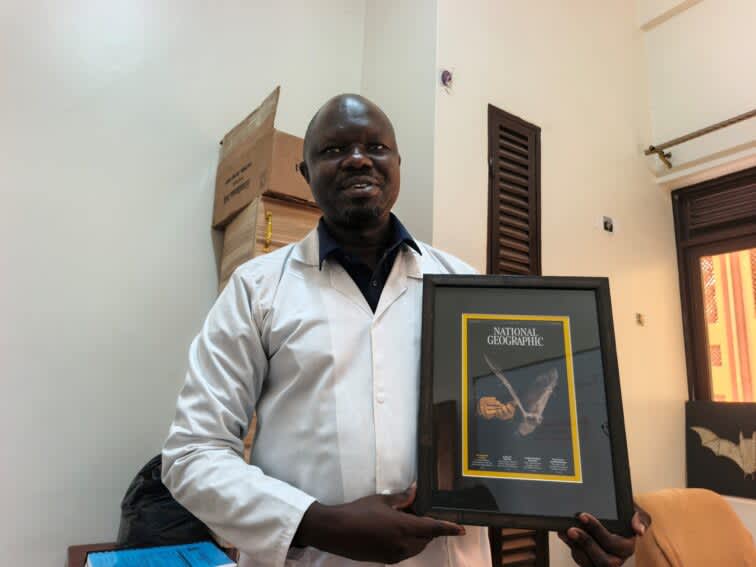
Dr. Imran Ejotre, Director of the Ecological Health Research Laboratory at Muni University showing one of the International recognition awards.
Established in 2017, the Ecological Health Research Laboratory at Muni University has become one of Uganda’s leading centers for research on wildlife ecology, biodiversity conservation and emerging infectious diseases.
The laboratory carries out continuous surveillance by identifying bat species, collecting biological samples, and testing wildlife for viruses that have the potential to spill over into humans or livestock. This work supports Uganda’s early warning systems for emerging infectious diseases and contributes to international research collaborations on zoonotic diseases.
The researchers say current monitoring has not identified any unusual viral activity among the fruit bats commonly observed in West Nile.
“We continue to closely monitor bat populations in the region,” Dr. Ejotre said. “At the moment, there is no scientific evidence suggesting that the fruit bats people see in our communities pose an Ebola threat.”
The researchers also pointed to increasing habitat destruction as one of the biggest challenges facing bat populations.
Deforestation, bush burning, urban expansion, and agricultural activities are destroying natural roosting sites, forcing bats to seek shelter in buildings and feed in fruit orchards located close to human settlements. This increased interaction raises the likelihood of contact between humans and wildlife.
Dr. Ejotre warned that continued destruction of natural ecosystems could increase the risk of future disease emergence.
“We must desist from destroying the habitats of wild animals and disrupting ecological systems. Human beings depend on healthy ecosystems for their own survival. As wildlife habitats disappear and species become stressed or displaced, the opportunities for new diseases to emerge and spill over into humans may increase.”
Although the researchers dismissed claims that the recent bat deaths were linked to Ebola, they cautioned members of the public against touching or handling dead bats.
Like many wild animals, bats can carry a variety of bacteria, fungi and viruses that may pose health risks if proper precautions are not taken.
“Whenever dead bats are found, people should avoid direct contact. Those responsible for handling or disposing of them should wear gloves, facemasks and protective clothing, or better still notify the relevant authorities so the animals can be handled safely using recommended scientific procedures,” Dr. Ejotre advised.

Dr. Imran Ejotre, Director of the Ecological Health Research Laboratory at Muni University (Right), Mr. Anguyo Dennis Foe, Senior Laboratory Technician,(Left) and Mr. Adiga Kassim, Laboratory Technician(Centre) who worked on the research.
While bats are recognized as natural reservoirs for several zoonotic pathogens, researchers stress that being a reservoir does not mean an animal is constantly spreading disease. In most cases, viruses circulate naturally within wildlife populations without causing illness to the animals themselves. Human infection typically requires a specific chain of events involving close exposure to infected animals, contaminated bodily fluids, or intermediate hosts.
The Muni University researchers therefore urge the public to rely on verified scientific information during disease outbreaks and to report unusual wildlife deaths to veterinary authorities, wildlife officers or public health officials instead of spreading rumours or attempting to investigate the animals themselves.
They say strengthening surveillance, conserving wildlife habitats and improving public awareness remain the most effective strategies for preventing future zoonotic disease outbreaks while protecting Uganda’s biodiversity.
Scientists estimate that there are more than 1,400 bat species worldwide, making bats nearly one-quarter of all known mammal species. Uganda alone hosts approximately 98 species, reflecting the country’s rich biodiversity.