
Hi, I am Anguzu, Radio Pacis AI Assistant. How can I help you today? Ask me about Radio Pacis, our programmes, frequencies, news, Arua, or the world around us.
23 May 2026 · Radio Pacis Newsroom
DAILY MONITOR The opposition National Unity Platform (NUP) has petitioned the Director of Public Prosecutions (DPP), Lino Anguzu, over the state’s continued failure to transfer the case files of approximately 40 political supporters from military courts to civ
DAILY MONITOR
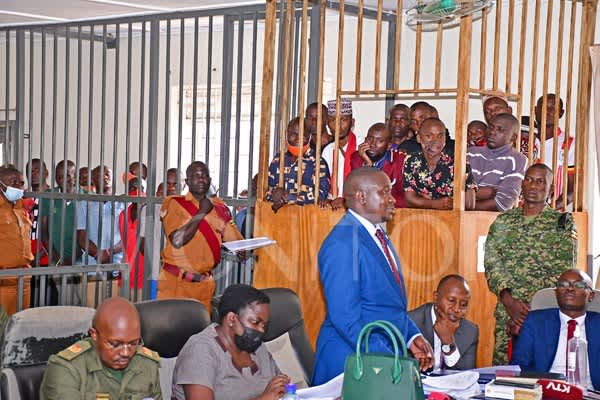
The opposition National Unity Platform (NUP) has petitioned the Director of Public Prosecutions (DPP), Lino Anguzu, over the state’s continued failure to transfer the case files of approximately 40 political supporters from military courts to civilian jurisdictions.
The petition comes despite a landmark January 31, 2025, Supreme Court ruling that strictly barred the trial of civilians in the General Court Martial (GCM).
According to Africa’s youngest opposition party, the DPP’s office has either intentionally refused or failed to execute the apex court’s directives. This legal gridlock has left dozens of opposition detainees languishing behind bars without clear judicial recourse, sparking intense condemnation from human rights defenders and legal experts.
A legal tug-of-war
The affected NUP supporters were arrested in a series of state crackdowns between 2021 and 2023. Initially arraigned before the GCM in Makindye, they were charged with the unlawful possession of firearms—a charge frequently leveled against opposition activists in Uganda. The state later amended the charge sheets to include the capital offense of treachery.
For these detainees and their families, hopes for freedom surged following the Supreme Court’s definitive ruling in the case of Attorney General vs. Boxing Day icon and former lawmaker Michael Kabaziguruka. The highest court in the land affirmed that military courts lack the jurisdiction to try civilians, ordering an immediate cessation of such trials.
However, the political landscape shifted dramatically less than four months later. In May 2025, Parliament—predominantly controlled by the ruling National Resistance Movement (NRM)—passed the controversial UPDF Amendment Act, 2025. The legislation effectively diluted the Supreme Court’s ruling, reopening the military court doors for civilians under specific, broadly defined circumstances. Legal activists immediately condemned the bill, labeling it a direct tool for the “weaponization” of the country’s justice system.
NUP demands accountability
In a formal petition submitted to the DPP on May 18, 2026, NUP Secretary General David Lewis Rubongoya fiercely critiqued the state’s prosecuting authority. He noted that the prolonged detention and failure to transfer the files violate the foundational constitutional principles of a fair and speedy hearing.Rubongoya demanded that the DPP drop all charges against the individuals due to gross violations of their fundamental human rights. He added that NUP leadership is ready to meet with the DPP’s office immediately to resolve the impasse in the public interest.
Furthermore, Rubongoya raised alarm over alleged institutional manipulation. He claimed NUP had received credible reports that detainees are currently being approached by officials of the newly reconstituted General Court Martial. These officials are allegedly coercing prisoners to sign fresh statements falsely indicating that their alleged offenses were committed in 2026—an apparent move to retroactively align their cases with the newly passed UPDF Amendment Act of 2025.
“The continued failure of the DPP’s office to comply with the Supreme Court’s explicit orders is neither justified nor justifiable,” Rubongoya emphasized. “No matter their political opinion or the gravity of the accusations against them, these citizens remain presumed innocent since they have not been convicted by any competent court.”
DPP, State actors respond
When contacted for comment, the state confirmed receipt of the opposition’s grievances but remained tight-lipped regarding the administrative delay.
Ms. Jacquelyn Okui, the Public Relations Officer at the DPP’s office, confirmed that the petition was officially received at their registry on May 20, 2026.
“This complaint was received at our registry yesterday. It is being processed through the normal complaint handling protocols in the DPP’s office. It will be addressed, and feedback will be provided to the complainant,” Ms. Okui stated, declining to comment further on the specific status of the detainees’ files.
“A captured Judiciary”
The prolonged detention of political prisoners without trial has attracted mounting criticism from opposition leaders, legal scholars, and civil society groups. Critics argue that the practice undermines constitutional guarantees, erodes public trust in the third arm of government, and reflects a deepening reliance on state institutions to suppress political dissent.
Speaking to Monitor, Mr. George Musisi, one of the lead defense lawyers representing the NUP detainees, expressed deep frustration with the current legal bottleneck. He revealed that defense teams have exhausted multiple avenues—appealing to the High Court and writing formal letters to the DPP, the Attorney General (AG), and the Principal Judge—only to face systemic brick walls.
“We believe the Attorney General failed or refused to advise his clients [the government and the military] to comply with transferring civilian files from the military court to ordinary courts,” Musisi said.
“If the decision of the highest court of the land can be disrespected, it speaks to a weaponized criminal justice system used for political reasons, where they use the law purely for the purposes of punishment.”
Musisi called on the judiciary to re-embark on its path of independence and deliver justice without state manipulation, reminding judicial officers that they hold a sacred duty to bring the Constitution to life to check state abuse and oppression.
Echoing Musisi’s sentiments, the Vice President of the Uganda Law Society (ULS), Mr. Anthony Asiimwe, strongly blamed the state for violating the prisoners’ constitutional right to a fair hearing.
Asiimwe disclosed that the ULS had previously written to the Attorney General, the DPP, the head of the judiciary, and the Commissioner General of Prisons seeking the specific details and files of civilians currently stuck in military courts to provide individual legal remedies. Like the NUP lawyers, the law society received no response from any of the state bodies.
“Right now, it’s very difficult for members of the public to have trust in the judiciary; it is under capture,” Asiimwe stated bluntly. “When you look at the Constitution, the judiciary is an independent, co-equal arm of government. It is time for them to wake up and exercise that independence.”
The ULS Vice President also took aim at the judiciary’s heavily promoted plea-bargain campaign—a program designed to reduce prison backlog by encouraging accused persons to plead guilty in exchange for lighter sentences. Asiimwe warned that the program is being weaponized against political detainees, stating that many individuals are being coerced into accepting trumped-up charges for crimes they never committed just to escape the harsh conditions of military detention.
The list of the 40 detainees NUP presented to the DPP
1. Yasin Sekitoleko, Kitalya Prison since 2021
4. Sharif Kalanzi, Kitalya Prison since 2021
2. Musa Kavuma, Luzira Upper Prison since 2021
5. Arthur Ndawula, aka Ghetto King, Luzira Upper Prison since 2021
3. Abdallah Gibisiwa, Kitalya Prison since 2021
6. Joseph Muwonge, Kitalya Prison since 2021
7. Faizal Miti, Luzira Upper Prison since 2021
8. Stuart Lugendo, Luzira Upper Prison since 2021
9. Anthony Agaba aka Bobi Young, Luzira Upper Prison since 2024
10. Emma Kato Umar, Luzira Upper Prison since 2021
11. Robert Wamala, Luzira Upper Prison since 2021
12. Godfrey Agodri, Kigo Prison since 2021
13. Jimmy Galukande, Kitalya Prison since 2021
14. Sylvester Matovu, Luzira Upper Prison since 2021
15. Tonny Ssekayombya, Luzira Upper Prison since 2021
16. Tonny Sseguya, Luzira Upper Prison since 2021
17. Joram Gamwesi, Luzira Upper Prison since 2021
18. Paul Lyamulyemye, Luzira Upper Prison since 2021
19. Issa Kizito, Kigo Prison since 2021
20. Frank David Ssemwogerere, Luzira Upper Prison since 2021
21. Alex Bogere, Luzira Upper Prison since 2021
22. Kassim Kibirango, Luzira Upper Prison since 2021
23. Benon Kiseka, Luzira Upper Prison since 2021
24. Abdallah Faisal Kintu, Kitalya Prison since 2021
25. Julius Mulinda, Luzira Upper Prison since 2021
26. Patrick Mwase, Kitalya Prison since 2021
27. Muhammad Nyanzi, Luzira Upper Prison since 2021
28. John Masembe, in Luzira Upper Prison since 2021
29. Mawazi Kagere, in Kitalya Prison since 2021
30. Yosia Twahili, in Kitalya Prison since 2021
31. Angulibo Siragi, in Kigo Prison since 2023
32. Hamza Andama, in Kigo Prison since 2023
33. Idda Kasim, in Kigo Prison since 2023
34. Ratib Buga, in Kigo Prison since 2023
35. Arafat Mugumya, in Kigo Prison since 2023
36. Robert Ssenyonga, Upper Prison since 2021 in Luzira
37. Brightish Daniels Mazinga Juuko, Kitalya Prison since 2023
38. Bosco Rapat, Kitalya Prison since 2023
39. Akram Tumwine, Kitalya Prison since 2023
40. Hassan Kagwiso, iKitalya Prison since 2023