


Hi, I am Anguzu, Radio Pacis AI Assistant. How can I help you today? Ask me about Radio Pacis, our programmes, frequencies, news, Arua, or the world around us.
26 March 2026 · Radio Pacis Newsroom
The state of Owino Market in Arua Central Division, Arua City, after Overnight demolition by law enforcement officers (Photo: Onzoma Albert) By Onzoma Albert Arua City The Owino Market vendors in Arua Central Division, Arua City, are protesting and threatening
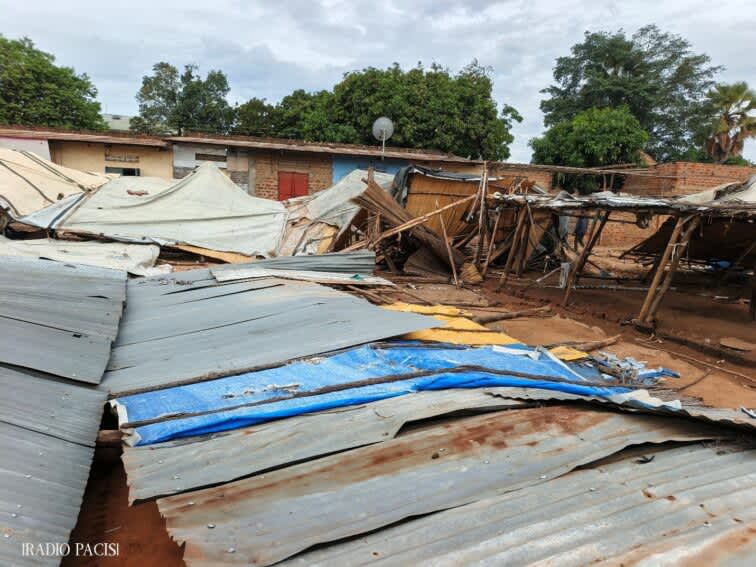
The state of Owino Market in Arua Central Division, Arua City, after Overnight demolition by law enforcement officers (Photo: Onzoma Albert)
By Onzoma Albert
Arua City
The Owino Market vendors in Arua Central Division, Arua City, are protesting and threatening to pursue legal action against Arua Central Division Council, following the overnight demolition of market structures and goods by law enforcement officers between 1:00am and 3:00am on Wednesday morning.
The vendors insist that the demolition targeted their private market without prior notice, despite having paid ground rent that extends until January 2027.
The vendors also complain that their livelihoods have been destroyed and point out that other similar markets, such as the fish market, Lobida market, Kirab market, and Lopa-lopa fish market, were not affected, suggesting a possible political bias behind the enforcement directing accusation towards the outgoing mayor of Arua central division.

Some of the affected vendors inspecting the demolished structures at Owino Market (Photo: Onzoma Albert)
The vendors further allege that their structures, including 190 iron sheets provided by the Prime Minister’s Office, were destroyed, and that during the enforcement exercise, their stores were broken into, clothes stolen, and goods damaged.
They claim that Owino Market remits about UGX 280,000 daily in market dues, paid by approximately 1,022 vendors occupying 472 stalls and 222 pitches, each accommodating 3-4 vendors. They argue that the location of the market is compliant, being nine meters away from the roadside, and that it should not have been demolished.
One vendor held that, “every day we remit money to council inform of market dues and we are one of the biggest revenue contributors in Arua central division and we should not be treated in this way,” he said.
“The guidelines from the government is very clear that the enforcement officers should evict the street vendors and remove kiosks and illegal structures on the roadsides, I want to know from the council is Owino market on the roadside?” another female vendor queried.
“We are going to stay here and reorganize our market again to conduct business as usual and we are not going anywhere from here” he said.

The affected Vendors of Owino Market during their meeting at the demolished market with local leaders and other stakeholders (Photo: Onzoma Albert)
Saidy Baguma, the Arua central division mayor-elect, has offered to provide free legal assistance to the affected vendors. He urged them to remain calm as they seek legal remedies.
“I want to offer free legal service to these vendors, we want to find out the root cause of this demolition whether it is legally or illegally done and if it is not legally done we shall battle the issue in favor of the affected vendors,” he affirmed.
Muzaid Khemis, the mayor of Arua Central Division, defends the enforcement, asserting it is a nationwide effort unrelated to politics, despite the vendors’ accusations.
“This same enforcement is happening in Kampala, Lira, Gulu, Mbarara and it is happening everywhere actually and it is a presidential directive, so I am the one doing those ones, that false accusation is a political defeat, hangover and this thing is never political” he responded.
The vendors are demanding compensation for their destroyed goods and structures, insisting they own the market legally and have fulfilled all obligations.
The council justifies its actions citing adherence to the Public Health Act, Local Governments Act, Roads Act of 2019, and Physical Planning Act of 2010.
These laws guide enforcement activities to promote order, public health, and proper urban planning, including the removal of illegal structures.
Both parties maintain their positions, the vendors seek justice and reparations, while the council emphasizes legal compliance and order.