


Hi, I am Anguzu, Radio Pacis AI Assistant. How can I help you today? Ask me about Radio Pacis, our programmes, frequencies, news, Arua, or the world around us.
13 May 2026 · Radio Pacis Newsroom
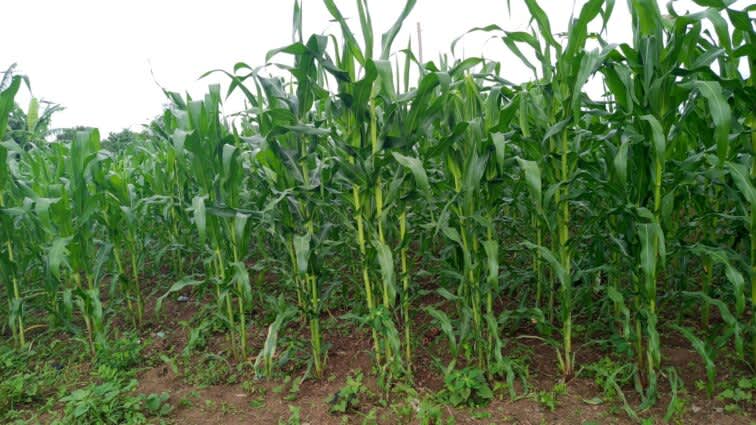
Maize garden of Hon Kasongo Okot in Ogwari-A village in Omel sub county. By Odong Stephen Gulu city Farmers in Ogwari A Village, Ogwari Parish, Omel Sub-county in Gulu District are optimistic about achieving a good harvest during the first planting season due
By Odong Stephen
Gulu city
Farmers in Ogwari A Village, Ogwari Parish, Omel Sub-county in Gulu District are optimistic about achieving a good harvest during the first planting season due to steady rains and healthy crop growth.
The farmers say the rains have been favorable this year, creating suitable conditions for crops to thrive and increasing hopes for better yields compared to previous seasons.
Hon. Kasongo Okot, the Area Councilor III of Ogwari Parish, said he planted two hectares of maize this season and expects to harvest at least 50 sacks because the crops are healthy and progressing well.
“The way the crops are growing is very good. Even when fellow farmers visit my garden, they become happy and encouraged. I believe that after harvesting in the coming months, I will be able to smile as a farmer and even build a small house in my compound,” he said.
Another farmer, Moses Kumagum, who planted soybeans this season, also expressed confidence in a good harvest due to the healthy condition of his crops.
However, he warned that weeds have become a major challenge this year compared to last season.
“The weeds are more serious compared to last year. My advice to farmers growing crops like soybeans is to ensure weeds do not overtake their crops. Farmers should continue weeding regularly if they want to achieve a good harvest that can support their families,” Kumagum said.
Innocent Kalokwera, the LC1 Secretary of Ogwari A Village, said crops such as groundnuts, maize, soybeans, and beans planted during the first season are all performing well because of the reliable rainfall received in the area.
“This year, from the way I have seen the crops performing, I encourage farmers to continue farming because they are likely to get a good harvest,” Kalokwera noted.
An agronomist who preferred anonymity advised farmers to make proper use of fertilizers to improve soil nutrients, saying this would help increase crop yields and improve produce quality.
The agronomist also appealed to farmers to use recommended chemicals for specific crops and to consult agricultural experts for guidance on the proper use of pesticides against destructive pests such as armyworms, which commonly damage crops in gardens.
Meanwhile, the LC3 Chairperson of Omel Sub- County, Hon. Vincent Ouma, appealed to the communities in the sub-county to maintain the spirit of hard work, especially in farming, which he described as one of the key ways households can generate income to meet their needs.
“As the chairperson, I am happy whenever we receive both rain and sunshine because it is a sign that we shall have a good harvest. My advice to farmers is to continue working hard and ensure that they weed their maize gardens in time so that weeds do not destroy the crops. This is also the last month for those who want to plant soybeans, so farmers should hurry and plant in order to achieve a good harvest as well,” he said.
Hon. Ouma further explained that during the last financial year, the sub-county allocated one million shillings for crop farming activities and another one million shillings for livestock farming education. He said the funds were used by sub-county officials, agricultural experts, and veterinary officers to educate farmers across the six parishes on modern farming methods and better agricultural practices aimed at improving yields.
He noted that the farmers’ current optimism about a good harvest shows they have followed the advice provided through the training programs, which he described as a success for the sub-county.
According to Hon. Ouma, the sub-county has again budgeted one million shillings this financial year for crop farming education and another one million shillings for animal farming education to encourage households to engage in both crop and livestock farming as a way of reducing poverty.
Despite the positive outlook, farmers are appealing to leaders and relevant authorities to help them find reliable markets for their produce. They say middlemen often buy crops at very low prices, making it difficult for farmers to benefit fully from their hard work.
Some farmers believe agriculture can significantly reduce poverty in their households, but only if they are able to sell their produce at fair and profitable prices.