


Hi, I am Anguzu, Radio Pacis AI Assistant. How can I help you today? Ask me about Radio Pacis, our programmes, frequencies, news, Arua, or the world around us.
2 October 2025 · Radio Pacis Newsroom
Opebaku Group in Ogujebe village Palorinya parish, Palorinya sub county Obongi district comprising of both refugeees and host community using the local method of irrigation system to water their tomato seedlings. By Ganiko Samson BullenObongi In the dusty earl
Opebaku Group in Ogujebe village Palorinya parish, Palorinya sub county Obongi district comprising of both refugeees and host community using the local method of irrigation system to water their tomato seedlings.
By Ganiko Samson Bullen
Obongi
In the dusty early morning light of Palorinya refugeee settlement in Obongi district, Northern Uganda, something extraordinary is taking root.
Refugee households, once entirely dependent on meager food rationns and uncertain aid, are now cultivating hope — planting vegetables, and harnessing solar-powered irrigation on tiny plots of land. Food security is rising, nutrition dividersity is improving, and incomes, once flatlined, are beginning to improve.
With nearly 55% of refugeee households in Palorinya now classified as food secure thanks to backyard gardening and smart agronomic support, what was once a survival strategy is emerging as a sustainable lifeline.
https://drive.google.com/file/d/1j8pPxOwwkip3__HDVNR2BdtRsSsO8Nf6/view?usp=sharing
Palorinya Refugee settlement now home to one hundred forty one thousand seven hundred thirty seven refugeees, comprising of seventy four thousand four hundred sixty four females and sixty seven thousand two hundred seventy three males, according to statistics from the Office of the prime minister released on 31st of July 2025.
In this area, Smart Climate Agriculture has set out glimpse of hope for better livelihoods. The findings see a great impact of the smart climate Agriculture from the refugeee’s community. 60% of the community especially women now have deeply adopted the system which now has improved their productivity.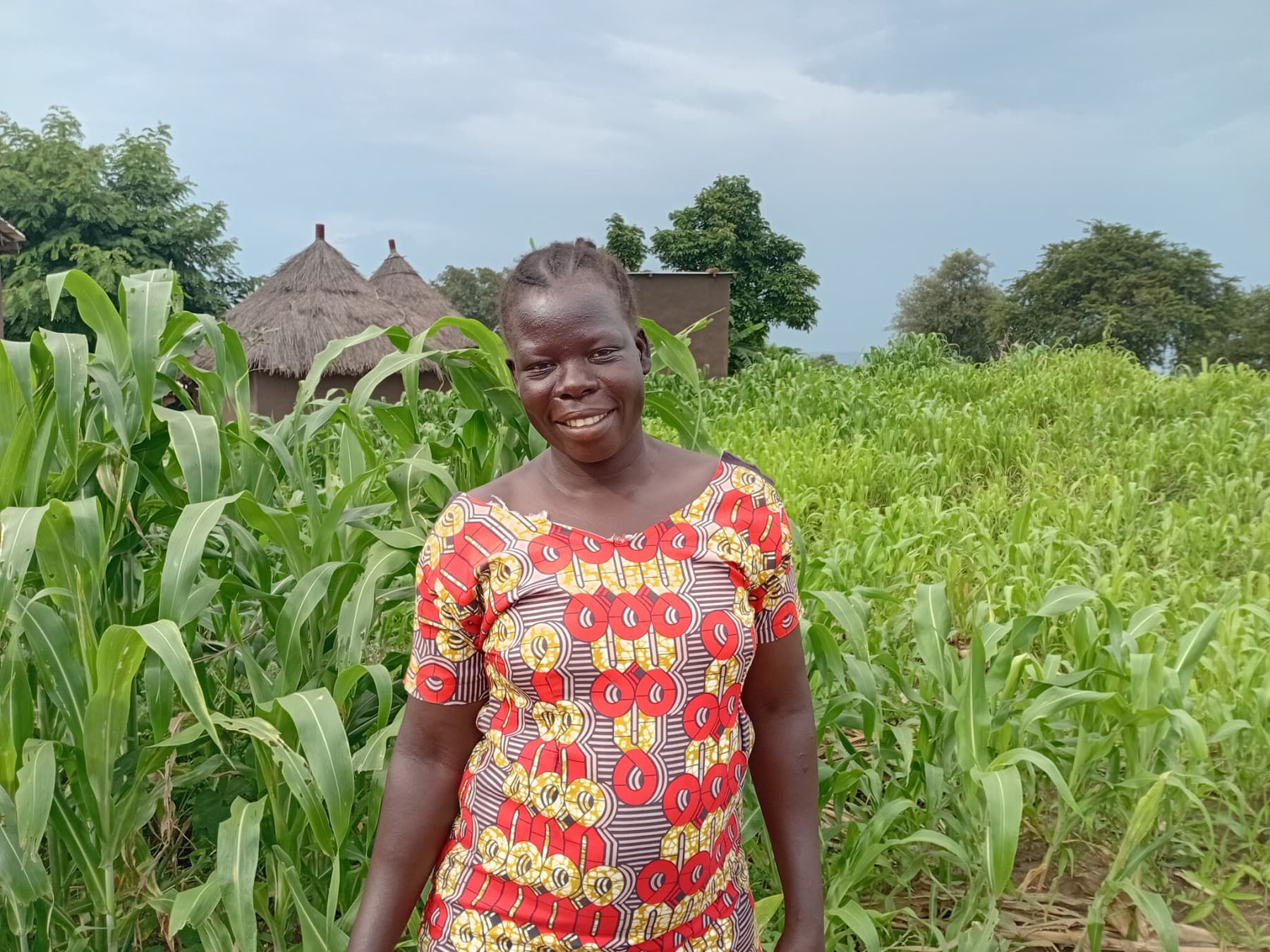
Stella Sophi a refugee in her backyard farm
Stella Sophi a south Sudanese refugee based in Keguru village, block 3 zone one in Palorinya refugeee’s settlement says that despite the harsh climatic conditions, adoption of climate smart agriculture has paid-off. She said even if the ration has been cut off, she is surviving on what she has produced as after harvesting maize, soya beans and with sorghum in the first season.
“From during my interview in the introduction of the practice of smart climate Agriculture now I can see some of the changes though there was too much sunshine at least this year God help us with rain were I managed to produce some crops like maize, sweet potatoes and sorghum among others” Sophi pointed
https://youtu.be/lhPlUKpS1rE?si=5YyKg0JH1OHKzpHO
She added that she also experienced a lot of flooding that washed most of the crops in the garden. “Though it happened, we were not discouraged totally but we also started planting more Crops and per now am talking we have produced enough even if the food ration has been cut off.” She noted.
Opebaku group comprising of refugeee and the host community in Ogujabe village Palorinya parish, Palorinya Sub County is one of the groups supported by For Africa a non-governmental organization one of the implementing partners operating in Obongi district. They got seeds to start a nursery bed of tomatoes. The group says they realized 7.5 Million Ugandan shillings from the sale of the tomatoes.
According to Abio Grace is one of the group members; their target is to save some money, which later will be divided to every household.
https://drive.google.com/file/d/1tJSC1azX4CM8BS1WHRqW-2f2F2ZGTz-C/view?usp=sharing
“We got 7.5 Million from the tomatoes as we started with raising nursery bed, our target in this second nursery bed after planting and after good harvest we are going to divided the money in to two, saving and the rest will be divide to every household” she pointed .
Mata Philip another member in the Opebaku group says that with support from development partners, they managed to adopt irrigation agriculture and as a group, they have earned much from the growing of water melons.
He said due to the change in weather patterns, they resorted to irrigation system of watering their crops with the help of the partners were they ventured to water melon plantation were they get more 7millon in the first season and in the second season through the support from the partners using the climate smart Agriculture skills they planted tomatoes where they were able to get 9 million using the local method of irrigation using the watering cane.
https://drive.google.com/file/d/1UhlmWFrVjnVtSf9JO5uGZJU0SX08zItJ/view?usp=sharing
“We had planted water melon as farmers group comprising of refugeees and host with the help of For Africa where they gave us seeds and improving the irrigation system which we used for watering” he revealed.
He said disclosed that, the partners used supported them with chemical spraying where in the water melon they got 7 million and above and also in the tomatoes they were able to get 9 million.
The hot conditions of Palorinya refugeee’s settlement are not favorable to crop growth – and this has left the refugeees and people from the host communities to rely on wetlands as well as resorting to drought resistant crops, and kitchen gardening.
Bishop Emmanuel Amo of Sudan Pentecostal church based in Palorinya who is also an agricultural oriented person says that though climate smart practices like irrigation are desirable, they are costly and this necessitates continued support of development partners to drill more boreholes.
“We have limited land, the second when we are faced with less rainfall like here in Palorinya most of the season we experienced much sun heat, crops that grows better grows in places which are valleys” Amo.
He said the best solution is to introduce crops that are resilient and drilling more boreholes for them to get more water for watering the crops
According to Francis Edema Bishop of Pentecostal Assembly of Uganda says that to cope with the ever changing weather patterns, farmers must stay alert and observant to weather and season changes.
With the continuous support from implementing partners, the refugeees and the host communities have benefited from climate smart agriculture. Leo Omara the —— notes that farmers are spearheading the talk of transformation through climate smart agriculture and more benefits will be realized.
All practices like at For Africa a non-governmental organization operating in Obongi district serving both the refugeees and the host, under the smart climate Agriculture in 2025 they realized little changes with only 45% but this year they have made a progress as they engaged fully in the practice of the smart climate Agriculture where they farmers got 90% of the return.
He said they have been using they have been using tractors and Agronomic as he appalled to the beneficiaries to take up the system saying their farmers were able to harvest 20- 25 bags of the returns this year.
“Last year using the smart Agriculture practice as we ventured in to the system we could not realize much changes but now am testifying to you that this year we are making a lot of progress, last year we had a totally of 45% return that our farmers received from their gardens after along participation in production but this year when we engaged fully in smart Agriculture our farmers got 90% of their return he added.
Government of Uganda has continued to put more effort in engaging the partners such that government programs are implemented and supported.
Adeoge Robert, the settlement commandant from the department of refugeees in the Office of the Prime Minister says that as authorities, they are engaging with different partners to support refugeees and make their lives better.
“This climate smart Agriculture the government role is that we are coordinating and monitoring, so government role is mobilization resources for this smart Agriculture by having engagement with the partners” he said.
In Palorinya, climate-smart agriculture is not just a method of farming — it is a lifeline. With support from partners and the resilience of the refugeees and host communities, food security is improving, incomes are growing, and hope is being restored. This transformation is proof that with the right tools and support, communities can thrive even in the harshest conditions.