


Hi, I am Anguzu, Radio Pacis AI Assistant. How can I help you today? Ask me about Radio Pacis, our programmes, frequencies, news, Arua, or the world around us.
7 May 2026 · Radio Pacis Newsroom
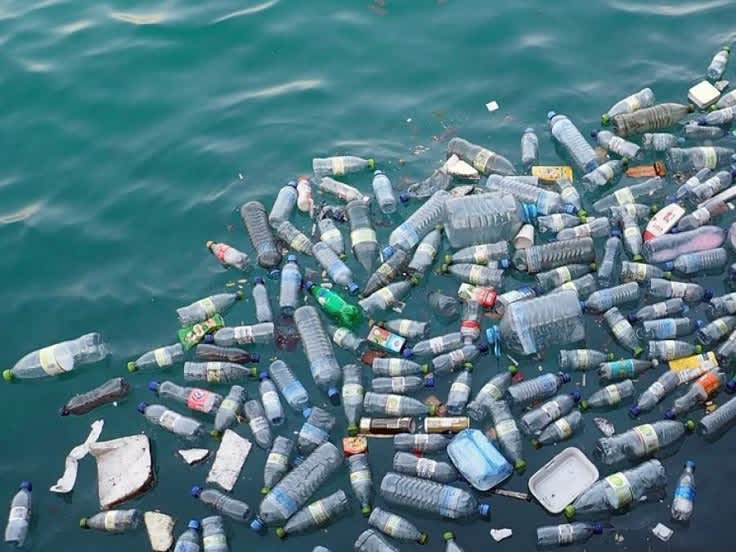
Discarded plastic bottles floating in water highlight the growing challenge of poor waste management and pollution By Biko Rombe Gulu City The Rotaract Club of Gulu University on Tuesday April 21, 2026 held a fellowship aimed at raising awareness on plastic wa
By Biko Rombe
Gulu City
The Rotaract Club of Gulu University on Tuesday April 21, 2026 held a fellowship aimed at raising awareness on plastic waste management, with a strong focus on recycling as a tool for conserving the environment.
The discussion, held under the theme “The Impact of Recycling Plastics in the Conservation of Our Vibrant Earth,” brought together students to reflect on the growing global plastic crisis and practical solutions at individual and community levels.
Speaking during the session, HCP Collins Anywar, a Polymer Engineer at TakaTaka Plastics, said plastics were originally developed as a solution to material shortages but have since evolved into a major environmental challenge.
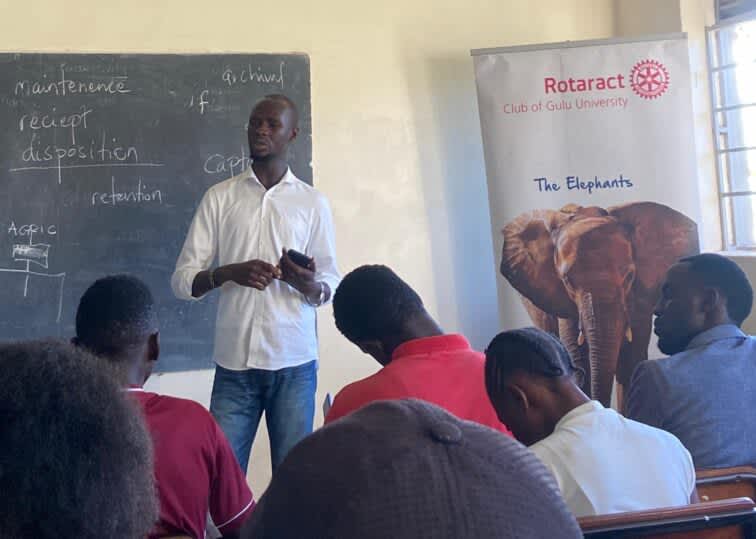
“Plastics didn’t just come out of nowhere. They were solving a problem at the time. But today, their impact on the environment is significant,” Anywar said.
He noted that more than 400 million tons of plastics are produced globally each year, with only about 9 percent recycled, leaving the rest to pollute land and water systems.
Anywar warned that improperly disposed plastics take hundreds of years to degrade, eventually breaking down into micro plastics—tiny particles that can enter the food chain and pose health risks.
“Micro plastics have been found in human lungs and even breast milk, which shows how serious the problem has become,” he added.
He also clarified the difference between reuse and recycling, explaining that recycling involves technical processes such as sorting, crushing, and reprocessing materials into new products, while reuse simply extends the life of a product in its original form.
From an environmental perspective, Anywar said recycling helps reduce pollution, lowers dependence on petroleum resources, and cuts carbon emissions associated with plastic production and disposal.
He added that recycling also has economic benefits, including job creation and recovery of material value that would otherwise be lost through single-use plastics.
Meanwhile, according to, Opiyo Jonathan, a student of Food Bioscience and Agribusiness at Gulu University and a member of the Rotaract Club, there is need for behavioral change in tackling plastic pollution.
“Recycling alone cannot solve the plastic problem. We must reduce how much we use and change our daily habits,” Jonathan emphasized.
He urged individuals to adopt reusable alternatives such as water bottles and shopping bags noting that, reliance on single-use plastics significantly contributes to environmental degradation.
Jonathan highlighted that an average person consuming the recommended daily water intake could use up to five plastic bottles a day, which, if not properly managed, adds to the growing waste burden.
The fellowship also explored challenges within the recycling sector, particularly the difficulty in processing thin plastics such as polythene bags due to contamination and limited technology.
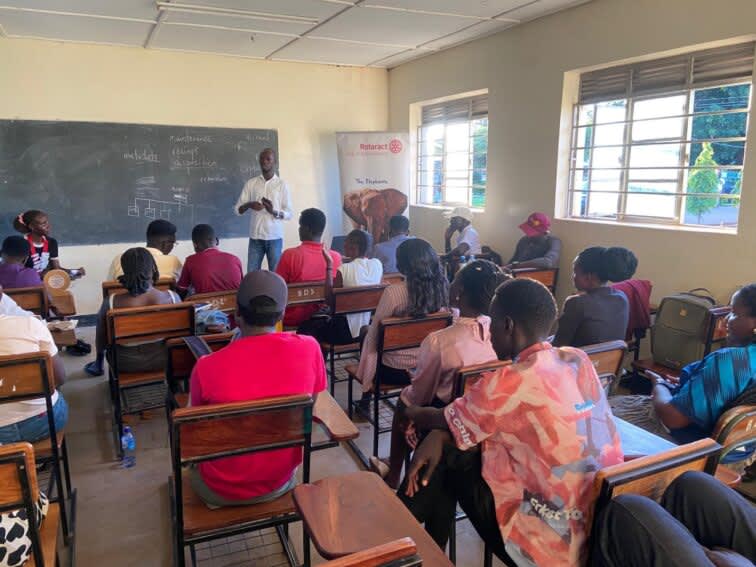
Participants were encouraged to sort waste, support recycling initiatives, and advocate for policies that promote sustainable waste management systems.
The event forms part of Rotaract’s environmental focus for the month, aligning with broader efforts to promote sustainability and community awareness.