


Hi, I am Anguzu, Radio Pacis AI Assistant. How can I help you today? Ask me about Radio Pacis, our programmes, frequencies, news, Arua, or the world around us.
6 July 2026 · Radio Pacis Newsroom
Two speakers, Gladys Aware and Pricilla Pita challenge themselves on a point before the audience on Thursday. PHOTOS BY ROBERT ELEMA By Robert Elema Yumbe Cheers and applause echoed across Kumuna Primary school playground, in Yumbe district on Thursday as the
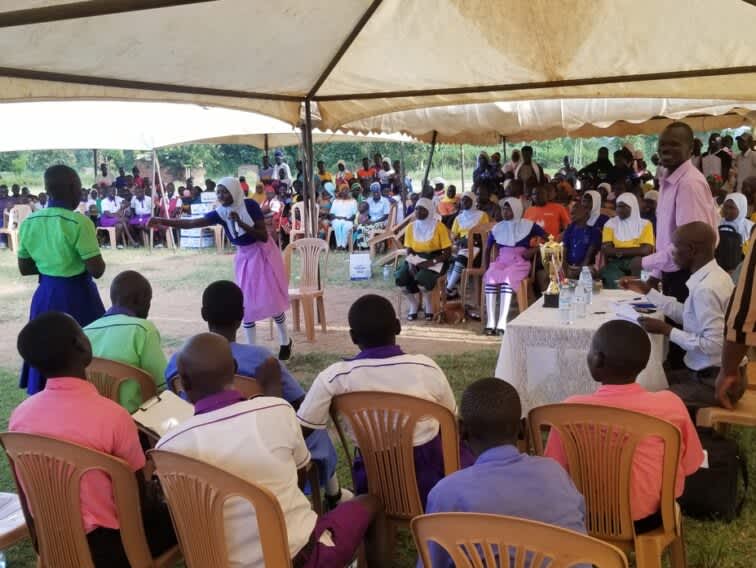
Two speakers, Gladys Aware and Pricilla Pita challenge themselves on a point before the audience on Thursday. PHOTOS BY ROBERT ELEMA
By Robert Elema
Yumbe
Cheers and applause echoed across Kumuna Primary school playground, in Yumbe district on Thursday as the learners took to the stage, ready to defend their views on one of the most urgent environmental issues of biodiversity conservation.
The debate organized by World Vision under the motion, “Environmental degradation has done more harm to biodiversity” was more than an academic contest where learners from Ariwa sub county faced those from Odravu sub county.
It reflected growing concern among learners about the rapid destruction of forests, wetlands, rivers, and wildlife habitats, which they say is threatening the country’s rich biodiversity.
Speaking in support of the motion, Pricilla Pita, one of the learners argued that unchecked tree cutting, bush burning, poor waste disposal, and wetland encroachment have led to the disappearance of many plant and animal species. “When forests are cleared, birds lose their nesting places, animals lose their homes, and communities lose the natural resources they depend on,” she said.
Another participant Gladys Aware added that environmental degradation is also worsening climate change, leading to prolonged droughts, floods, and declining agricultural productivity. “Cutting down trees has affected the rain pattern here in the district. We experienced drought for many months and this has resulted in the drying of crops that were planted,” she said.
She said, communities are suffering from hunger because there is food shortage and that some families go with one meal a day as opposed to the minimum meals of three times a day due to food shortage.
Those opposing the motion acknowledged the damage caused by environmental degradation but argued that conservation efforts by government, schools, and local communities are helping restore ecosystems through tree planting, environmental education, and better natural resource management.
Teachers said the debate aimed to help learners think critically about environmental challenges while encouraging them to become ambassadors for conservation. “Our goal is to produce learners who understand that protecting the environment is everyone’s responsibility. These debates inspire them to become part of the solution,” said the debate patron, Mr Daniel Weligaku.
“Our responsibility as educators is not only to prepare learners for examinations but also to prepare responsible citizens who care for their environment,” he added. He said, through debate like this, learners appreciate that every individual has a role in protecting biodiversity.
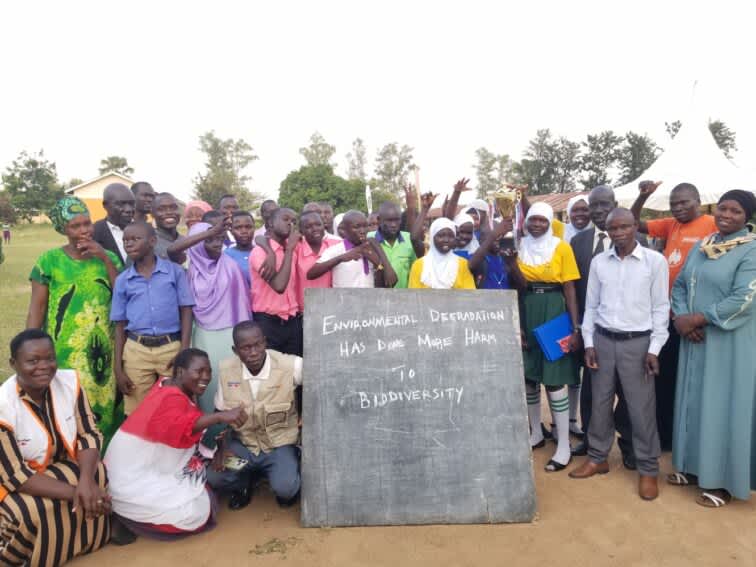
Learners, World Vision officials, teachers and other stakeholders pose for photo after the debating competition competition.
Mr Nathan Asiku who represented the Education office at the event appeals to schools to embrace growing of trees. “As schools, I would think where there is land, there is a need to plant trees to meet the expectation of World Vision as they are keeping us aware of the effects of environmental degradation and importance of trees which they have brought as debate in schools,” he said.
He encouraged the teachers to take debating activities as routine curriculum duty in the various schools and that many schools have abandoned debating activities which he said is a wrong move.
Mr. Ocan Lameck, a project officer at World vision said, World Vision, with other partners like CRS, CARE and Palm Corps are implementing a 6year re-greening project in Ariwa and Odravu sub counties in Yumbe District.
He said, under the re-greening project, they are implementing a series of activities to ensure the environment is preserved and conserved. “The activity of the school debate was an initiative of learners we work with because in the sub counties where we implement the re-greening project, we formed environmental clubs in the schools to manage the environment,” he said.
“The objective of the activity was to raise awareness of the pupils, teachers and their parents on the effects of environmental degradation. The initiative was to make the pupils think and come up with creative solutions of how to manage our environment,” he added.
He said, during the baseline survey the environment was severely degraded, especially communities neighboring refugee settlements and because of the increase in population, most of the trees were cut for fuel including settlement.
He added that as World Vision and other partners, they rolled out this initiative by planting more trees especially for wood fuel and food security and nutrition to benefit the communities in the future.
The learners however warn that continued destruction of natural habitats could have serious economic and social consequences if not addressed.
Throughout the debate, learners proposed practical solutions, including planting more trees, protecting wetlands, reducing plastic pollution, enforcing environmental laws, and educating communities about sustainable use of natural resources.
As the debate concluded, one message stood out clearly: protecting biodiversity cannot be left to governments and conservation organizations alone. Every citizen, including school children, has a role to play in safeguarding the environment for future generations.