


Hi, I am Anguzu, Radio Pacis AI Assistant. How can I help you today? Ask me about Radio Pacis, our programmes, frequencies, news, Arua, or the world around us.
19 June 2025 · Radio Pacis Newsroom
SP Herbert Muhangi, the Officer in Charge of Arua Main Prison at the health center Pharmacy entrance. All photos by Dramadri Federick. By Dramadri FederickArua City The heightened security protocols at Arua Main Prison are currently hampering access to healthc
SP Herbert Muhangi, the Officer in Charge of Arua Main Prison at the health center Pharmacy entrance. All photos by Dramadri Federick.
By Dramadri Federick
Arua City
The heightened security protocols at Arua Main Prison are currently hampering access to healthcare services at Arua Main Prison Health Center III.
Established shortly after the construction of Arua Main Prison in 1930 as a public health facility to serve both inmates and the surrounding community, the Arua Main Prison Health Center III has historically provided essential medical services.
However, routine security procedures, limited public awareness of the facility’s existence, and other factors have contributed to its underutilization by members of the public.
In response to rising threats of unrest and smuggling, authorities enforced heightened security protocols across the prison grounds. These included increased patrols, strict movement restrictions, and extensive security checks at all entry points.
While these measures aimed to protect both staff and inmates, they inadvertently disrupted the normal operations of the health center, which shares the same complex.
Interactions with health workers at Arua Main Prison Health Center III indicate that the facility is fully operational, stocked with adequate drugs and equipped with diagnostic machines for diseases such as HIV, TB, malaria, ulcers, and diabetes, among others. Despite this, the utilization remains low.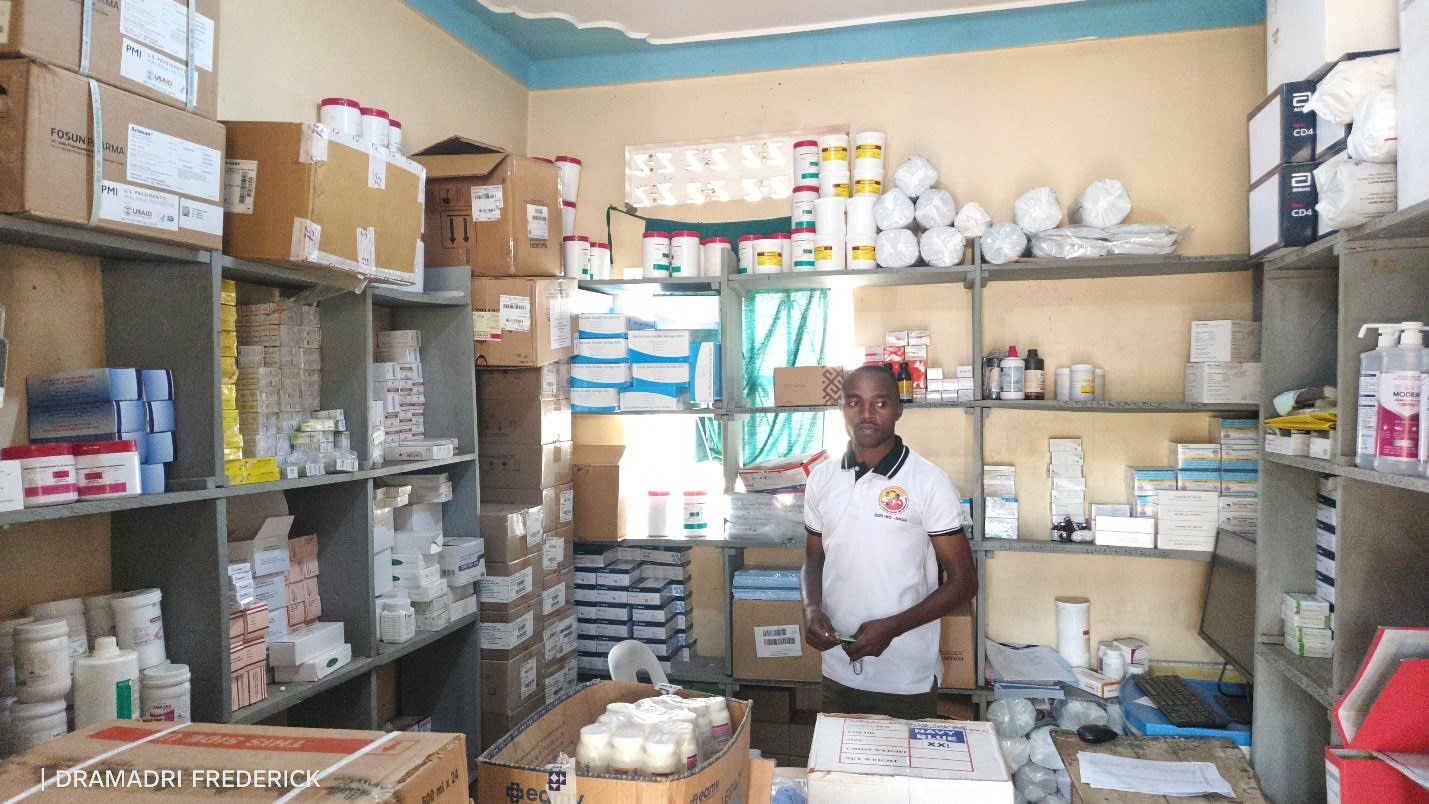
Arua Main Prison Health Center III drug Store
Sharon Munduru, whom by press time brought her child suffering from fever, cough, and flu, remarked that the services at the facility are easily accessible, prompt, and that the health workers are welcoming and hospitable to patients.
“If you go to Police Health Center III, you find many people there, and so at Arua Referral Hospital so for us we are near Prisons here we just come here and it’s just a matter of carrying your national ID to enter from the gate and their services are very fast, easy and you can’t go without having your medication,” Munduru explained.
Records from the facility reveal that, on average, about 700 patients with various illnesses are registered weekly. Of these, approximately 100 patients come from outside the prison community this is primarily due to fears related to data collection and security checks conducted by security personnel.
The most common ailments seen at the outpatient department include respiratory tract infections, peptic ulcers, tuberculosis, malaria, and diabetes.
Hellen Dejang, Enrolled Nurse at the facility they conduct variety of services including immunization campaigns, Nutritional assessments, General body checkups Antenatal Serveries though they don’t conduct deliveries due to inadequate space, other services including Family planning and Reproductive Health services, Maternal Child Health services and emergency care.
The facility receives supplies from National Medical Stores, Joint Medical Stores and equally from General stores of Uganda Prisons Services in Luzira. It has variety of equipments in the laboratory including the Gene expert Machines, SD4 count Machines, Microscopes, Diabetes Machine, Afino Machine with exception of the CBC-Complete Blood Count Machine and Chemical Analysis Machine whose services are sort from either Oli Health Center III or Arua Regional Referral Hospital.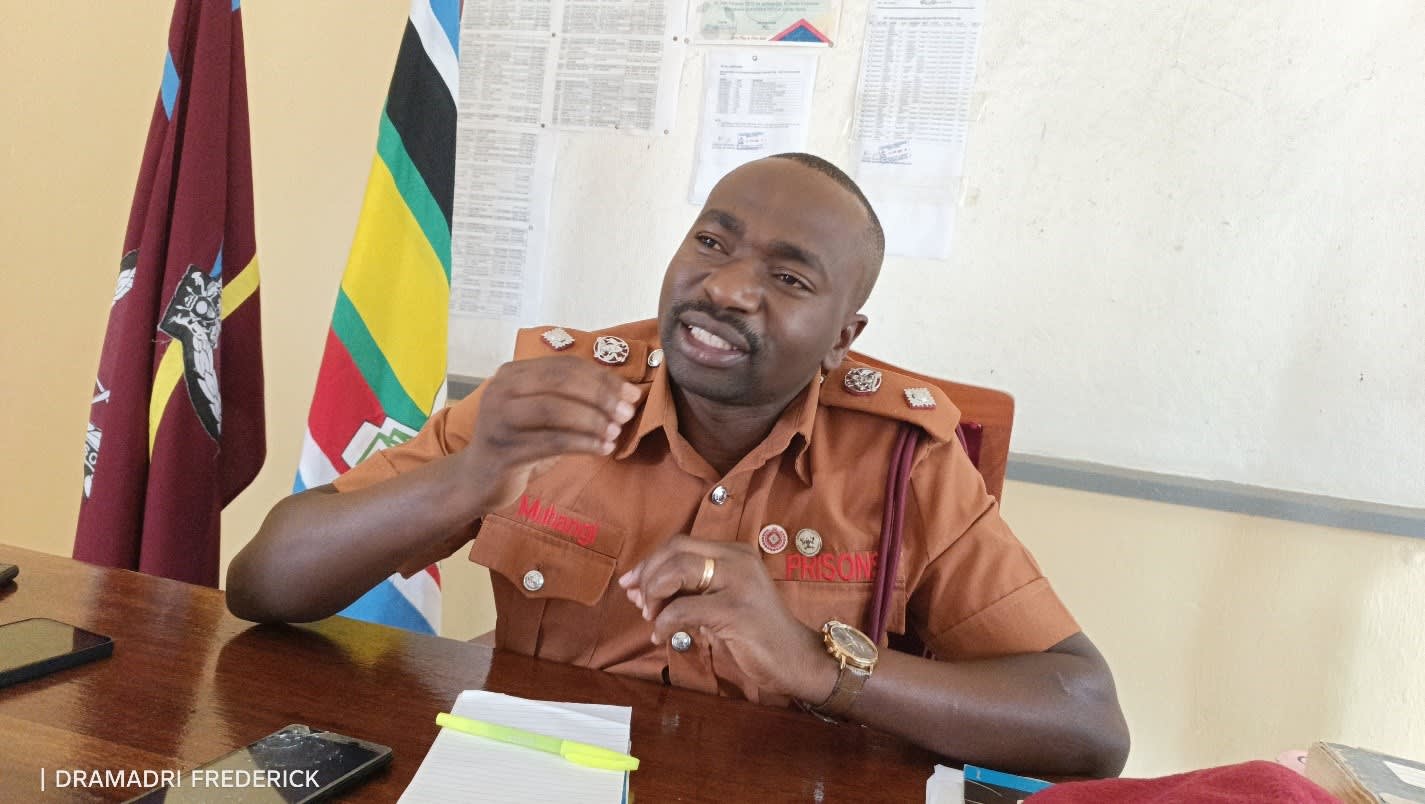
SP Herbert Muhangi, the Officer in Charge of Arua Main Prison.
SP Herbert Muhangi, the Officer in Charge of Arua Main Prison, stated that the security protocols are designed to maintain order and safety, given that the health facility is situated within a secure installation.
“The nature of the Health Facility is situated under a Security institution, so perhaps you have to adhere to the security protocols that are in place, we only require proper identification and we register you, usher you in and serve you. The challenge we have is when you ask some people about their national Identity Cards for identification, they don’t just turn away even any other identification they have none, so we get challenged on how to really manage security and this person who is a stranger. If the general public could carry any form of identification, we are good to go.” Muhangi said.
The facility is staffed by 16 personnel and primarily serves the catchment areas of Kenya and Awindiri Wards in Arua City.