


Hi, I am Anguzu, Radio Pacis AI Assistant. How can I help you today? Ask me about Radio Pacis, our programmes, frequencies, news, Arua, or the world around us.
11 May 2026 · Radio Pacis Newsroom
Inzikuru Millicent Milly defending the move to relocate the city headquarters to former Oluko Sub county headquarters. Photo by Dramadri Federick. By Dramadri Federick Arua City Arua City’s future hangs in the balance after an emotionally charged council sessi
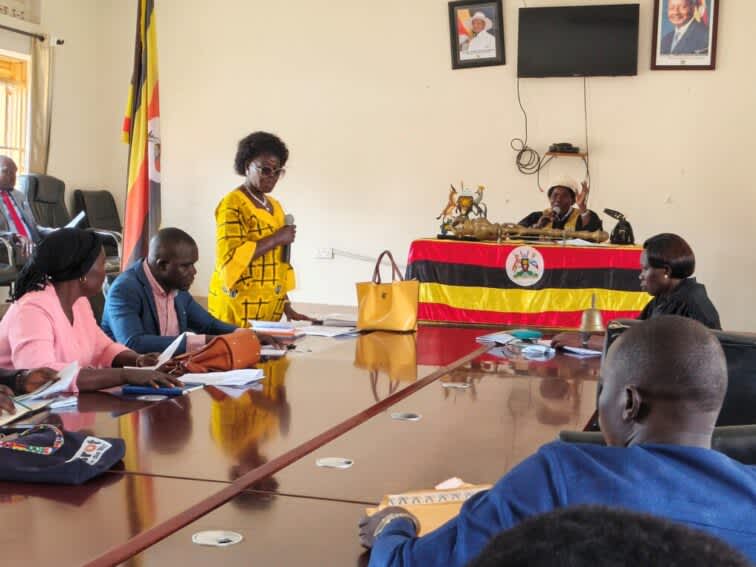
Inzikuru Millicent Milly defending the move to relocate the city headquarters to former Oluko Sub county headquarters. Photo by Dramadri Federick.
By Dramadri Federick
Arua City
Arua City’s future hangs in the balance after an emotionally charged council session descended into sharp divisions over a controversial proposal to relocate the City headquarters to former Oluko sub county Headquarters in Ayivu East Constituency.
What began as a routine council discussion quickly turned into a tense confrontation, exposing deep fears, political mistrust, and unresolved land conflicts that now threaten to stall a major city development project.
The proposal was tabled before council by the Leader of Government Business, Inzikuru Millicent Milly, following a joint executive meeting between the City Executive Committee and Ayivu Division executive committee leaders held on March 16, 2026 under Min No. 5/CEC/16/MAR/2026. Leaders had resolved to move the city headquarters to the former Oluko Sub-county headquarters after securing 300 million shillings under the Discretionary Development Equalisation Grant (DDEG) to construct a new city administrative block.
Under the arrangement, the leaders envisioned that the current site at the Arua District headquarters would instead be converted into a revenue-generating facility aimed at boosting the city’s income base other than establishing the city headquarter.
But beneath the ambitious relocation plan lies a painful and unresolved battle over land ownership.
Inzikuru shocked councillors when she revealed that nearly two quarters of the 6.98-acre Oluko land is currently under dispute and before court.
The revelation immediately sparked outrage inside the council chambers, with several councillors warning that proceeding with construction on contested land could plunge the city into financial loss and endless legal battles.
Voices rose as councillors Eriku Cyril, Doreen Onyiru, Adia James, Godfrey Anguyo, and Christopher Acidri strongly opposed the relocation. They argued that taxpayers’ money could be wasted if the land dispute is not first resolved. Others insisted the city should instead adopt modern urban planning strategies and establish the headquarters at the current Arua District Local Government site.
The debate grew increasingly emotional as councilors accused one another of rushing sensitive decisions without proper consultation.
However, not all leaders rejected the proposal.
Councilors Aliru Khadija and Ayaba Joseph passionately defended the relocation plan, arguing that moving the headquarters closer to hard-to-reach communities would improve service delivery and strengthen local revenue collection.
For many residents of Ayivu East, the proposed move represents more than just buildings and offices it symbolizes recognition, development, and long-awaited government presence in their communities.
Yet the scars surrounding the Oluko land continue to cast a dark shadow over the project.
The former Oluko Sub-county headquarters land was donated by the community in 1944, a gesture that once symbolized unity and trust in local leadership. But decades later, rapid population growth and changing administrative structures have turned the once-idle land into a source of bitter contestation. Since the amalgamation of seven former sub-counties including Oluko into a city division, pressure over ownership and land use has intensified, leaving families, leaders, and institutions divided.
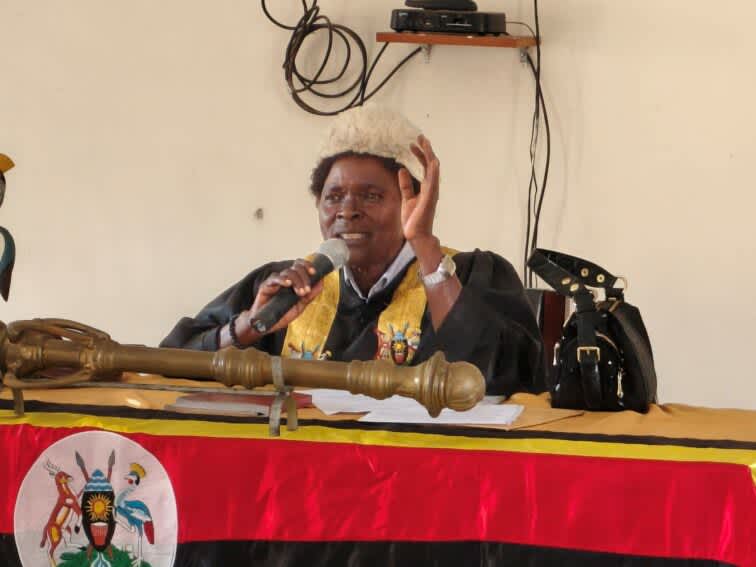
City speaker Making final ruling
As tempers flared inside the council chambers, City Speaker Yako Teddy Gloria was forced to intervene.
In a decisive ruling aimed at restoring calm, the Speaker halted the matter and deferred it indefinitely until the land dispute is resolved or until Arua District Local Government returns to its original headquarters, where the allocated funds could instead be utilized.
For now, the dream of a new city headquarters establishment in Oluko remains suspended in uncertainty caught between promises of development, unresolved land conflicts, and a council deeply divided over the future direction of Arua City.