


Hi, I am Anguzu, Radio Pacis AI Assistant. How can I help you today? Ask me about Radio Pacis, our programmes, frequencies, news, Arua, or the world around us.
21 July 2026 · Radio Pacis Newsroom
(L-R) Fredrick Kizza Chief Warden Murchision Falls National Park, Katamigwa Wilson Chief Warden Ajai Wildlife Reserve and Susan Nsambu Nakawuki Minister of State for Tourism, Wildlife and Antiquities during the familiarization tour of Ajai Wildlife Reserve in
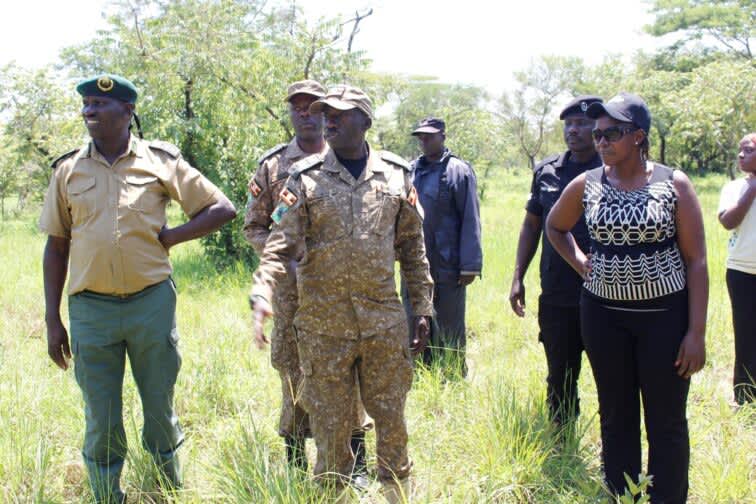
(L-R) Fredrick Kizza Chief Warden Murchision Falls National Park, Katamigwa Wilson Chief Warden Ajai Wildlife Reserve and Susan Nsambu Nakawuki Minister of State for Tourism, Wildlife and Antiquities during the familiarization tour of Ajai Wildlife Reserve in Madi Okollo district.
By Dramadri Federick
Arua City
Uganda’s Minister of State for Tourism, Wildlife and Antiquities, Susan Nsambu Nakawuki, has proposed introducing the death penalty for people convicted of poaching or illegally hunting wildlife in the country’s national parks and protected reserves, arguing that stronger penalties are needed to safeguard Uganda’s biodiversity and protect billions of shillings invested in wildlife conservation.
The proposal was made during a familiarization tour of Ajai Wildlife Reserve in northwestern part of Uganda in Madi Okollo district, where the minister inspected ongoing restoration and conservation projects aimed at reviving one of Uganda’s historic wildlife habitats.
Ajai Wildlife Reserve, covering approximately 166 square kilometers, is undergoing an extensive restoration programme under the Uganda Wildlife Authority (UWA). The government has invested in infrastructure and wildlife management to restore the reserve into a thriving conservation area and tourism destination.
Among the projects are a 30-kilometre electric fence to reduce human-wildlife conflict, newly constructed animal watering points, a 134,000-cubic-litre water storage tank, eight ranger outposts, improved road networks, and modern surveillance systems designed to strengthen anti-poaching operations.
Nakawuki said the government has invested heavily in restocking wildlife, strengthening ranger capacity, deploying surveillance technology and rehabilitating protected areas to boost biodiversity conservation and tourism. Despite these efforts, she said illegal hunting continues to undermine government investment.
“Government is spending a lot to bring those animals here in Ajai Wildlife Reserve. Don’t touch our animals, don’t poach. If you dare poach you can die, or you will go to jail and we are pushing for a death penalty so that when you go to jail you don’t come back alive,” Nakawuki said.
Her remarks indicate the government’s desire to pursue tougher punishments for wildlife crimes, although no legislation proposing capital punishment has yet been introduced in Parliament.
Existing law already provides severe penalties including the life imprisonment. Uganda already has some of Africa’s strictest wildlife protection laws.
Under the Uganda Wildlife Act, 2019, anyone convicted of poaching, trafficking or illegally dealing in critically endangered species including elephants, rhinos, lions, chimpanzees and pangolins, faces life imprisonment, fines of up to UGX 20 billion (approximately US$5.5 million), or both. The law, however, does not provide for the death penalty.
Any amendment introducing capital punishment for wildlife crimes would require parliamentary approval and would likely trigger constitutional, legal and human rights debate both within Uganda and internationally.
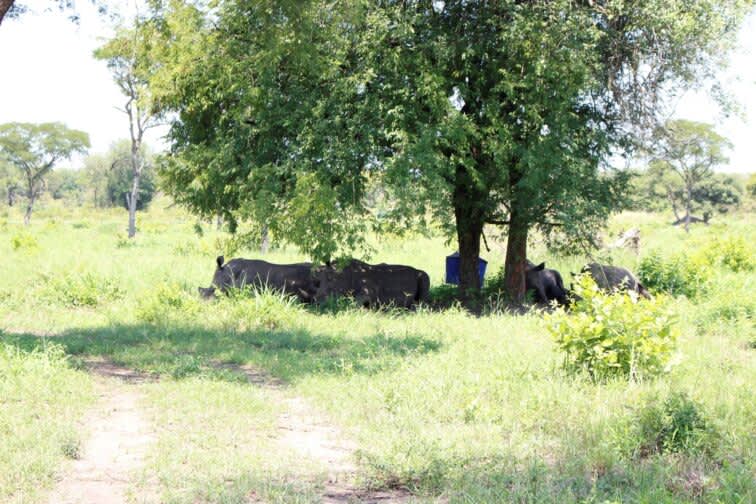
The Four White Rhinos trans located from Zziwa Santuary to Ajai Wildlife Reserve are resting under a tree at the reserve.
According to the Uganda Wildlife Authority, approximately UGX 60 billion will be required to fully restore Ajai Wildlife Reserve under the National Wildlife Conservation Strategy.
The restoration programme seeks to reintroduce wildlife species that disappeared from the reserve following decades of poaching, habitat degradation and insecurity.
Planned reintroductions include 460 Uganda kobs, 20 white rhinos, 20 buffaloes, 15 giraffes, lions and 44 zebras.
Conservation officials believe restoring wildlife populations will not only improve biodiversity but also stimulate tourism and generate employment and business opportunities for communities surrounding the reserve.
Wilson Katamigwa, Chief Warden of Ajai Wildlife Reserve, said communities in Madi Okollo District have increasingly embraced conservation efforts and are working closely with the Uganda Wildlife Authority to protect wildlife.
However, he acknowledged that illegal hunting remains a challenge.
“We still have some individuals who are poaching these animals, especially antelopes and Uganda kobs. Some also kill our baboons when they move outside the reserve. We are addressing this through increased ranger patrols and expanded use of surveillance cameras,” Katamigwa said.
UWA says the expansion of CCTV surveillance, electric fencing, intelligence gathering and regular ranger patrols has significantly strengthened wildlife protection, although isolated poaching incidents continue to occur.
Veteran politician Wadri Kasiano Ezati argues that Uganda should prioritize effective enforcement of existing wildlife laws before considering tougher punishments.
According to Ezati, the Wildlife Act already contains stringent penalties, but enforcement remains inconsistent, while communities neighbouring protected areas continue to suffer crop destruction, livestock losses and occasional attacks from wild animals.
“If we don’t pay attention to the enforcement of our laws and ensure people understand them, we shall not achieve the intended objectives even if the law is amended. Death penalties are extreme and could contradict international human rights commitments Uganda has signed,” Ezati said.
His comments reflect a broader debate over whether improving enforcement, community engagement and compensation for wildlife-related losses would be more effective than increasing criminal penalties.
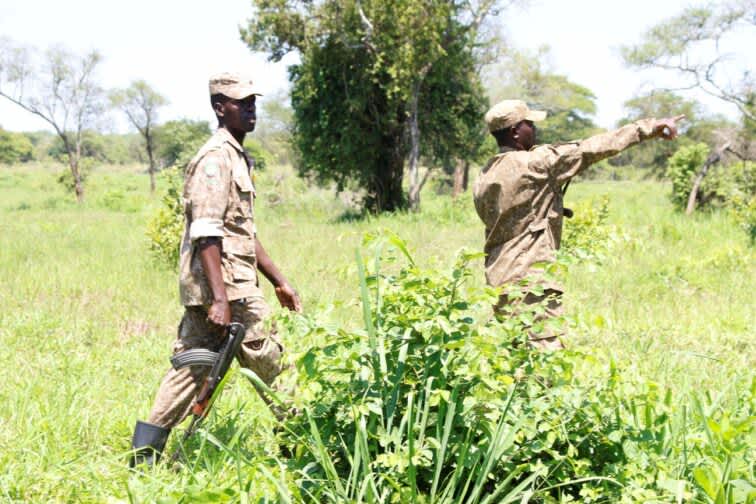
Rangers at Ajai Wildlife Reserve conducting coordinated patrols.
According to the Uganda Wildlife Authority’s 2024 Annual Report, intensified anti-poaching operations led to significant increases in arrests and recoveries across Uganda’s protected areas.
During the reporting period, UWA arrested 2,145 suspects linked to wildlife crimes and recovered 10,190 wildlife specimens and wildlife products.
Law enforcement teams also seized 30,578 poaching and trafficking implements, including 17 firearms, 13 magazines and 174 rounds of ammunition, from operations conducted in the Murchison Falls, Queen Elizabeth, Mount Elgon, Bwindi-Mgahinga and Kidepo Valley conservation areas.
The report indicates that arrests increased by 35.2% compared to the previous reporting period, when 1,586 suspects were arrested, while recoveries of poaching implements rose by 27.7%.
Although enforcement activities increased, recoveries of wildlife products declined by about 11%, with authorities seizing 10,190 items, down from 11,448 recorded during the previous reporting period. Conservation officials say the decline may reflect changing poaching patterns as well as improved prevention measures.
Uganda is home to 10 national parks, 12 wildlife reserves and 13 wildlife sanctuaries, all managed by the Uganda Wildlife Authority. Wildlife tourism remains one of the country’s most valuable economic sectors, attracting visitors for gorilla trekking, game drives, birdwatching and nature-based experiences.
According to the Ministry of Tourism, Wildlife and Antiquities, Tourism contributes approximately 5.9% to Uganda’s Gross Domestic Product (GDP), directly and indirectly. The sector accounts for approximately UGX 5.77 trillion (US$1.61 billion) in direct capital investment earning the country around UGX 5.8 trillion (US$1.62 billion) annually in foreign exchange, making it the country’s leading service export. Meanwhile other aspects including Wildlife and nature-based tourism directly supports more than 876,000 jobs, representing approximately 7.5% of national employment.
Government officials argue that protecting wildlife is therefore not only an environmental responsibility but also an economic necessity, supporting livelihoods, investment and national revenue.
For now, Minister Nakawuki’s proposal remains a policy recommendation. whether Uganda should introduce capital punishment for wildlife crimes is likely to become the subject of extensive parliamentary debate, as policymakers weigh conservation priorities against constitutional safeguards, international obligations and the effectiveness of enforcing existing laws.