


Hi, I am Anguzu, Radio Pacis AI Assistant. How can I help you today? Ask me about Radio Pacis, our programmes, frequencies, news, Arua, or the world around us.
1 July 2026 · Radio Pacis Newsroom
Members of the National Council for the Persons with disabilities across West Nile sub region gather for a capacity building at Dreamland Hotel in Arua district. Dramadri Federick Arua City Persons with disabilities in West Nile are calling for reforms in the policies governing the appointment of leaders who serve […]
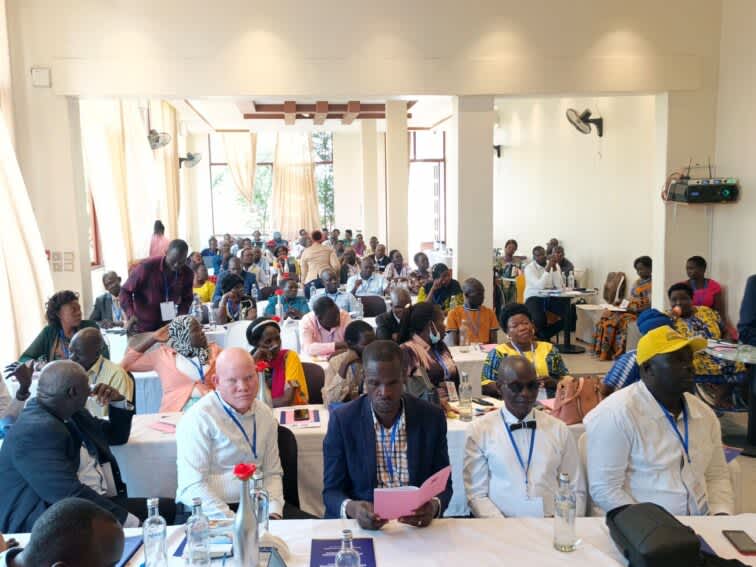
Members of the National Council for the Persons with disabilities across West Nile sub region gather for a capacity building at Dreamland Hotel in Arua district.
Dramadri Federick
Arua City
Persons with disabilities in West Nile are calling for reforms in the policies governing the appointment of leaders who serve on disability councils, saying the current system affects accountability and service delivery.
They argue that the current arrangement, where members of disability councils are appointed from local government structures up to the national level, has created challenges in accountability and representation.
According to the PWDs, some appointed representatives have become less responsive to the needs of the communities they represent, while others lack the capacity to effectively advocate for inclusive services.
The appointment of members to the National Council for Disability is guided by the National Council for Disability Act, 2003 as amended, alongside the Persons with Disabilities Act, 2020. Under the law, members are either appointed by the Minister responsible or serve as ex-officio representatives from relevant institutions.
However, Osborn Turyasingura, the Head of the National Secretariat for Special Interest Groups, says the structure has made it difficult to hold representatives accountable because some leaders feel more answerable to those who appoint them than to the persons with disabilities they represent.
“You find that most of these people pay allegiance to the appointing authority no necessarily the people they represent, we have to advocate for this council to have their leaders voted from village levels up to national level such that these people can be accountable to their constituents”. Turyasingura said
Turyasingura says reforms are needed to ensure disability leaders derive their mandate directly from the people they serve, allowing them to better champion issues affecting PWDs from the grassroots to the national level.
Meanwhile, Ayokoru Jean Longo, the District Community Development Officer in charge of Persons with Disabilities, says the current system has created confusion due to the existence of both appointed disability councils and an Electoral College system managed by the Electoral Commission.
She has called on policymakers to harmonize the laws to avoid overlapping structures. “Since they were brought on board as Disability Council members, most of them don’t know what to do”. Ayikoru explained
Aliru Khadija, the Female Councilor representing Persons with Disabilities at Arua City Council, who also chairs the Finance, Planning and Administration Committee, has welcomed the proposed reforms.
She says an elected leadership system could strengthen advocacy for increased funding towards community services and programmes supporting persons with disabilities.
“I warmly want to welcome this move because once you’re appointed you feel relaxed but once you’re elected, there’s that pressure that comes with elections you are expected to deliver service, push and advocate, lobby for the increment of the Indicative Planning Figures of the Community services department under Ministry of Gender Labor and Social Development” Khadija explained
According to the 2024 National Population and Housing Census released by the Uganda Bureau of Statistics, Uganda has approximately 5.5 million persons with disabilities, representing a disability prevalence rate of 13.2 percent among people aged two years and above.
The PWDs say strengthening leadership structures is critical in ensuring these numbers translate into effective policies, better resource allocation, and improved access to services.