


Hi, I am Anguzu, Radio Pacis AI Assistant. How can I help you today? Ask me about Radio Pacis, our programmes, frequencies, news, Arua, or the world around us.
26 June 2026 · Radio Pacis Newsroom
The arrival of the Deputy chief justice during the first session (Photo by Martin Anguyo) By Martin Anguyo Arua City Arua High Court has formally opened a Court of Appeal session, bringing appellate justice closer to the people of West Nile who previously had
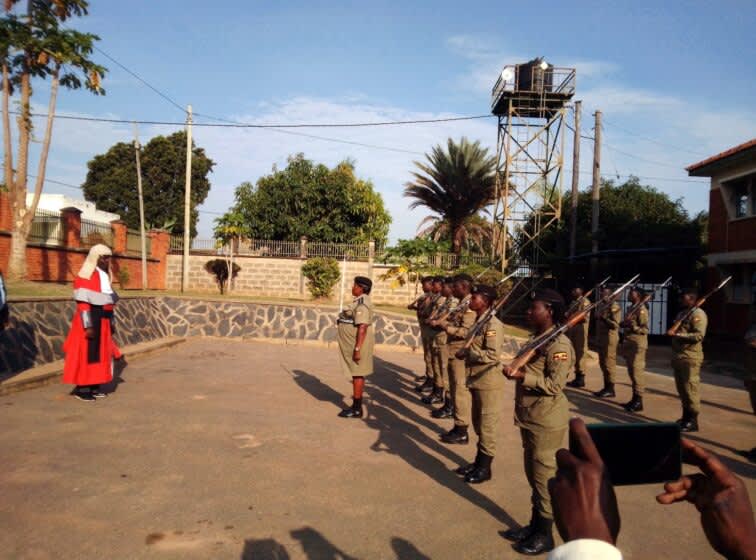
The arrival of the Deputy chief justice during the first session (Photo by Martin Anguyo)
By Martin Anguyo
Arua City
Arua High Court has formally opened a Court of Appeal session, bringing appellate justice closer to the people of West Nile who previously had to travel to Kampala to have their appeals heard.
An appellate justice is a judge who works in an appeals court. The landmark development, launched on Tuesday, comes after years of appeals from judicial officers, lawyers, and residents who argued that the distance to Kampala had become a significant barrier to accessing justice.
Many complainants were forced to travel hundreds of kilometers to pursue appeals, a challenge that often delayed justice and increased the financial burden on already vulnerable families.
A Court of Appeal is a superior court that reviews decisions made by lower courts to determine whether the law was correctly applied. Unlike trial courts, it does not hear new witnesses or examine fresh evidence but instead scrutinizes legal records and proceedings to establish whether judicial errors were made.
Presiding over the opening ceremony, Uganda’s Deputy Chief Justice, Justice Moses Kawumi Kazibwe, described the initiative as part of the Judiciary’s broader commitment to bringing justice closer to the people and ensuring that court services are accessible to all Ugandans regardless of their location.
“We are determined to bring court closure in communities when offences occur, improve our services and make communities understand the judicial proces,” he noted.
The Deputy Registrar of Arua High Court, Simon Toloko, urged residents of West Nile to embrace the opportunity, saying the appellate session would help address longstanding concerns among litigants seeking redress after judgments from lower courts.
“This is a significant step towards ensuring that justice is not only done but is seen to be accessible to the people it serves,” Toloko said.
Representing the Office of the Director of Public Prosecutions, Richard called upon judicial officers to expedite the hearing of appeals and avoid unnecessary delays that have historically contributed to case backlogs within the justice system. “It gives us courage as judges but I would advise all the judges here that, we shouldn’t delay court proceedings” he said.
While welcoming the development, the Chairperson of the West Nile Bar Association, Lady Daisy, challenged the Judiciary to go a step further by introducing civil appellate sessions in the region. “Such a move would further reduce costs and improve access to justice for parties involved in civil disputes” she said.
The significance of the Arua Court of Appeal session extends beyond convenience. Legal experts say decentralizing appellate services is a critical step in addressing regional inequalities in access to justice. By reducing travel costs, shortening waiting periods, and bringing judicial services closer to communities, the initiative is expected to enhance public confidence in the courts and improve the efficiency of case management.
The demand for appellate services in the region was evident during the first sitting, where the court heard 28 cases that had already been scheduled for hearing. The majority of the appeals involved serious criminal offences, including murder, rape, and aggravated defilement.
As the Court of Appeal begins its work in Arua, many residents view the development as more than a judicial reform—it is a long-awaited recognition that access to justice should not depend on one’s distance from the nation’s capital.