


Hi, I am Anguzu, Radio Pacis AI Assistant. How can I help you today? Ask me about Radio Pacis, our programmes, frequencies, news, Arua, or the world around us.
20 October 2025 · Radio Pacis Newsroom

Edigar narrates how he gained strength to stand for the girl child in Lugbari Primary School By Dramadri Federick Arua city A 14-year-old boy at Lugbari Primary School in Odupi Sub County, Terego District, has demonstrated a strong commitment to advocating for
Edigar narrates how he gained strength to stand for the girl child in Lugbari Primary School
By Dramadri Federick
Arua city
A 14-year-old boy at Lugbari Primary School in Odupi Sub County, Terego District, has demonstrated a strong commitment to advocating for girl child education by consistently making reusable sanitary pads and sharing his knowledge with fellow learners.
Ebenezer Edigar, a Primary Five pupil and the school's Head Boy for the past two years, has been teaching his classmates how to make reusable sanitary pads to help girls manage their menstrual hygiene effectively.
Edigar acquired this knowledge through the UNICEF i-UPSHIFT program, a youth social innovation and social entrepreneurship initiative that equips adolescents aged between 10-20 years with life skills and entrepreneurial tools to develop their own businesses and address community challenges.
His project has been warmly received by the school, which supports it by allocating part of the PTA funds to purchase additional materials for production.
“When I believe in myself and I believe in my abilities, I will be vigorous in doing things. We have seen the way the girls are suffering and nowadays things are not easy and other families are poor and they cannot buy sanitary pads monthly for them,” Edigar elaborated.
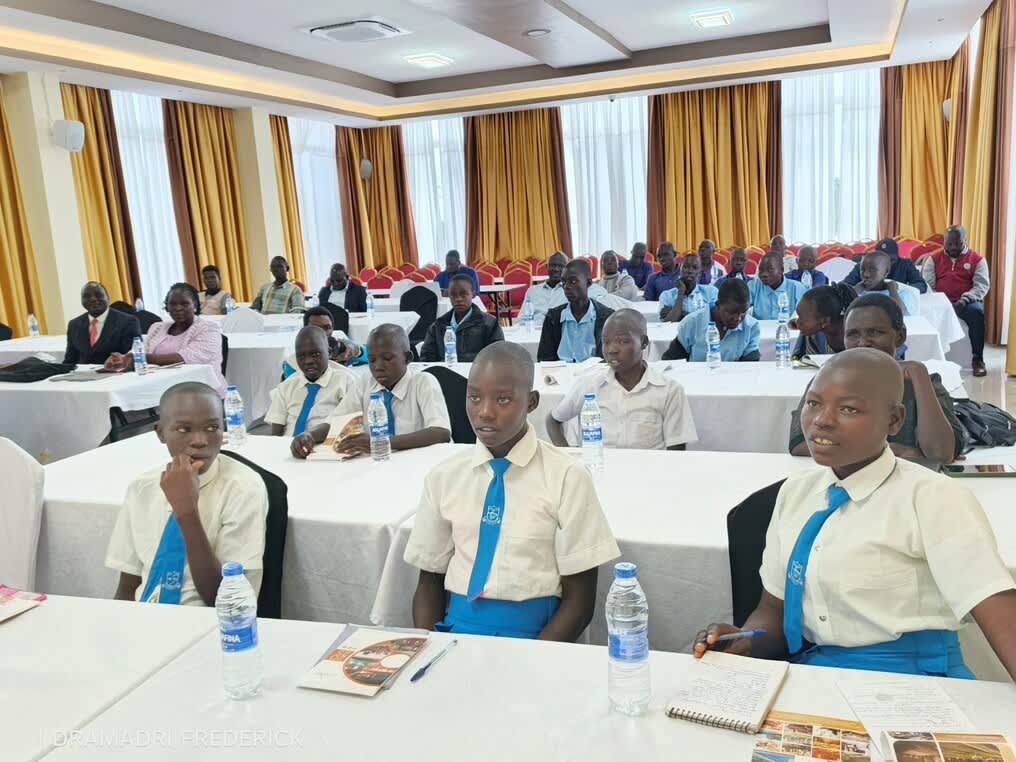
Edigar and the school mates appear before UNICEF officials to defend their proposal
Elizabeth Munguleni, a 16-year-old girl at Eleke Primary School in Yumbe District, shares that many girls lack support, especially in cases where parents do not value education.
“It’s shameful to see somebody’s blood, so if girls are in their menstruation, most of them would just stay at home because they don’t have pads to help themselves,” Munguleni explained.
The Integrated UPSHIFT (i-UPSHIFT) program is a social innovation and entrepreneurship initiative led by UNICEF, often in collaboration with organizations like the International Labour Organization (ILO). It aims to empower marginalized adolescents and young people aged 10 to 24—such as out-of-school youth, adolescent mothers, and refugees—by equipping them with skills, mentorship, and seed funding to develop sustainable community solutions.
The program emphasizes a curriculum based on human-centered design principles, guiding participants through identifying community problems, such as climate change or access to clean water, and working in teams to develop innovative solutions and prototypes.
Julius Ewaju, the Senior Education Officer of Madi Okollo District, where the same project is being implemented, noted that the high dropout rate among pupils, particularly among girls, is a significant challenge that affects the quality of human resources in the district. Ewaju says, the district statistics put the completion rate at 15 % while dropout rates among learners are at 50% attributing it to lack of support to the girl child education by availing them with scholastic materials and better sustainable menstrual hygiene management practices.
“You go to a primary seven class and find that out of 15 candidates in P.7 class, only 3 are girls and yet if you trace back from P.1 class these might have been 100-150 learners,” Ewaju stated.
The 2024 National Census indicates that in West Nile a region with a population of approximately 3.8 million, the illiteracy rates stand at 30%. Furthermore, only 42% of professionals in the region possess certificates, just 18% hold degrees, a mere 0.2% have PhDs, and 29% lack any formal education, revealing significant disparities in educational attainment.
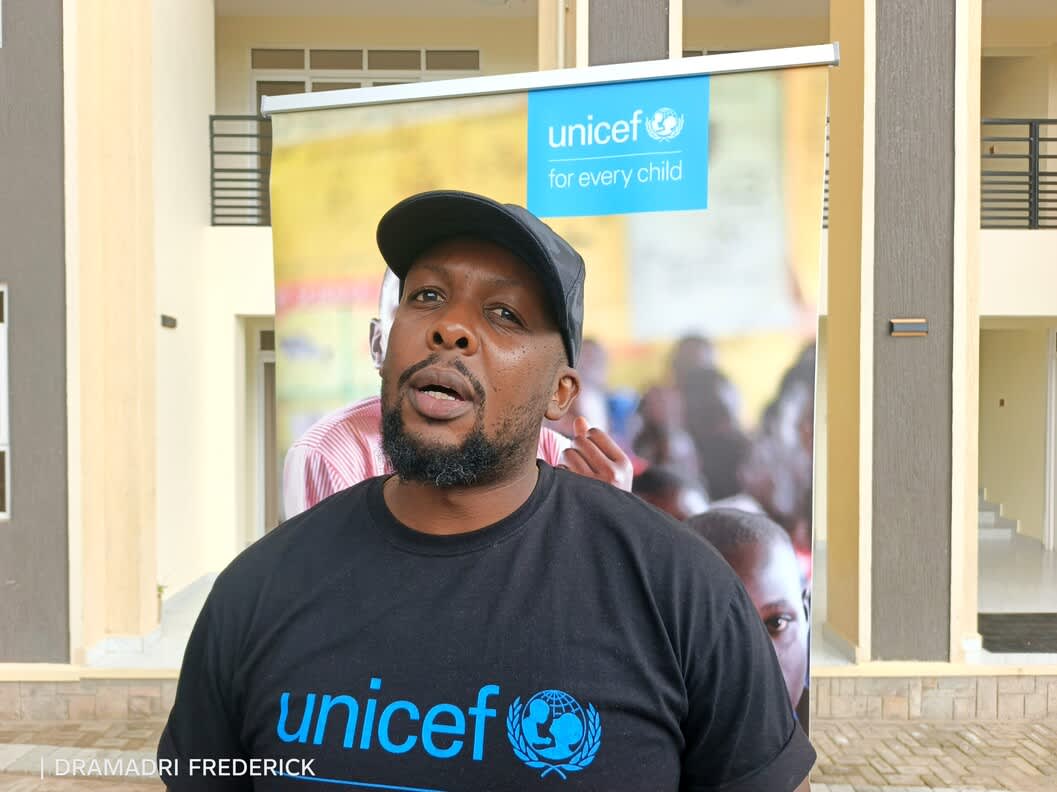
Edmond Mwebembezi, Communications Officer at UNICEF Uganda
However, Edmond Mwebembezi, Communications Officer at UNICEF Uganda emphasized the need for a concerted effort to address the factors contributing to the high dropout rates among girls in schools.
He advocates for empowering children and youth to be active participants in identifying their challenges and leading solutions. “We don’t think any solution is bad,” Mwebembezi remarked. “But we believe that these children, who are the future of the country and the world at large, should be given the opportunity to be at the forefront of such activities. They need to be involved in creating sustainable solutions so that they can find a better place for themselves.”
According to the Economic Policy Research Centre, Uganda's school dropout rates are among the highest in Sub-Saharan Africa, with approximately 45% dropout in primary education and around 30% in secondary education. These figures are notably higher than neighboring East African countries like Kenya and Tanzania, which boast dropout rates below 25%.
This discrepancy highlights the urgent need for comprehensive interventions to improve school retention, especially for girls facing gender-specific challenges such as menstrual health and social support, to foster sustainable development and human capital growth in Uganda.