


Hi, I am Anguzu, Radio Pacis AI Assistant. How can I help you today? Ask me about Radio Pacis, our programmes, frequencies, news, Arua, or the world around us.
27 May 2026 · Radio Pacis Newsroom
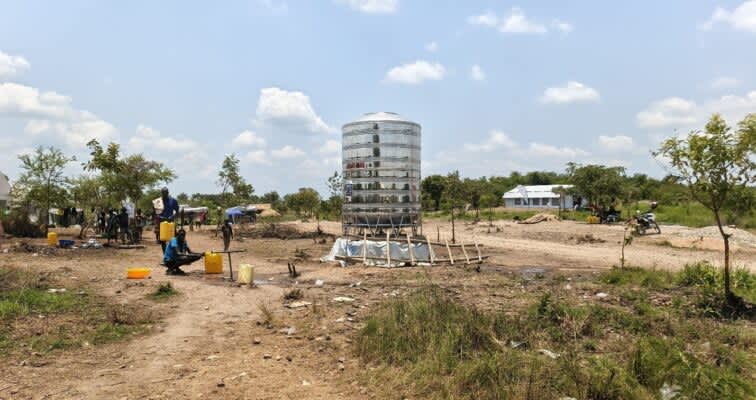
Funding gaps hit refugee settlements in the West Nile region escalating conflicts over resources (FILE Photo by Dramadri) By Dramadri Federick Arua city Stakeholders across Uganda’s refugee-hosting districts are calling for stronger collaboration and increased
By Dramadri Federick
Arua city
Stakeholders across Uganda’s refugee-hosting districts are calling for stronger collaboration and increased international investment to build resilient, peaceful, and sustainable communities as refugee influxes as climate-related pressures intensify across the West Nile region.
During a high-level inter-district dialogue on peacebuilding and climate resilience convened by Oxfam in Uganda, leaders from Terego, Yumbe, and Madi Okollo districts warned that years of humanitarian and development gains risk being reversed due to shrinking donor funding, environmental degradation and increasing competition over natural resources.
The dialogue, held under the theme “Building Peace and Climate Resilience: Strengthening Collaboration for Sustainable Communities,” brought together political and technical leaders, refugee-led organizations, civil society actors, cultural institutions, and development partners to identify locally driven solutions for some of Uganda’s most vulnerable communities.
Refugee Influx Intensifying Pressure on Fragile Communities
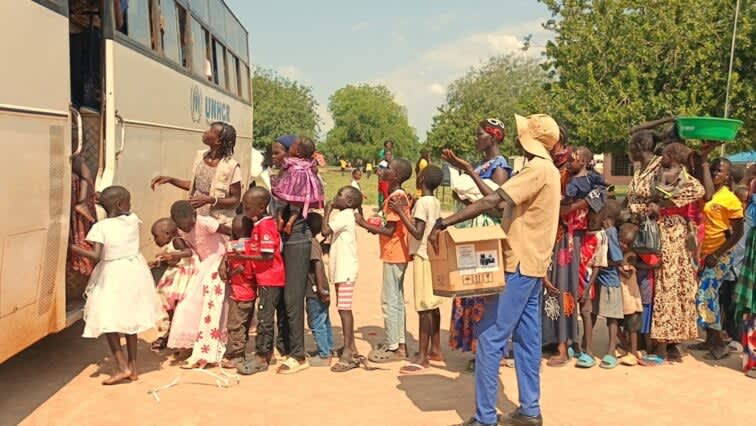
Uganda remains Africa’s largest refugee-hosting country, currently sheltering approximately 2 million refugees, with about 70% of them settling in the West Nile region, according to the UNHCR.
The majority of these are fleeing conflict and instability in South Sudan and the Democratic Republic of Congo.
In the West Nile region alone, the Office of the Prime Minister reports that more than 8,000 new refugees have arrived since January 2025, settling in Bidibidi, Lobule, Imvepi and Rhino Camp settlements.
The rapid influx has placed enormous strain on already overstretched social services, land, water resources, forests, and livelihoods.
According to the United Nations High Commissioner for Refugees (UNHCR), nearly 92 percent of refugees in Uganda live alongside host communities that are highly vulnerable to climate shocks, including prolonged droughts, extreme heatwaves and flooding. At the same time, 99 percent of refugee households rely on firewood and charcoal for cooking, creating an annual demand exceeding 345,000 metric tons of woody biomass across settlements.
This growing dependence on natural resources has accelerated deforestation, environmental degradation, and tensions between refugee and host communities over access to land and livelihoods.
“We need to collaborate to strengthen communities where people live in harmony with each other and the environment,” Jena Toma, Deputy Refugee Desk Officer for West Nile Region in the Office of the Prime Minister said in a statement.
“There are increasing conflicts over resources, yet the number of partners and available funding to address these challenges continues to decline. Without coordinated action, the crisis could worsen,” she added.
Climate Change and Conflict Deepening Vulnerability.
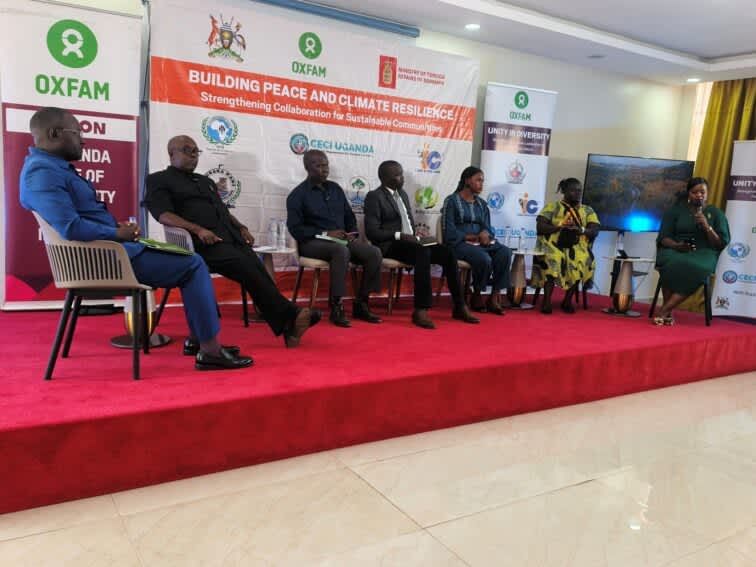
Stakeholders at the dialogue emphasized that climate change is no longer a future threat but a present-day humanitarian and development crisis directly affecting food security, income generation and social cohesion.
Francis Shanty Odokorach, Country Director of Oxfam in Uganda, noted that, climate-induced pressures are fueling competition over scarce resources, heightening risks of conflict within and between refugee and host communities.
“Climate change is already affecting livelihoods, food security, and community stability across Uganda, particularly here in West Nile,” Odokorach mentioned.
“When access to land, water, forests, and livelihoods becomes strained, tensions emerge. This is why we must invest in integrated solutions that strengthen resilience, promote inclusion, and build lasting peace,” he added.
He further warned that the humanitarian response in Uganda is facing severe financial constraints despite rapidly increasing needs.
“The refugee response in Uganda is critically underfunded. Accessing funding has become more difficult and more competitive globally, yet the humanitarian pressures continue to rise,”
“This calls for stronger local systems, integrated government planning, and sustained investment in community-led resilience initiatives,” he explained.
Local Solutions Driving Sustainable Change
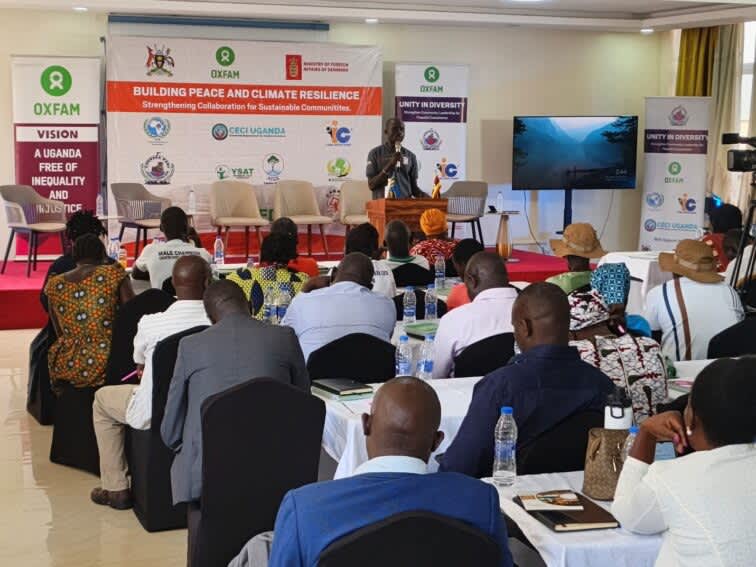
The inter-district dialogue forms part of the Humanitarian, Development and Peace Initiative for Crisis-Affected Populations in Uganda (HDP Project) implemented by Oxfam in Uganda and partners with support from the Danish International Development Agency (DANIDA).
The initiative promotes community-led climate adaptation, peacebuilding, accountable governance and sustainable livelihoods to reduce dependency on humanitarian aid while strengthening resilience among both refugees and host populations.
Local governments in the region are already implementing practical solutions aimed at restoring degraded ecosystems and preventing future conflicts.
John Engamvile, Terego District Environment Officer, revealed that the district has developed an Environmental Action Plan to coordinate interventions, reduce duplication and strengthen environmental restoration efforts.
“We are prioritizing community-driven solutions and collective action,”
“Stakeholders across different levels are now working together to ensure environmental damage is mitigated while supporting sustainable livelihoods for both refugees and host communities,” Engamvile explained.
Meanwhile, Madi Okollo Resident District Commissioner Masereka Joshua emphasized the importance of measuring impact and documenting lessons from ongoing interventions to guide future programming and investment.
“We need evidence on how these interventions are reducing conflicts and mitigating climate change effects within refugee settlements,” Masereka said.
“Strong data and accountability mechanisms are essential for sustainable humanitarian and development responses,” he maintained.
A Critical Funding Gap Threatens Progress.
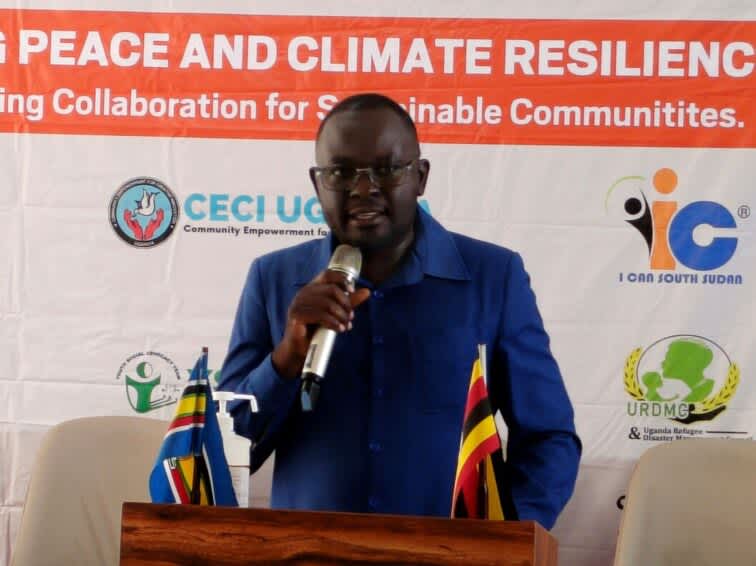
Francis Shanty Odokorach, Country Director of Oxfam in Uganda speaking during the inter-district dialogue in Arua.
Despite Uganda’s internationally recognized open-door refugee policy, humanitarian actors warn that the refugee response remains critically underfunded.
The Uganda Country Refugee Response Plan currently requires more than USD 850 million, yet funding gaps exceeding USD 600 million threaten essential services, environmental restoration programs and long-term resilience initiatives.
Development partners and humanitarian agencies at the dialogue called for increased international solidarity and long-term financing models that integrate humanitarian response, climate adaptation, and peacebuilding.
Mr. Odokorach revealed that the effects of climate change are crippling livelihoods, compounded by the alarming influx of refugees from South Sudan and the Democratic Republic of Congo who depend heavily on natural resources within the settlements.
“The refugees’ response in Uganda is severely underfunded. It has become more difficult and more competitive to be able access funding that we used to have and we now need a lot of local mechanisms such as local government integrations of programs and projects for sustainability,” the country Director called.
Without sustained investment, stakeholders warn that environmental degradation, poverty and social tensions could deepen hence undermining stability in one of Uganda’s most fragile regions.
As refugee numbers continue to rise and climate shocks intensify, local leaders say collaborative, community-driven, and adequately funded interventions are urgently needed to secure a peaceful and sustainable future for both refugees and host communities in West Nile and Uganda as a country.