


Hi, I am Anguzu, Radio Pacis AI Assistant. How can I help you today? Ask me about Radio Pacis, our programmes, frequencies, news, Arua, or the world around us.
16 March 2026 · Radio Pacis Newsroom
Teachers for an engagement with WENRECO and NCDC officials (Photo by Benson Pastore) By Martin Anguyo Arua City Efforts to improve the quality of education in the West Nile sub-region are gaining momentum as the West Nile Rural Electrification Company (WENRECo
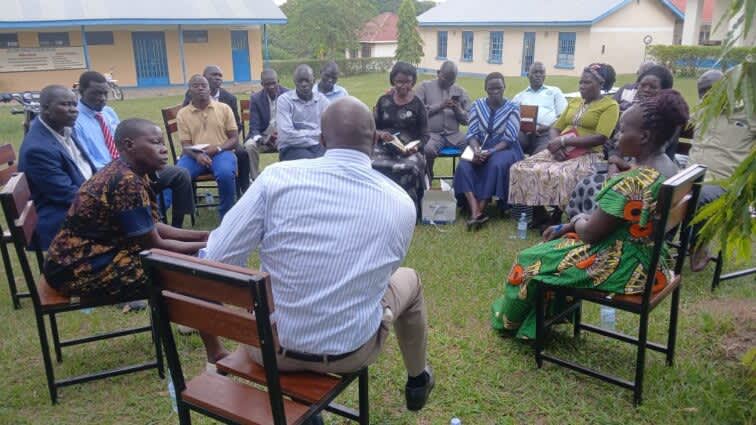
Teachers for an engagement with WENRECO and NCDC officials (Photo by Benson Pastore)
By Martin Anguyo
Arua City
Efforts to improve the quality of education in the West Nile sub-region are gaining momentum as the West Nile Rural Electrification Company (WENRECo) intensifies its support toward strengthening teachers’ professional capacity in curriculum interpretation and item writing—two key areas that significantly influence learners’ academic performance.
The initiative, which has been ongoing but is now receiving renewed emphasis, is targeting teachers from five districts across the region. It focuses on equipping educators with practical skills to better interpret the national curriculum and design quality assessment items that accurately measure learners’ understanding and competencies.
Education experts have consistently pointed out that challenges in curriculum interpretation and weak assessment methods contribute to poor academic performance in many schools, particularly in rural areas.
By strengthening teachers’ knowledge in these areas, stakeholders believe schools in West Nile will be better positioned to improve learning outcomes.
Speaking about the program, Lillian Ayot, the Public Relations Officer for WENRECo, explained that the company’s intervention reflects its broader commitment to supporting community development beyond the provision of electricity.
She noted that improving teachers’ professional skills is a critical step toward strengthening the education sector in the region.
According to Ayot, the intensified training sessions are designed to guide teachers on how to align classroom instruction with curriculum expectations while developing examination questions that promote critical thinking and deeper understanding among learners.
″We have been having interventions within this initiative where we sponsor assessments and organize trainings to build the capacity of teachers‶ she said.
Meanwhile, Etoma Geoffrey, the founder of West Nile Education Solutions, said the initiative is already showing promising results. He explained that teachers who have undergone the training are demonstrating improved confidence in preparing examinations and structuring lessons that better address learners’ needs.
“In the recent assessments carried out, the initiative is yielding fruit and continuous professional development for teachers is one of the most effective strategies for transforming education outcomes,” Geoffrey noted, adding that such programs help educators remain updated with modern teaching and assessment methods.
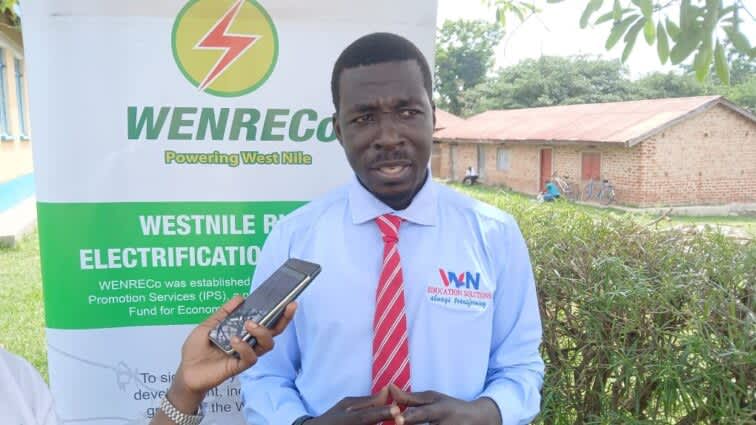
Etoma Geoffrey, the West Nile Education solutions founder speaks on the positive impact of the initiative (Photo by Benson Pastore).
Teachers who participated in the training also reported significant benefits. Goffin Amatre, a teacher from Oleba Primary School, said the program has broadened his understanding of how to develop examination questions that align with curriculum objectives and effectively evaluate learners’ knowledge.
“Through this training, I have learned that setting examination questions is not simply about testing memory, but about aligning every question with the specific learning objectives in the curriculum,” Amatre explained. “This approach will help us assess learners more accurately and identify areas where they need more support,” he added.
Similarly, Amatre Sally, a teacher from Bongova Primary School, revealed that the training introduced her to new teaching and assessment approaches that were not extensively covered during her teacher training course. She expressed confidence that the newly acquired skills will help improve how she evaluates learners in the classroom.
“Some of the assessment methods we have learned here were not deeply emphasized during our teacher training,” Sally noted. “With these new skills, I now feel more confident in designing tests that truly measure learners’ understanding rather than just their ability to recall information,” she said
Education stakeholders say initiatives that focus on strengthening teacher capacity remain critical in addressing learning gaps, particularly in underserved communities where access to continuous professional training is limited and education analysts believe that if sustained, such targeted capacity-building efforts could contribute significantly to improved learner performance in regional and national examinations in the coming years.