


Hi, I am Anguzu, Radio Pacis AI Assistant. How can I help you today? Ask me about Radio Pacis, our programmes, frequencies, news, Arua, or the world around us.
24 April 2026 · Radio Pacis Newsroom
Animals feeding on waste materials from the Arua city recycling plant in Ewuata. By Dramadri Federick Arua city Poorly managed plastic waste from Ediofe Trading Centre is increasingly finding its way into River Enyau, which lies just a short distance from the
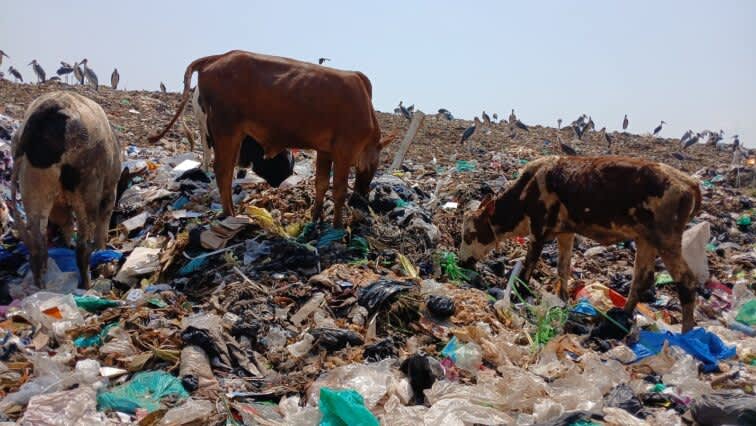
Animals feeding on waste materials from the Arua city recycling plant in Ewuata.
By Dramadri Federick
Arua city
Poorly managed plastic waste from Ediofe Trading Centre is increasingly finding its way into River Enyau, which lies just a short distance from the busy market. The river, once a vital natural water source for surrounding communities, is now under serious threat from continuous dumping of polythene bags, plastic bottles, and other non-biodegradable materials.
Traders and residents around the trading centre continue to dispose off waste in open spaces, roadside trenches, and drainage channels. During rainy seasons, the waste is washed directly into River Enyau, polluting the water and choking its flow. The result has caused frequent blockages, stagnant water pools, and growing fears of disease outbreaks linked to contaminated water sources.
Mike Baiga, Chairperson of Ediofe Trading Centre Committee, says authorities are now planning strict enforcement measures to reverse the trend. He notes that sanitation inspections will soon be intensified in the area. “By next week we shall be moving door to door to do inspections. One should have a bin or sack for keeping waste including plastics among other requirements because the waste disposal in Ediofe Trading Centre directly affects River Enyau,” Baiga said.
Residents say the situation has worsened due to weak enforcement of waste management regulations and lack of consistent monitoring by city authorities. Despite the presence of designated waste collection points, many traders and households continue to ignore them, opting instead for illegal dumping sites that eventually drain into the river system.
The environmental impact is becoming increasingly visible. Plastic waste is now embedded along riverbanks, clogging water channels and affecting aquatic life. Fishermen and nearby residents report declining water quality and increasing difficulty accessing clean water for domestic use.
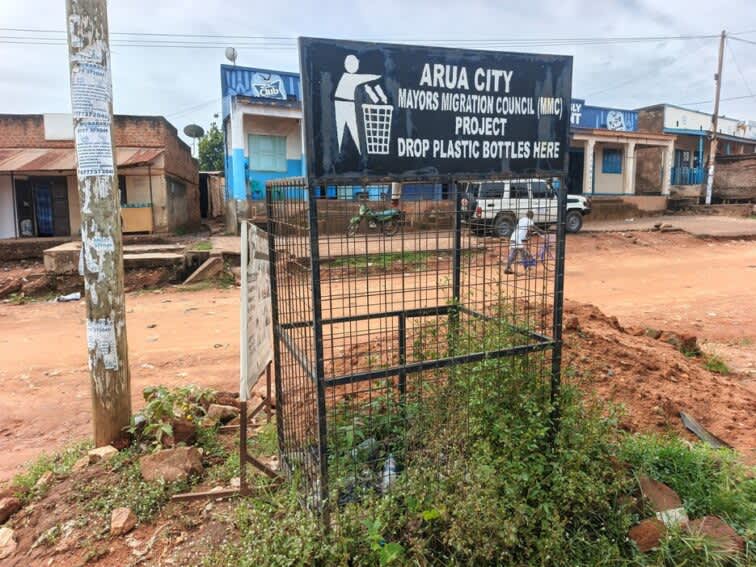
One of the unutilized plastic waste collector (Takataka point) installed at Ediofe Trading center since 2022.
The crisis is further compounded by the failure of a recycling plant established under a $200,000 initiative by the Mayors Migration Council through its Global Cities Fund. The project, which was intended to strengthen waste management systems in Arua City, has reportedly never become fully operational since its establishment.
As a result, large heaps of plastic waste have accumulated at the facility, creating an additional environmental hazard instead of solving the problem. Shockingly, animals especially cattle have been seen feeding on the scattered plastic waste around the site. This has raised serious concerns among residents and environmental experts, who warn that the contamination is entering the food chain.
Local farmers say cattle health has visibly deteriorated, with reports of weight loss, digestive complications, and reduced productivity. The fear is that toxins and microplastics consumed by livestock may eventually reach humans through milk and meat products, posing long-term public health risks.
Augustino Acema, LC1 Chairperson of Ewanyapa Cell, blames weak enforcement and lack of discipline among residents for the worsening situation. “The whole city, people just throw these plastics anyhow because they are not strictly followed,” he said, pointing to gaps in supervision and accountability.
Uganda’s environmental governance framework provides clear legal obligations, but enforcement remains inconsistent. Key instruments include the Constitution of the Republic of Uganda, which guarantees the right to a clean and healthy environment under Article 39 and obligates citizens to maintain environmental cleanliness under Article 17(j). These provisions are reinforced by the National Environment Act, which regulates plastic use, prohibits littering, and introduces Extended Producer Responsibility requiring manufacturers to manage post-consumer waste.
The National Environment (Waste Management) Regulations further operationalize these laws by prohibiting non-compliant plastic bags, mandating waste minimization, and requiring sorting and collection systems at source. In addition, the Uganda National Bureau of Standards enforces quality standards for permissible plastic products under Uganda Standard 773:2007.
Despite this comprehensive legal framework, implementation at local government level remains weak. Mary Dawaru, focal person for the Mayors Migration Council projects in Arua City, says local authorities are overwhelmed by non-compliant companies and lack adequate support. “We need the executive of the country to come to our aid; our hands are tied as a local government,” she said.
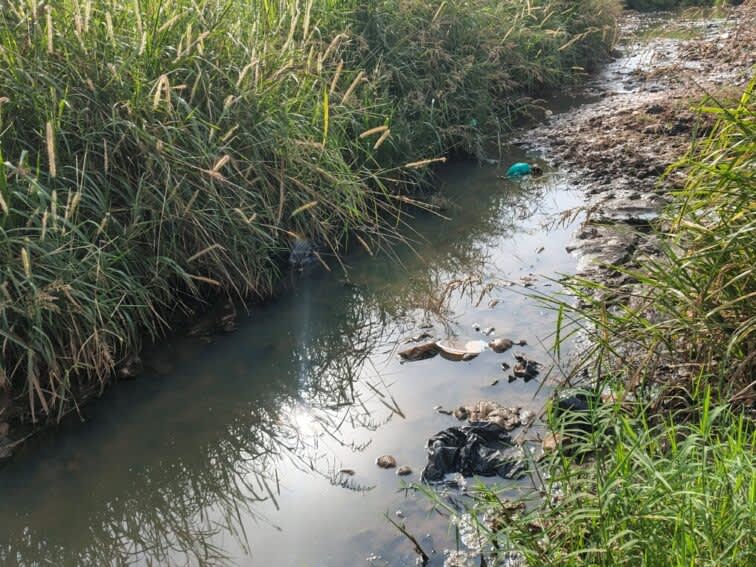
River Enyau under Threat as Ediofe Trading Centre Becomes a Pollution Hotspot.
Environmental experts warn that Arua City’s situation is a reflection of a broader national crisis. Robert Kajobe, Director of Training, Research and Innovations at Muni University, cautions that continued open dumping and burning of plastics will have severe health consequences. “We have a lot of open dumping in these faster growing cities, and open burning of plastics releases a lot of dioxides in the air, and these have complications to humans in form of cancer,” he explained.
Nationally, Uganda generates an estimated 600 tons of plastic waste daily, yet only about 6 percent is recycled mostly by informal waste pickers operating without formal support systems. This gap leaves most waste to accumulate in urban centers like Arua, where infrastructure and enforcement capacity are already stretched.
Without urgent intervention, experts warn that Arua City risks facing escalating environmental degradation, contamination of water sources like River Enyau, livestock health crises, and increased public health risks. Strengthening enforcement, operationalizing stalled infrastructure like the recycling plant, and ensuring producer accountability are seen as critical steps toward reversing the crisis and restoring environmental balance in the city.