


Hi, I am Anguzu, Radio Pacis AI Assistant. How can I help you today? Ask me about Radio Pacis, our programmes, frequencies, news, Arua, or the world around us.
26 March 2026 · Radio Pacis Newsroom
Some of the women checking on the cabbage they planted as a group (Photo by Martin Anguyo) By Martin Anguyo Arua City The implementation of the Sustainable Inclusive Youth Employment Pathways (SIYEP) program, supported by the Agency for Accelerated Regional De
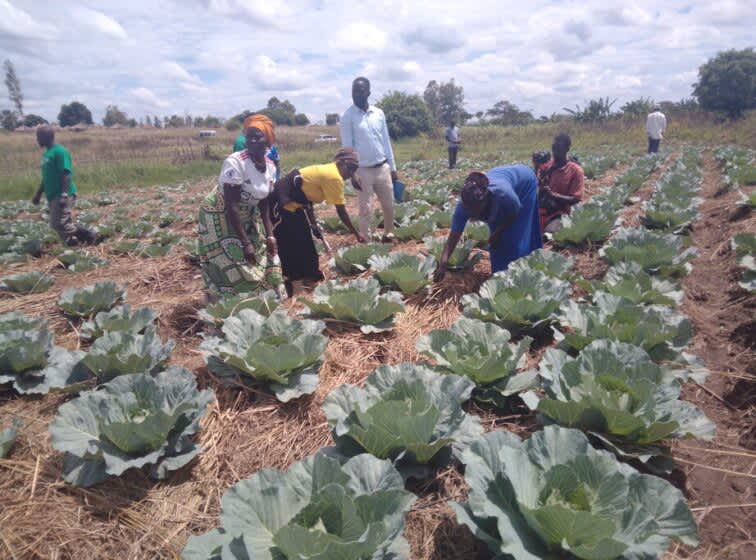
Some of the women checking on the cabbage they planted as a group (Photo by Martin Anguyo)
By Martin Anguyo
Arua City
The implementation of the Sustainable Inclusive Youth Employment Pathways (SIYEP) program, supported by the Agency for Accelerated Regional Development (AFARD) in partnership with the MasterCard Foundation, is steadily transforming the livelihoods of young women and girls in Lodonga Sub-county, Yumbe District through horticulture training.
The initiative is already yielding visible impact, as many beneficiaries who had initially lost hope in securing meaningful livelihoods are now embracing horticulture as a reliable source of income and self-reliance.
The program is equipping them with practical skills in modern farming practices such as nursery bed preparation, irrigation, pest control, and post-harvest handling—skills that are critical in enabling them to transition from vulnerability to productivity and long-term economic sustainability.
Joyce Wanican Drileba, the Country Program Director at AFARD, expresses optimism that the intervention will significantly boost incomes among the youth, particularly young women who often face limited economic opportunities.
She describes the Program as a “transformative and catalytic empowerment intervention” that is “strategically repositioning marginalized young women into economically productive actors within their communities,” emphasizing that such initiatives are key to addressing structural unemployment.
Beneficiaries themselves attest to the program’s growing impact. Halima Fikira, one of the participants, commends the partners for what she calls a “life-altering and economically liberating opportunity,” noting that the horticulture training has “significantly enhanced her entrepreneurial capacity and household resilience,” while opening up new pathways for financial independence and self-sufficiency.
Similarly, Dawa Rukia urges fellow young women to embrace horticulture, describing it as a “sustainable and income-generating agricultural venture with long-term socio-economic benefits.”
She stresses that the skills acquired are not only practical but also “instrumental in strengthening household food security and improving overall livelihoods,” especially in rural settings where formal employment opportunities remain scarce.
The SIYEP program, valued at approximately 170 billion Ugandan shillings, is being implemented beyond Yumbe District, reaching 62 districts across eight sub-regions in Uganda.
This wide coverage reflects a deliberate and strategic effort to tackle youth unemployment at scale, particularly among vulnerable populations.
With youth unemployment still a pressing challenge in Uganda—where over 70 percent of the population is below the age of 30—programs like SIYEP present a scalable model for inclusive economic empowerment.
By equipping young people with practical, income-generating skills, the initiative is not only restoring hope but also contributing to national development through increased productivity, improved household incomes, and reduced dependency levels.