


Hi, I am Anguzu, Radio Pacis AI Assistant. How can I help you today? Ask me about Radio Pacis, our programmes, frequencies, news, Arua, or the world around us.
18 March 2026 · Radio Pacis Newsroom
A Journalist editing a story using Adobe Audition Application (Photo by Dramadri Federick) By Dramadri Federick Arua City Lawyers, journalists, and digital rights advocates are calling for the immediate release of all suspects charged under the Computer Misuse
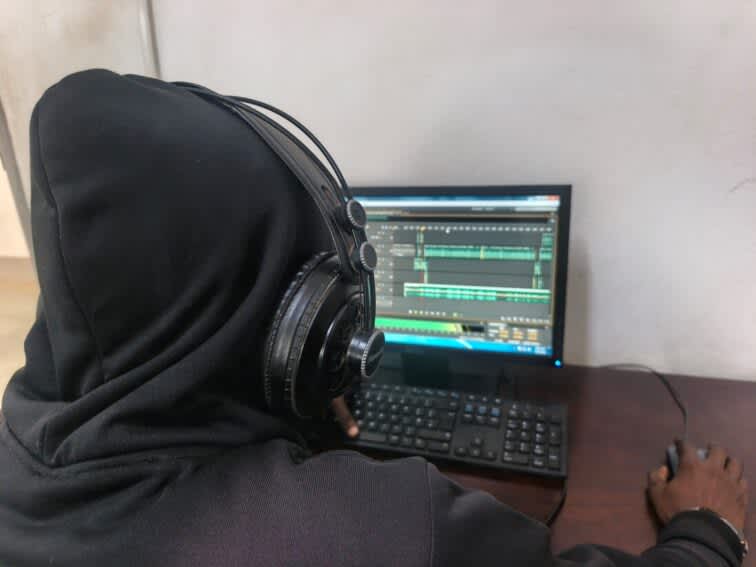 A Journalist editing a story using Adobe Audition Application (Photo by Dramadri Federick)
By Dramadri Federick
Arua City
Lawyers, journalists, and digital rights advocates are calling for the immediate release of all suspects charged under the Computer Misuse (Amendment) Act, 2022, following its nullification by Uganda’s Constitutional Court.
In a landmark unanimous decision, on Tuesday March 18, a five-judge panel led by Irene Mulyagonja declared the law null and void, citing serious constitutional violations in both its enactment and implementation.
The court found that the Act was passed without the required parliamentary quorum, in violation of Rule 24(3) of Parliament’s Rules of Procedure and Articles 88 and 89 of the Constitution, rendering the entire legislative process unconstitutional.
Beyond procedural flaws, the justices ruled that several provisions of the law were vague and overly broad, failing to clearly define criminal conduct and instead granting law enforcement excessive discretion that enabled arbitrary and selective enforcement.
The ruling further held that the law unjustifiably limited freedom of expression as guaranteed under Article 29 of the Constitution. Provisions targeting “malicious information” and “unsolicited messages,” the court noted, had the effect of suppressing legitimate public debate, dissent, and media practice. The court also declared criminal libel provisions incompatible with a free and democratic society.
The controversial amendments originated from a Private Member’s Bill introduced in February 2022 by Muhammad Nsereko.
The bill was passed in September 2022 and later assented to by Yoweri Museveni in October the same year. It introduced harsh penalties, including fines of up to UGX 15 million and a 10-year ban from holding public office for convicted individuals.
The decision has been widely welcomed by journalists, lawyers, and content creators, who argue that the law had significantly curtailed freedom of expression, media practice, and digital innovation in Uganda.
Counsel Abibo Fred Arwoa, Managing Partner at Sinai Advocates and Partners, criticized the law as having been rushed through Parliament without due process and used to target opposition politicians, activists, journalists, and content creators. He argued that the Act contravened Chapter Four of the 1995 Constitution, which guarantees fundamental human rights.
“It was a law of rule, not a rule of law,” Arwoa said.
He has since called on law enforcement agencies, including the Police, UPDF, and Prisons authorities, to immediately release all individuals detained under the now-nullified law.
“My prayer is that those who are still in cells, on remand, and in prisons must be released with immediate effect because, as it stands today, their detention is illegal,” he added.
Sabir Musa, Secretary General of the Arua City Journalists Association, said the law had created a climate of fear among journalists, particularly affecting investigative reporting by criminalizing the unauthorized recording and sharing of information.
“The ruling restores the space for journalists to operate freely. Freedom of the press, expression, and access to information is now stronger because the Computer Misuse Act imposed serious limitations,” Musa noted.
Similarly, Clement Aluma, Chairperson of the West Nile Press Association, welcomed the court’s decision but emphasized the need to retain protective provisions, particularly those safeguarding children.
While applauding the independence of the judiciary, Aluma questioned the subjective nature of the law’s enforcement.
“It criminalized the work of media practitioners, especially in sharing what authorities termed offensive, hateful, or unsolicited information. But who determines what is offensive or hateful?” he asked.
Critics of the law had long argued that provisions such as Section 25 were deliberately vague, allowing authorities to arrest and prosecute individuals, including journalists and activists, for criticizing public officials. High-profile cases, including that of Stella Nyanzi, Edward Awebwa Sentenced to six years for “abusing” the President while Ibrahim Musana of Pressure 24/7 were Remanded for hate speech against Gen. Muhoozi Kainerugaba, among others were prosecuted under this Act for social media posts deemed offensive to the presidency.
With the court’s ruling, all ongoing police investigations, arrests, and court proceedings based on the 2022 amendments are expected to cease immediately. Prosecutors can no longer sustain charges under the struck-down provisions, effectively bringing relief to many who had been affected by the law.