


Hi, I am Anguzu, Radio Pacis AI Assistant. How can I help you today? Ask me about Radio Pacis, our programmes, frequencies, news, Arua, or the world around us.
30 April 2026 · Radio Pacis Newsroom
DAILY MONITOR President Museveni has assented to eight pieces of legislation, including Copyright and Neighbouring Rights (Amendment) Act, 2026 which seeks to modernize Uganda’s 2006 copyright laws to better protect creators in the digital age and ensure they
DAILY MONITOR
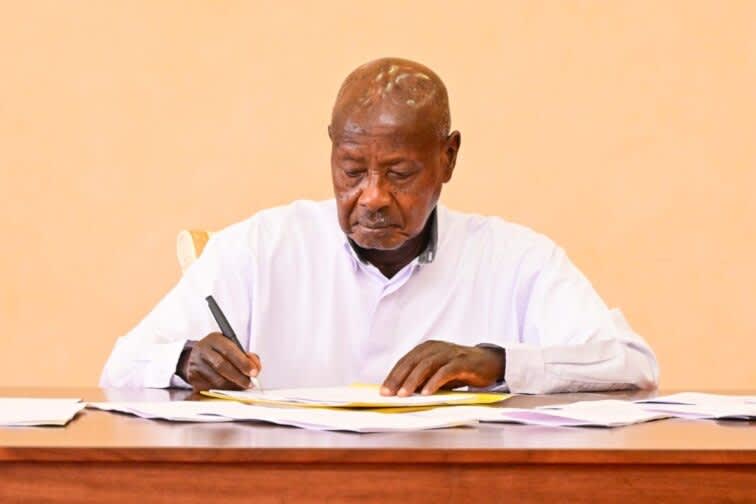
President Museveni has assented to eight pieces of legislation, including Copyright and Neighbouring Rights (Amendment) Act, 2026 which seeks to modernize Uganda’s 2006 copyright laws to better protect creators in the digital age and ensure they receive fair compensation for their work.
Passed by Parliament on March 17, 2026, the law provides stiffer penalties for infringement for piracy, introduces fines of up to Shs50 million and imprisonment for up to 10 years, or both for anyone who violates it.
Unlike before, the Registrar of Copyright or owners can now issue orders to online platforms to quickly remove infringing content from the internet, according to the law signed by Mr Museveni on Wednesday.
While copyright is automatic, the new law requires registration with URSB to use certain legal protections, such as take-down notices.
Additionally, the Minister of Justice can now collaborate with the Uganda Registration Services Bureau (URSB) to set procedures for collecting and distributing royalties through the National Payment System.
To prevent unfair exploitation, copyright assignments are limited to 20 years, after which the rights revert to the original author.
Mr Museveni also signed the Employment (Amendment) Act, 2025 strengthens protections for domestic, casual, and migrant workers, according to a statement from his press team.
The law offers several reforms, except the national minimum wage which remains a point of contention and was not adjusted by this specific Act.
The new law, which updates the Employment Act of 2006 formally recognises domestic and casual workers as employees under “contracts of service,” ensuring they are entitled to the same basic rights and benefits as other workers after four months of continuous engagement.
The new law also mandates that employers provide lactation stations and daily 30-minute breastfeeding breaks every two hours, or a reduction in daily work hours for 60 days following maternity leave. Additionally, it increases the entitlement for paid sick leave from two months to six months before an employer can legally terminate an employee due to illness.
All employers, regardless of workforce size, will be required to implement and display a formal sexual harassment policy (previously required only for those with 25+ employees).
The new law also Standardizes severance pay at a minimum of one month’s gross salary for each year of service and introduces stricter licensing for recruitment agencies and requires mandatory repatriation clauses in contracts for workers employed abroad.
The other laws Mr Museveni has signed include the National Drug and Health Products Authority Act, 2026, which expands regulation across medicines, vaccines, medical devices, diagnostics, cosmetics, and other health products, strengthening safety and oversight.
Also assented to were the Energy Efficiency and Conservation Act, 2026, introducing mandatory energy standards, audits, and regulation of inefficient technologies, and the Non-Performing Assets Recovery Trust (Repeal) Act, 2024, which dissolves the Trust and transfers its functions to the Ministry of Finance to streamline operations.
Other laws are the Forensic and Scientific Analytical Services Act, 2026 which enhances forensic systems and evidence handling; the Public Enterprises Reform and Divestiture (Amendment) Act, 2024, and the Magistrates Courts (Amendment) Act, 2026.