


Hi, I am Anguzu, Radio Pacis AI Assistant. How can I help you today? Ask me about Radio Pacis, our programmes, frequencies, news, Arua, or the world around us.
22 March 2026 · Radio Pacis Newsroom
NDA officials handing over partnership documents to Lugbara Kari Cultural Institution officials during their recent meeting in Arua City (Photo by Onzoma Albert). By Onzoma Albert Arua City The National Drug Authority (NDA) has issued a warning to the public a
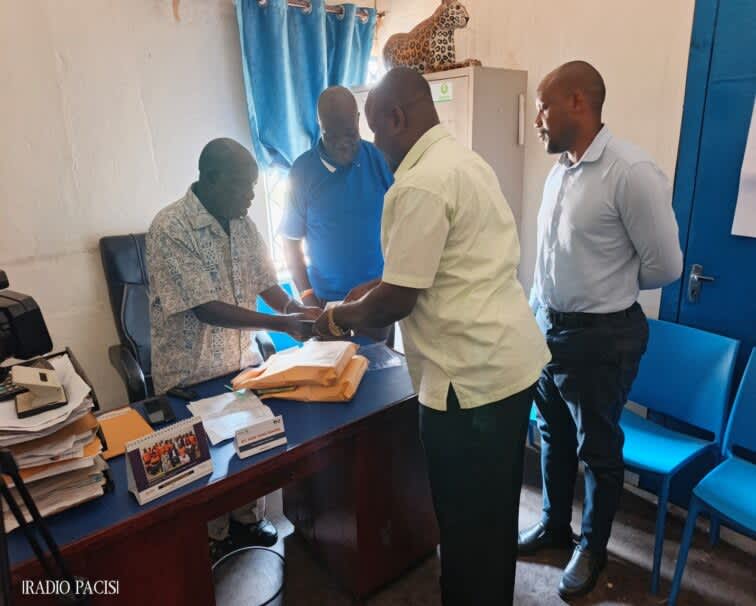
NDA officials handing over partnership documents to Lugbara Kari Cultural Institution officials during their recent meeting in Arua City (Photo by Onzoma Albert).
By Onzoma Albert
Arua City
The National Drug Authority (NDA) has issued a warning to the public against purchasing drugs from hawkers, unqualified medical personnel, and unlicensed drug outlets.
This initiative coincides with a campaign launched in partnership with the Lugbara Kari cultural institution to address the rising issue of drug hawking, particularly in Arua city and other border districts in West Nile region.
Since Arua’s elevation to city status in July 2020, the sale of drugs in public spaces such as markets, streets, and trading centers has increased significantly.
Fred Kalungi Kabuye, working with NDA’s Public Relations Office, emphasized that drug hawking poses serious public health risks and called on Ugandans to avoid buying medicines from unlicensed outlets.
“You spend money to buy drugs that will not be able to treat you at the end instead the illness will worsen so it is better when you are sick you go to the qualified medical personnel for proper medical check-ups and then they prescribe drugs for you and you take the drugs as they have prescribed and in case you are required to go back for review you follow-up later” he emphasized.
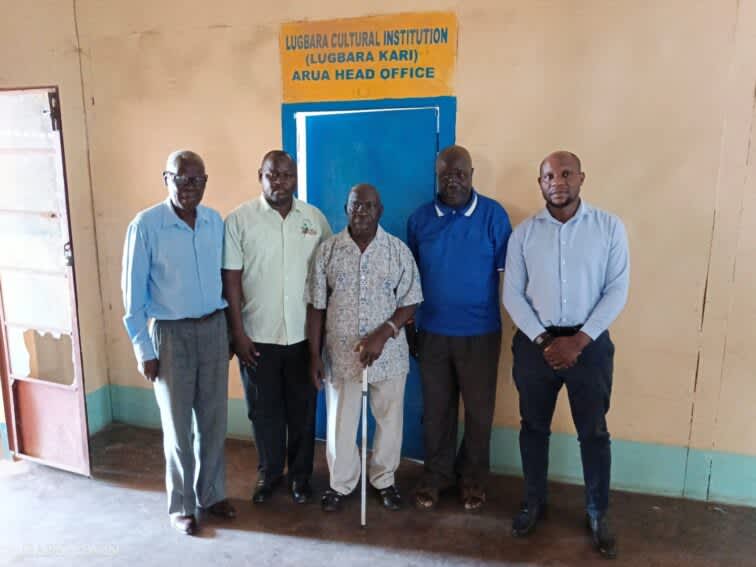
NDA officials and Lugbara Kari Officials pose for group photo after their meeting at Lugbara Kari offices in Arua City (Photo by Onzoma Albert).
Dr. Isaac Atiku, minister of health for the Lugbara Kari cultural institution, acknowledged the prevalence of drug hawkers and unlicensed practitioners within communities and reaffirmed the cultural institution’s support for NDA’s efforts to curb this vice.
“We these days have a lot people in our communities coming up as herbalists and many of them are not licensed but we as cultural leaders know them and I think our partnership with national drug authority will help us identify this people and teach them best practices” he said.
Angelo Matua Pati, the clan chief of Maracha under the Lugbara Kari, urged the NDA to intensify their efforts, especially along the border districts of West Nile bordering the Democratic Republic of Congo and South Sudan, where the illicit trade is particularly active.
“Many people are now selling this traditional medicines in Arua city here without working with our office to register them making it hard for us to know where they are coming from, for example last year in November I show some people who could have probably come from Sudan and were selling the traditional medicines and their tribes were not known and they just move all over the city without been regulated, I think such people should work closely with your office” he said.
The NDA is mandated by the National Drug Policy and Authority Act to regulate the importation, exportation, quality, and sale of pharmaceuticals and medicines. The current campaign is timely because unscrupulous hawkers and herbalists exploit public ignorance to sell counterfeit and fake drugs, posing significant health risks.
The initiative aims to protect public health by controlling unregulated drug sales and promoting awareness about the dangers of buying medicines from unlicensed sources, emphasizing the importance of authentic and licensed pharmaceutical products.