


Hi, I am Anguzu, Radio Pacis AI Assistant. How can I help you today? Ask me about Radio Pacis, our programmes, frequencies, news, Arua, or the world around us.
6 June 2026 · Radio Pacis Newsroom
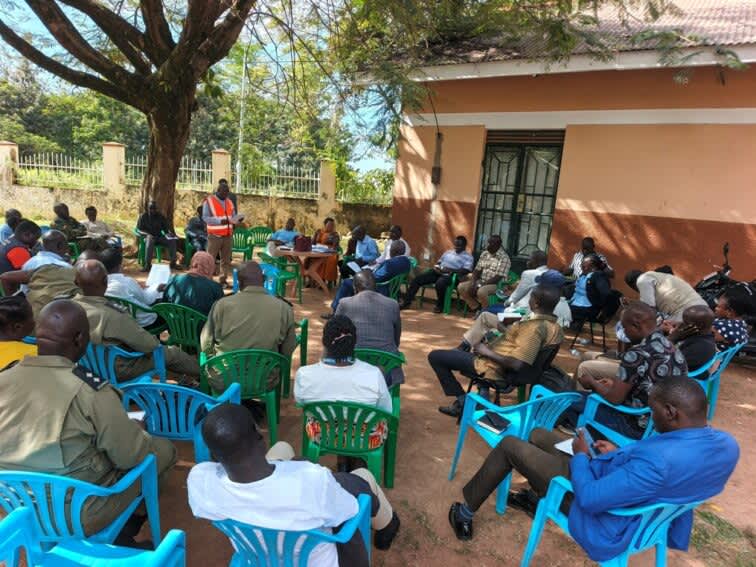
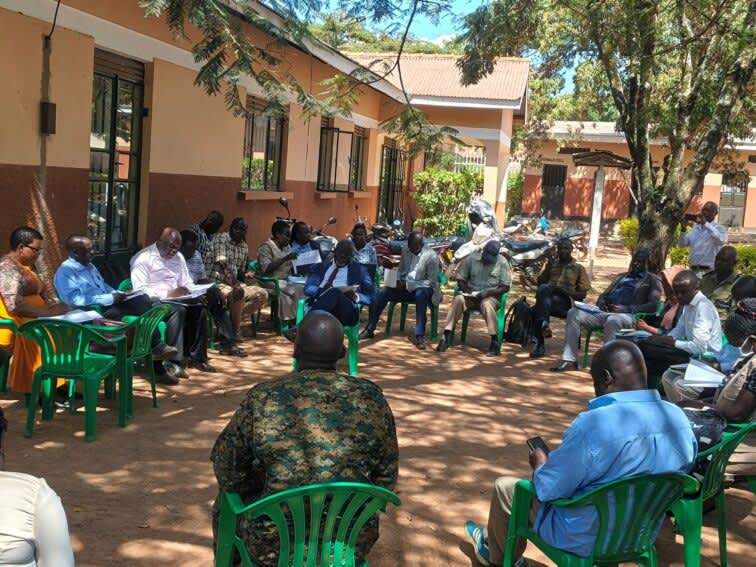
Members of Arua city Taskforce during situational analysis at the City Health Department. By Dramadri Federick Arua Arua City authorities have raised alarm over more than 150 porous border routes along the Uganda – DR Congo frontier, warning that continued ill
By Dramadri Federick
Arua
Arua City authorities have raised alarm over more than 150 porous border routes along the Uganda – DR Congo frontier, warning that continued illegal cross-border movement is undermining efforts to prevent the spread of Ebola Virus Disease (EVD) into Uganda.
The concern comes amid heightened surveillance and restrictions following the Ebola outbreak declared in the Democratic Republic of Congo on May 15, 2026.
Uganda has since intensified border controls, suspended cross-border markets, and closed official entry points to reduce the risk of transmission.
However, local leaders say hundreds of residents continue to use unauthorized 156 crossing points stretching from Odramacaku to Etori for trade, farming, and family visits, creating a significant public health risk not only for Arua City but also for the rest of the country.
According to Arua City authorities, the porous routes have become a major challenge in enforcing Ebola prevention measures, especially because of the deep cultural, social, and economic ties between communities living on both sides of the border.
Arua City Deputy Internal Security Officer, Andrua Lino, said security agencies are struggling to effectively monitor the vast network of illegal crossing points.
“We have a total of over 156 porous routes people are using to cross to Congo and coming back. Out of these roads, only two are manned where there is police and UPDF presence. We need to increase the number of personnel or establish more police stations and detachments along the border,” Lino noted.
The revelation has raised concerns about the country’s preparedness to contain a possible surge in imported Ebola cases, especially in West Nile, which serves as a major gateway between Uganda and eastern DRC.
Health officials have also expressed frustration over what they describe as weak enforcement of border restrictions.
Some health workers accuse security personnel stationed at the border of failing to fully implement government directives aimed at stopping unnecessary movement.
Alfred Amandu, Arua City’s Officer in Charge of Environmental Health, questioned how travelers continue to move through monitored areas without being intercepted.
“These people pass where the police are. How do they (Police Officers) allow people to go to markets in DRC and come back without arresting them? If this continues, then we have not done anything, meaning, the disease will continue to spread among the population,” Amandu explained.
The allegations point to growing tensions between public health officials and security agencies over the effectiveness of current containment measures.
In response, the Uganda People’s Defence Forces (UPDF) acknowledged the challenges posed by the difficult terrain and numerous illegal crossing points. The military says efforts to enforce the border closure are ongoing but are constrained by limited resources.
Lt. Tonny Nam, Operations Commander of the 55th Battalion based in Arua City, said security agencies remain committed to implementing government directives.
“We got the directives from up and we have closed the border. The number of people entering and crossing the border has reduced. I can’t say it has reduced 100 percent because we have porous borders all over,” the commander revealed.
Public health experts warn that continued movement through unofficial routes could undermine national Ebola surveillance efforts.
Travelers entering through unmonitored points may bypass screening systems, making it difficult for health authorities to trace contacts and quickly identify potential cases.
The situation is particularly worrying because Arua City serves as a commercial and transport hub linking West Nile to other parts of Uganda.
Any outbreak originating from the border region could quickly spread through domestic travel networks, increasing the risk of wider community transmission.
Authorities continue to urge residents to avoid unnecessary travel to affected areas, report suspected Ebola symptoms immediately, and cooperate with health and security teams enforcing preventive measures.
As Uganda races to prevent another major Ebola outbreak, officials warn that sealing the country’s porous borders and strengthening surveillance systems will be critical to protecting lives and safeguarding national public health security.