


Hi, I am Anguzu, Radio Pacis AI Assistant. How can I help you today? Ask me about Radio Pacis, our programmes, frequencies, news, Arua, or the world around us.
29 March 2026 · Radio Pacis Newsroom
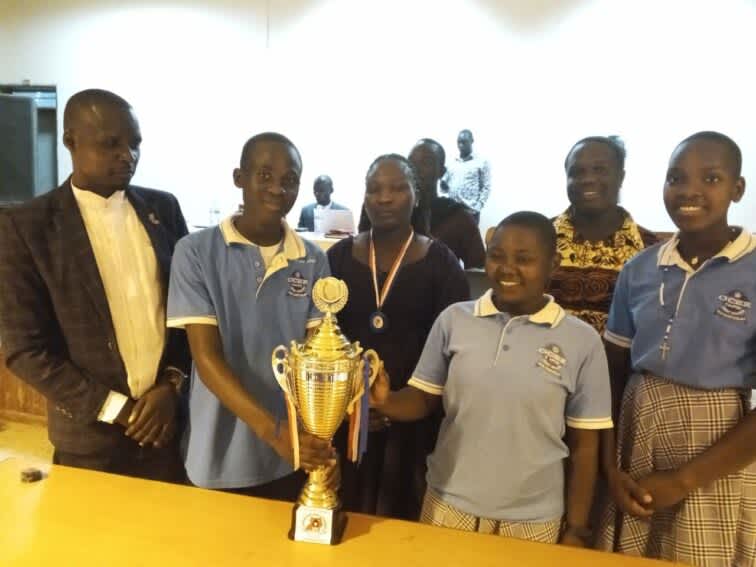
Students of Ocer Campion Jesuit College after winning the UNSA Gulu City Debate championship 2026 By Biko Rombe Gulu City Parents in Gulu city have been urged to embrace co-curricular activities as an essential part of a child’s growth. In education, there are
By Biko Rombe
Gulu City
Parents in Gulu city have been urged to embrace co-curricular activities as an essential part of a child’s growth.
In education, there are three types of curriculum: the core curriculum, which focuses on classroom subjects and exams; the co-curriculum, which includes activities like sports, music, leadership, dance, drama, and debate that build skills, talent, and character; and the hidden curriculum, where children learn values like discipline, respect, and social behavior without being formally taught.
Robert Okot, the Gulu City Sports Officer, emphasizes the importance of all three in the learning or education circle
“These three help a child grow holistically. Co-curricular activities like debate, sports, music, dance, and drama are especially important because they teach knowledge, skills, and attitudes, which are crucial for a child’s development. They also promote children’s health,” he said.
Okot noted that some parent’s reluctance to encourage co-curricular activities is rooted in old beliefs.
“Mostly elders stopped children from playing in the past, saying, they don’t want such games or plays. Many saw games as a waste of time. Unfortunately, some parents today still carry this mindset, stopping their children from engaging in co-curricular activities,” Okot added.
Akena Amos, UNSA Coordinator for Gulu City, highlighted that there are a number of life opportunities co-curricular activities can provide for learners.
“Someone can succeed in life because of co-curricular activities. Success isn’t always about academic results—talents in football, debate, or music can shape a child’s future. Let’s encourage children to take part in co-curricular activities, which are also supported by the Ministry,” Amos appealed.
Abedi Fiona, a Literature and English teacher at Ocer Campion Jesuit College, explains the personal development benefits of co-curricular activities.
“Debate, for example, helps a child understand themselves and stand confidently in front of people, discussing issues that develop a nation. Parents may say it’s a waste of time, but these activities are key to the holistic education we aim for,” she said.