

Hi, I am Anguzu, Radio Pacis AI Assistant. How can I help you today? Ask me about Radio Pacis, our programmes, frequencies, news, Arua, or the world around us.
16 June 2026 · Radio Pacis Newsroom
Beneficiaries together with city leaders and officials from Rwahi Investments Limited during a tour of the value addition facility section of animal feeds. By Dramadri Federick. Arua City Fifteen Parish Development Model (PDM) enterprise groups in Arua City ha
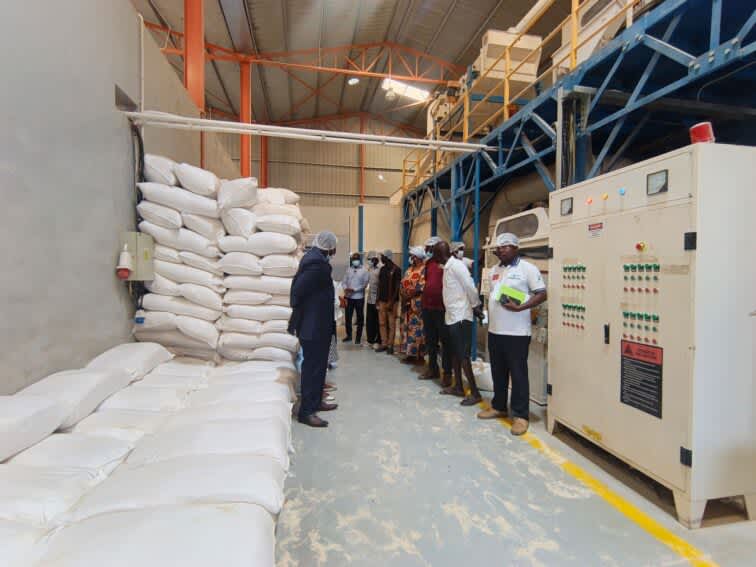
Beneficiaries together with city leaders and officials from Rwahi Investments Limited during a tour of the value addition facility section of animal feeds.
By Dramadri Federick.
Arua City
Fifteen Parish Development Model (PDM) enterprise groups in Arua City have received poultry and pig feeds worth Shs27 million in an effort to improve livestock production and strengthen household incomes.
The support, provided through Rwahi Investments Company Limited, comes after many PDM beneficiaries reported challenges sustaining their livestock projects due to the increasing cost of animal feeds.
Several farmers who received PDM funds to establish poultry and piggery enterprises have struggled to maintain production after spending their initial capital on purchasing animals and chicks, but later failing to afford the required feeds.
The high cost of feeds has affected animal growth, reduced productivity, and in some cases resulted in the death of livestock, threatening the success of the government’s Parish Development Model programme.
Under the partnership arrangement, Rwahi Investments Company Limited will provide feeds to the beneficiaries, while the farmers will pay back the cost of the feeds after selling their pigs and poultry products after a year.
Joseph Olupot, the Managing Director of Rwahi Investments Company Limited, explained that the intervention was designed to address one of the biggest challenges affecting PDM livestock beneficiaries.
He said many farmers were able to use the PDM funds to buy animals but lacked enough resources to sustain feeding, which affected the quality and profitability of their enterprises.
“The biggest problem they have is feeding. Once they receive about one million shillings from PDM, they buy pigs or chicks, but the feeding process is where they have been losing them. The animals or chicks end up dying because they cannot maintain the feeding programme.”
Olupot added that without proper feeding, farmers struggle to achieve the expected production levels, making it difficult for them to recover their investments.
Meanwhile, beneficiaries say the intervention will improve animal health, increase production, and enable them to benefit from their enterprises.
Scovia Eceru, a piggery farmer from Andruvu Cell in Komite Ward, Ayivu Division, said her pigs had lost weight because she could not consistently provide enough feeds.
She said the new support will help improve the condition of her animals and restore their growth.
“The PDM money was available, but feeding was not consistent, and the weight of the pigs kept reducing. With this support for feeds, we expect the animals to regain their weight and improve production.”
Another beneficiary, poultry farmer Alli Musa from Arua Central Division, said the cost of poultry feeds has become a major challenge for farmers, forcing some beneficiaries to use money meant for livestock projects on other needs.
“For just one hundred birds, you can spend almost Shs1.1 million on feeds. This makes it difficult for farmers who are starting out because the costs are very high.”
The initiative is being supported through a value addition facility established to improve agricultural production and processing in the region.
The facility requires about 50 tonnes each of maize, cassava, millet, and sorghum every day to support its operations. However, the West Nile region currently supplies only about 30 percent of the required raw materials.
The Assistant Resident City Commissioner for Arua Central Division, Judith Bako, said authorities will closely monitor the partnership to ensure that farmers benefit and that the programme achieves its intended objectives.
She encouraged beneficiaries to take advantage of the support to increase production and become self-sustaining.
“My concern is that after one year, farmers should be able to increase their productivity with the support of this facility. They should be able to sustain their enterprises and improve their incomes.”
The Shs8 billion value addition facility, located in Chongoloya Cell, Awindiri Ward, forms part of the Shs34.9 billion Arua Main Market project constructed under the Market and Agricultural Trade Improvement Programme (MATIP II).
Stakeholders say the partnership is expected to strengthen livestock production, reduce losses among PDM beneficiaries, and contribute to economic transformation among households in Arua City and the wider West Nile region.