

Hi, I am Anguzu, Radio Pacis AI Assistant. How can I help you today? Ask me about Radio Pacis, our programmes, frequencies, news, Arua, or the world around us.
30 April 2026 · Radio Pacis Newsroom
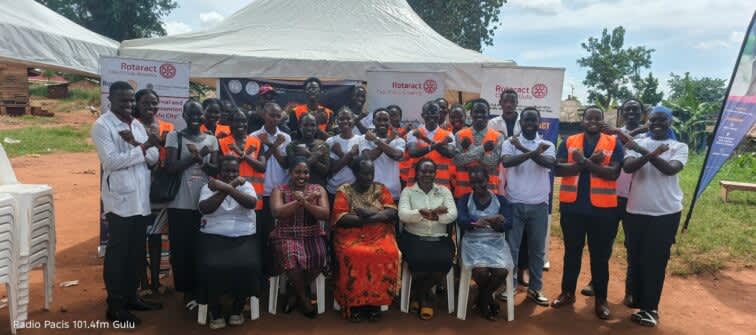
Members of the Rotaract club pose for a photo after the medical camp By Biko Rombe Gulu City Ahead of World Malaria Day observed annually on 26th April, the Rotaract Club of Gulu University organized a comprehensive medical outreach in Holy Rosary Cell, Laro-P
By Biko Rombe
Gulu City
Ahead of World Malaria Day observed annually on 26th April, the Rotaract Club of Gulu University organized a comprehensive medical outreach in Holy Rosary Cell, Laro-Pece Division, as part of its Integrated Maternal and Child Malaria Prevention Campaign.
The initiative focused on reducing malaria prevalence among vulnerable groups, particularly children under five years of age and pregnant mothers, who continue to bear the highest burden of the disease in Northern Uganda.
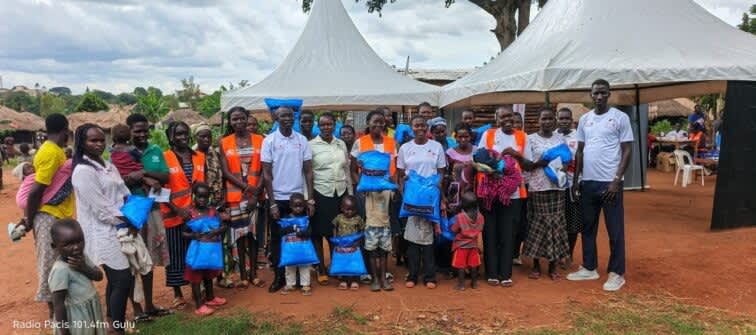
The medical camp was implemented under a grant supported by Rotarians against Malaria (RAM Global), bringing together medical students, health professionals and community volunteers in a coordinated effort to deliver free health services directly to residents.
Speaking during the activity, the project chairperson of the Rotaract Club of Gulu University, Ogena Thomas Opio, emphasized the urgency of addressing malaria, describing it as one of the most serious public health challenges in Uganda today.
He noted that recent statistics from March indicate malaria as the leading cause of morbidity across the country.
“Malaria cuts across all age groups, but pregnant mothers and children under five remain the most vulnerable. Through this project, we are working with our partners to bring prevention and awareness directly to the community,” he said.
According to Opio, malaria is not only preventable but also potentially life-threatening if not properly addressed.
He says, the campaign seeks to reinforce preventive practices such as sleeping under treated mosquito nets, maintaining clean homesteads, avoiding stagnant water and seeking professional medical care instead of self-medication.
“Malaria can take lives, cause miscarriage, and bring suffering into families. But it is preventable. Together, we can fight and even eliminate it if we take the right steps,” he added.
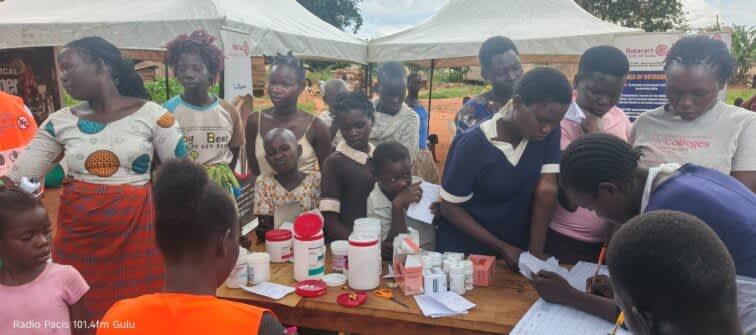
Suubi Janat Nalubega, a third-year medical student and the president of the Rotaract Club of Gulu University, said the event involved a wider range of clinical and preventive services.
These included distribution of mosquito nets, antenatal care services, anthropometric measurements to assess nutritional status, malaria testing, and counselling sessions.
She explained that the intervention was particularly critical due to the high prevalence of malaria in Northern Uganda and the increased vulnerability of children and expectant mothers.
“We are protecting the most vulnerable from the beginning of life. Unfortunately, we are facing challenges of limited manpower and demand exceeding supply, especially for mosquito nets, but the need in the community is very high,” she said.
Nalubega also stressed the importance of environmental hygiene and prompt medical attention, urging residents to eliminate stagnant water and plastic waste that serve as breeding grounds for mosquitoes.
Healthcare services were further supported by professionals from Laroo Health Centre III.
Atuhaire Peace, a health worker involved in the outreach, noted that the camp provided malaria testing, HIV testing, deworming services, and treatment for malaria and malnutrition-related conditions.
She described the turnout as overwhelming, indicating a strong unmet need for healthcare services in the community.
She also emphasized the continued importance of mosquito net usage and environmental sanitation in malaria prevention, noting that distribution efforts had already reached several households.
Kaunda Robinson, a councilor-elect for Holy Rosary Cell, acknowledged the significance of the intervention, describing malaria as a silent but deadly disease that often becomes severe before patients seek treatment.
“Sometimes people assume it is just fatigue, but it could already be malaria. I thank the Rotaract Club of Gulu University for bringing these services closer to the people. We hope such interventions continue regularly,” he said.
He further highlighted the economic vulnerability of the area, noting that many residents struggle to access healthcare due to poverty.
He called for more frequent outreach programs and suggested extending services to elderly residents who are often unable to travel to health centers.
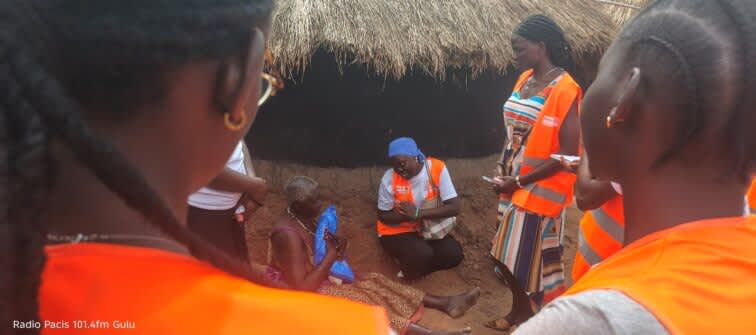
Community beneficiaries expressed appreciation for the initiative.
Ben Oyoo Derricks, a resident of the area, said the camp had equipped families with essential knowledge on malaria prevention and proper net usage.
“They have taught us how to prevent malaria and given us mosquito nets. We now understand the importance of cleanliness and removing stagnant water. This will help protect our families,” he said.
Similarly, Anena Fiona, another beneficiary, shared that the mosquito nets and health education would significantly improve household health practices.
She explained that residents were also guided on proper net preparation, including washing and airing before use, as well as maintaining a clean home environment.
Village health representatives also underscored the importance of collective responsibility in fighting malaria.
Alaroker Manuela, a Village Health Team member, noted that malaria prevention requires joint community action alongside government interventions such as mosquito net distribution and malaria vaccination for infants.
“Fighting malaria is not a one-person effort. We must all work together, use the nets properly, and ensure our environment is clean,” she said.
Beyond malaria prevention, the campaign also included nutrition education, where residents were taught the importance of balanced diets for child development with practical guidance on preparing nutritious meals such as porridge for young children to help combat malnutrition in the community.
In total, the outreach engaged 31 volunteers and reached 35 elderly persons, 10 pregnant women, and 44 children, with 59 mosquito nets distributed during the exercise.