


Hi, I am Anguzu, Radio Pacis AI Assistant. How can I help you today? Ask me about Radio Pacis, our programmes, frequencies, news, Arua, or the world around us.
15 July 2026 · Radio Pacis Newsroom
Anthony Okello, the commissioner of the electoral commission during the regional post-election evaluation workshop on July 13, 2026 at Heritage Courts Hotel, Arua city. (Photo By Erema) By Erema George Arua City Election stakeholders in west Nile have presente
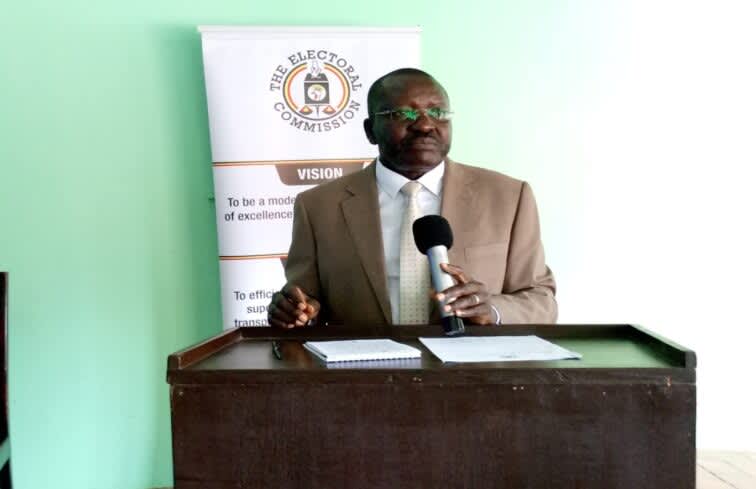
Anthony Okello, the commissioner of the electoral commission during the regional post-election evaluation workshop on July 13, 2026 at Heritage Courts Hotel, Arua city. (Photo By Erema)
By Erema George
Arua City
Election stakeholders in west Nile have presented a number of recommendations to the electoral commission of Uganda following the 2025/2026 general elections to ensure reforms in future electoral activities in the country.
During the regional post-election evaluation workshop overwhelmingly attended by different stakeholders conducted at Heritage Courts Hotel in Arua city on Monday, 13th July overseen by MS Android consult international, an independent consultancy company, many of the participants appreciated the electoral commission for the success of the elections while citing a number of challenges that occurred during the electoral cycle such as voter bribery, commercialization of politics, ballot staffing, none functionality of the biometry voter verification kit(BVVK Machines), unmatched voter particulars in some cases, inadequate civic and voter education among others.
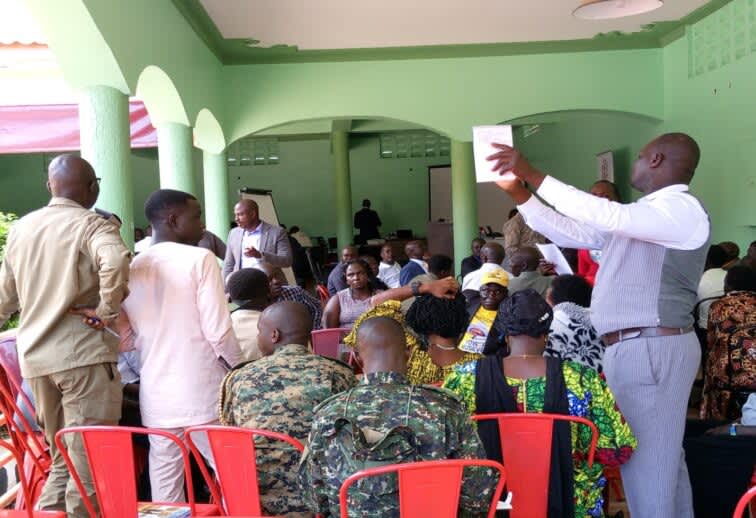
Participants during a group work, discussing topics to be presented as part of the evaluation exercise.
The Yumbe district chairperson Abdumtualib Asiku in a presentation called for streamlined voting starting from the lower local government;
“We’re proposing as an immediate measure that the elections should start from the LC I, LC III, LC V, MPs and the president. Some of us are always victims of circumstance so we suggest strongly to the electoral commission that during the 2031 elections, let us start from the LC I, LC III in that order.” Asiku stated.
Akuma Moses Odims, the executive director of West Nile Development Agenda (WENDA) said, digitalization of the electoral process and having a totally independent commission will be key in regaining citizens’ trust;
“We need the electoral commission to digitalize the electoral process right from registration to declaration of the results in order to reduce the time and promote transparency. This a lone will encourage trust in the entire system. Members discussed that by the virtue that the electoral commission is being appointed by the head of state, there can be conflict of interest because that is you’re appointing authority, what will you do? So we are suggesting that there should be an open process through which electoral commission should be nominated, and then of course appointed such that we can avoid conflict of interest.” Akuma said.
While the Nebbi district chairperson George Athuba advocated for the elimination of the UPDF in the voting process; “Surely, let us remove the soldiers from the voting process, during voting, they are too rough. During voting, soldiers are not the ones we are seeing now, they change. Athuba emphasized.
Commissioner Anthony Okello, of the electoral commission noted that; “You’ve raised a number of issues which the consultant has captured and the experiences shared here will definitely contribute significantly to future reviews of electoral laws. You know as electoral commission we implement the available laws, we don’t design laws but we are implementers but certain issues about election management needs legal reforms. With this kind of interaction, we are generating evidence based information that will inform such amendments.” Okello noted.
The purpose of the evaluation was to generate practical recommendations for institutional, legal, policy and administrative reforms aimed at enhancing the credibility, transparency, inclusiveness and efficiency of elections as well as documentation of the lessons learnt and the emerging issues from the commission’s strategic planning, policy development and preparation for subsequent electoral cycles.