


Hi, I am Anguzu, Radio Pacis AI Assistant. How can I help you today? Ask me about Radio Pacis, our programmes, frequencies, news, Arua, or the world around us.
17 March 2026 · Radio Pacis Newsroom
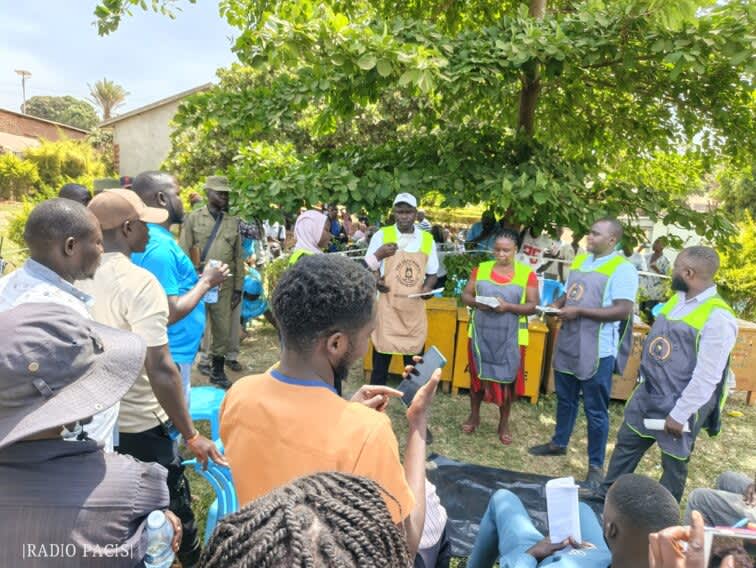
Temporary election officials during one of the recent elections in Arua city. By Onzoma Albert Arua city The Electoral Commission is finalizing payments for 26,896 temporary election officials in the West Nile region who served during the 2026 General Elections. West Nile has a total of 3,362 polling stations, each […]
0-4064×3048-1-0-{}-1-12#
Temporary election officials during one of the recent elections in Arua city.
By Onzoma Albert
Arua city
The Electoral Commission is finalizing payments for 26,896 temporary election officials in the West Nile region who served during the 2026 General Elections.
West Nile has a total of 3,362 polling stations, each staffed by 8 temporary officials during the elections.
Juma Shesha, the West Nile regional election officer, confirmed that all eligible officials will receive their remaining allowances, addressing days of public outcry and social media criticism over delayed payments to election staff nationwide.
“They will be paid soon, the payment delayed because most of them did not write their names correctly since payment is done using E-cash most of the payments bounced back, but we have done corrections of those names which for West Nile has already been summited to Kampala for payments, so anytime from this week or early next week they will start to receive payment messages in their phones,” he confirmed.
According to Shesha, Payments will be made based on the number of elections each official participated in, deviating from the original plan where Presiding Officers were to receive Shs 500,000, Polling Assistants Shs 300,000, Police Constables Shs 375,000, Biometric Voter Verification Kit (BVVK) machine operators Shs 500,000, and Tally Clerks Shs 300,000.
“Presiding officers will receive Shs 100,000/= per election cycle, polling assistants 75,000/= depending on the number of elections they participated in because some of the officials left on the way without completing the required election cycles so many of them have received their allowances twice already and waiting to be paid for the third time,” he added.
The Electoral Commission has faced repeated social media criticism for the delays, which led to protests among deployed staff, notably in Akere division, Apac district.
To prevent fraudulent payments, the commission has assured the public that verification of records is ongoing to ensure only duly appointed and verified election officials receive their allowances.
The move aims to restore confidence among election officials and address concerns about timely and transparent remuneration, following the disruption caused by delays in payment during the election period.