


Hi, I am Anguzu, Radio Pacis AI Assistant. How can I help you today? Ask me about Radio Pacis, our programmes, frequencies, news, Arua, or the world around us.
24 March 2026 · Radio Pacis Newsroom
Commissioner for Local Councils Development, Swizin Kizza Mugyema revealed that if leadership gaps are not addressed through vigorous inductions and deal with corrupt tendencies, the attrition rates could rise more. By Dramadri Federick Arua City Uganda has re
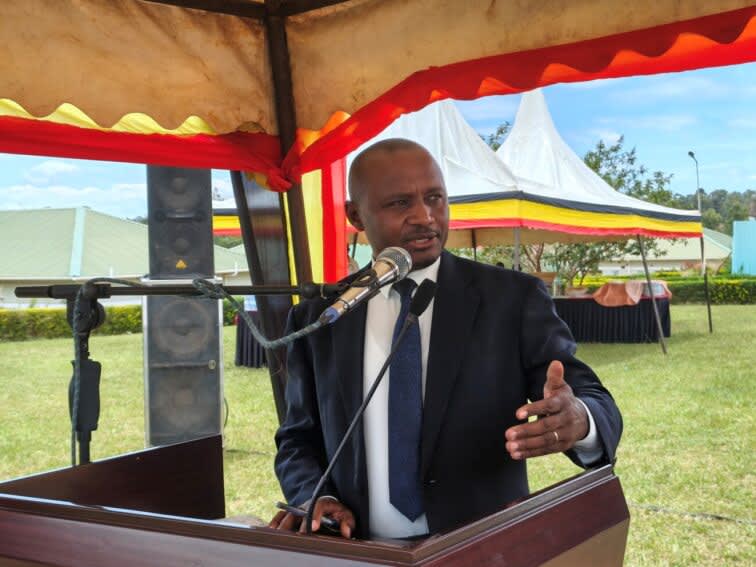
Commissioner for Local Councils Development, Swizin Kizza Mugyema revealed that if leadership gaps are not addressed through vigorous inductions and deal with corrupt tendencies, the attrition rates could rise more.
By Dramadri Federick
Arua City
Uganda has recorded an 80 percent turnover of Members of Parliament, surpassing earlier projections by Civil Society Organizations and signaling a significant shift in the country’s political landscape.
A few months ahead of the 2026 general elections, Afrobarometer, an African-based research organization, had projected that the attrition rate in Uganda’s Parliament could rise to 70 percent as voters exercised their democratic mandate. The projection was based on trends observed in previous parliamentary cycles.
According to Afro barometer’s analysis, of the 457 Members of Parliament who served in the 10th Parliament, 319 were not re-elected to the 11th Parliament, which is set to end in May 2026. Additionally, 31 MPs either chose not to contest or ran for different political offices, leaving only 107 legislators who successfully retained their seats.
The organization had warned that the turnover could increase further as voters continue to demand greater accountability, transparency, and responsiveness from their elected leaders.
However, speaking during the launch of the Muni University Institute of Leadership and Governance, the Commissioner for Local Councils Development, Swizin Kizza Mugyema, revealed that the turnover has exceeded expectations, reaching 80 percent as Uganda transitions into the 12th Parliament, which begins in May 2026.
Mugyema attributed the high attrition rate to what he described as self-centered leadership, weak accountability to campaign promises, and inadequate leadership skills among many legislators.
“We have just concluded the general elections and the turnover is 80 percent, meaning the majority of leaders heading to Parliament are new. The problem is not government; the problem is leaders who are not open to their electorates and who consider themselves above the people. Voters have a choice to make, and this is how they discipline their leaders,” Mugyema said.
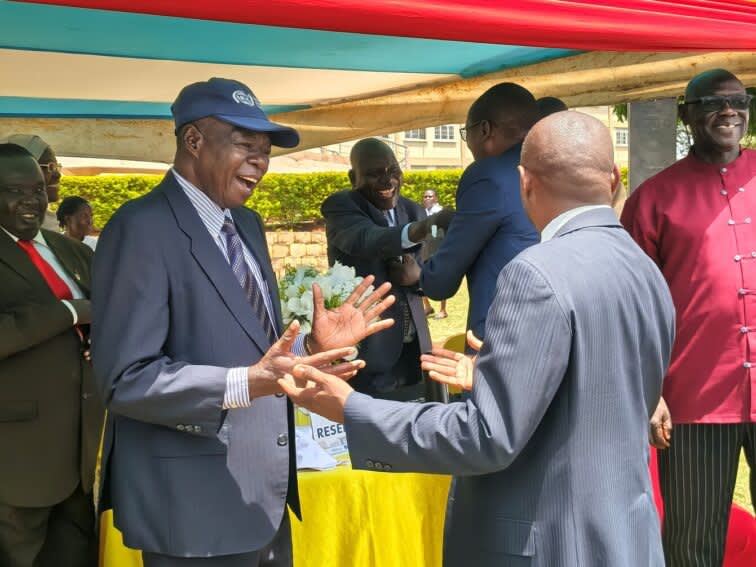
Swizin Kizza Mugyema the commissioner for local councils Development sharing light moments with former West Nile Political Leaders.
At the regional level, the Executive Director of the West Nile Development Association (WENDA), Moses Akuma Odims, noted that the West Nile sub-region has been significantly affected by the high turnover, with only a small number of leaders managing to retain their positions across election cycles.
He revealed that out of the 15 local governments in the region, only six leaders were re-elected, leaving the majority of leadership positions occupied by new entrants, many of whom lack prior governance experience.
“In the 15 local governments in the region, we have only been able to retain six leaders. This means the majority are new and have not previously served in leadership positions,” Akuma said.
Akuma emphasized the need for continuous induction, mentorship, and capacity building programs to equip new leaders with the necessary skills to effectively deliver on their mandates.
Meanwhile, Geoffrey Feta, the outgoing Member of Parliament for Ayivu East Constituency in Arua City, pointed to the disconnect between public expectations and the legal roles of legislators as a key factor driving electoral losses.
Feta explained that although government policies prohibit MPs from providing direct financial or material support to constituents, voters often expect immediate assistance in areas such as infrastructure, education, and basic services.
“I represent about 80,000 voters, and their expectations on a daily basis are immense. They want roads, water, food, school fees, and bridges, among others. Yet policy does not allow MPs to directly meet these needs. This mismatch is one of the reasons why the attrition level of leaders in West Nile is very high,” Feta said.
Uganda’s Parliament is composed of 353 directly elected constituency representatives, 146 District Woman Representatives one for each district and Members representing Special Interest Groups, including youth, persons with disabilities, and the army.
The high turnover presents both opportunities and challenges, offering a chance for political renewal while also raising concerns about institutional memory and leadership continuity in the country’s legislative processes.