


Hi, I am Anguzu, Radio Pacis AI Assistant. How can I help you today? Ask me about Radio Pacis, our programmes, frequencies, news, Arua, or the world around us.
18 July 2026 · Radio Pacis Newsroom
UNHCR Uganda Deputy Country Representative Bernard Inkoom (Long Sleeved Shirt) presenting the status quo during the US embassy officials’ visit to Imvepi Refugee Settlement. By Dramadri Federick Arua City The United Nations High Commissioner for Refugees (UNHC
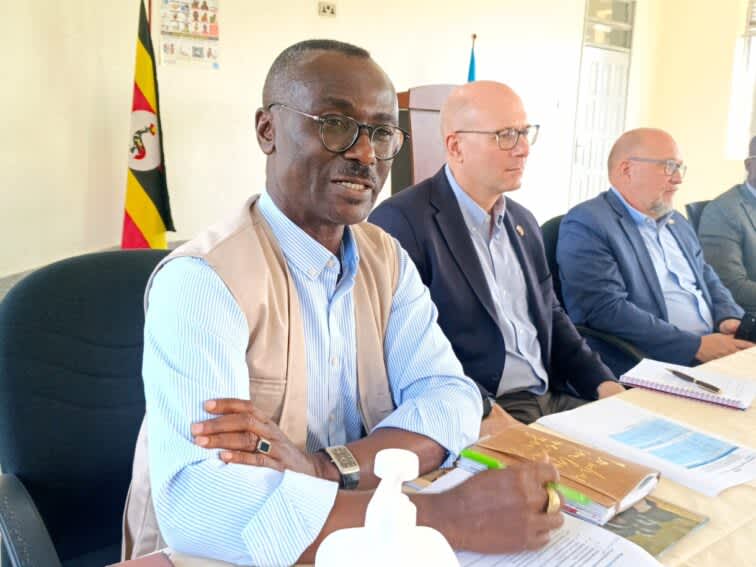
UNHCR Uganda Deputy Country Representative Bernard Inkoom (Long Sleeved Shirt) presenting the status quo during the US embassy officials’ visit to Imvepi Refugee Settlement.
By Dramadri Federick
Arua City
The United Nations High Commissioner for Refugees (UNHCR) has closed its coordination offices in Arua and Moyo districts following severe funding shortfalls that have significantly affected refugee operations in Uganda.
Speaking during a visit by officials from the United States Embassy to Imvepi Refugee Reception Centre in Terego District, UNHCR Uganda Deputy Country Representative Bernard Inkoom said the agency has been forced to scale down its operations after receiving only 27 percent of the funding required for its 2026 refugee response.
He noted that Uganda continues to host more than two million refugees, even as humanitarian needs continue to grow. “The total funding requirement for Uganda’s Refugee response for 2026 is $850million and this is supposed to be shared across 78 partners and you will find that our estimates if this pace of funding continues will mean only 27% of the funding need is funded”. Inkoom explained
Inkoom said the funding gap has compelled UNHCR to reduce its workforce by 60 percent, close its coordination offices in Arua and Moyo, and scale down the activities of several implementing partners. He said only the Yumbe and Adjumani offices remain operational in the West Nile region.
“We’ve closed important offices across the country including Arua and Moyo that were critical in coordination, we have drastically reduced our fleet size and we have reduced the number of our partners. This is to ensure services continue amid the funding challenges”. Bernard stated
Government of Uganda in May suspended refugee reception and registration during the Ebola outbreak, however asylum seekers have continued entering Uganda through unofficial border routes affecting already established Ebola management protocols.
The Refugee Desk Officer for West Nile, Kebirungi Jolly, said the region hosts four refugee settlements, with about 90 percent of the refugees coming from South Sudan. She explained that funding shortages have led to reduced food assistance for refugees, while increasing pressure on health, education, and other essential services in host communities.
“West Nile Remains the Heart of refugee response with 70% of the country’s refugee population of 2 million hosted in the region. Thereby calling for increased funding and sustainable investments”. Kebirungi noted
The United States Embassy reaffirmed its commitment to supporting Uganda’s humanitarian response. Speaking during the visit, Chargé d’Affaires Michael Cleverly said the humanitarian crisis is real and calls for concerted efforts and coordination among partners.
“It is not now business as usual, we in US are now looking at the impact fullness of our activities and that’s where we will invest resources”. Cleverly revealed
Terego district Chairman Wilfred Saka acknowledged United States support to Uganda saying it has helped in restoring hope but calls for increased funding and sustainable interventions.
The closure of the Arua and Moyo coordination offices stresses the growing impact of global funding shortages on Uganda’s refugee response and the urgent need for additional international support to sustain protection and essential services for both refugees and host communities.
Meanwhile, State Minister for Primary Health Care Dr. Charles Ayume urged development partners to broaden their support by investing in climate change interventions alongside humanitarian assistance, noting that environmental pressures are increasingly contributing to displacement and vulnerability. Refugee leaders also expressed gratitude to the United States Government for its long-standing support to Uganda’s refugee response calling for strengthened partnerships.