

Hi, I am Anguzu, Radio Pacis AI Assistant. How can I help you today? Ask me about Radio Pacis, our programmes, frequencies, news, Arua, or the world around us.
14 July 2026 · Radio Pacis Newsroom
By Onzoma Albert Arua City The West Nile Livestock Traders Association has introduced a mandatory registration for all individuals and businesses involved in the livestock trade, aiming to streamline the sector and curb illegal cross-border activities. The ini
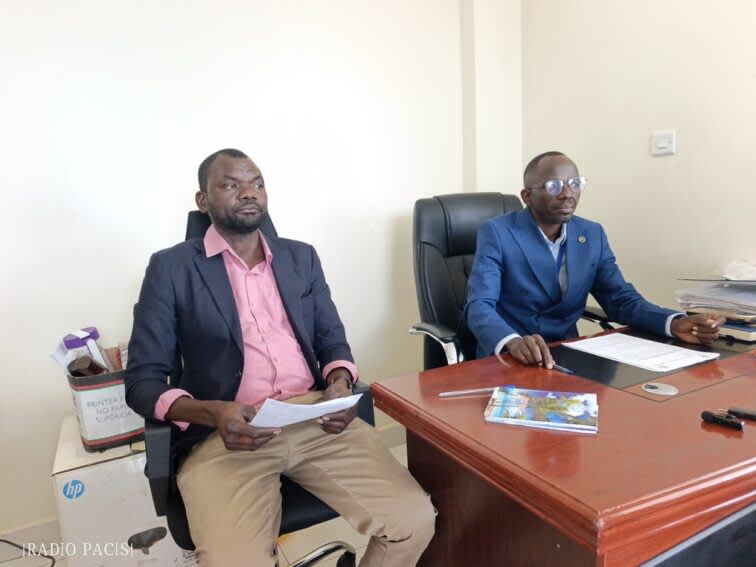
Andama Richard, WE-CAN, ED in blue coat and Patrick Okiror Hosea, in black coat, during press conference in Arua City.
By Onzoma Albert
Arua City
The West Nile Livestock Traders Association has introduced a mandatory registration for all individuals and businesses involved in the livestock trade, aiming to streamline the sector and curb illegal cross-border activities.
The initiative seeks to promote organized livestock trade between West Nile and the Democratic Republic of Congo (DRC), improve compliance with animal movement regulations, and enhance disease control measures.
The trade, particularly in cattle, goats, sheep, and pigs, has surged due to high demand and prices in eastern DRC, attracting many new traders from regions such as Soroti, Katakwi, Kaberamaido, Lango, and Acholi.
However, this rapid growth has been accompanied by widespread non-compliance with regulations, including illegal crossings and violations of Ebola prevention measures. Some traders transport livestock into DRC illegally or keep animals roaming along the border, posing health risks.
To address these issues, Patrick Okiror Hosea, the Chairperson of West Nile Livestock Traders Association, emphasize the importance of identifying legitimate traders, reducing livestock theft, and promoting lawful trade through registration and a livestock database.
“The district of the various 13 districts in the region will be conducting the registration of our members, the registration will include livestock traders, livestock producers and livestock transporters across the region to streamline the trade infiltrated by illegal traders” he said.
Richard Andama, the Executive Director of the West Nile Compensation Advocacy Network (WE-CAN), an organization that advises livestock traders in the region, an organization that advises livestock traders in the region, explained that Authorities have created advanced livestock inspection checkpoints at key border points like Pakwach and Bondo, with many trucks currently transporting animals to designated markets.
“The division commander has given the West Nile Livestock Traders full powers to put check-points at designated points to ensure that animals moving from other regions are destined into that specific place without moving anywhere, the number plates of the trucks will be properly checked hand in hand with security agencies including police and Uganda People’s Defense Forces (UPDF)” he said.
A new livestock market at Kova Cell in Onduparaka is being established to accommodate over 3,000 animals, facilitating organized trade.
The government has intensified efforts to regulate livestock movements, especially following recurrent outbreaks of transboundary animal diseases and concerns such as Ebola. Additional measures include establishing a comprehensive livestock database, strengthening border security, and improving disease surveillance and revenue collection.
The formal registration and new infrastructure aim to provide a more organized and secure marketplace, prevent illegal activities, and ensure better disease management in the region. The number of registered livestock businesses is expected to increase significantly, reflecting the sector’s growth under the new regulatory framework.